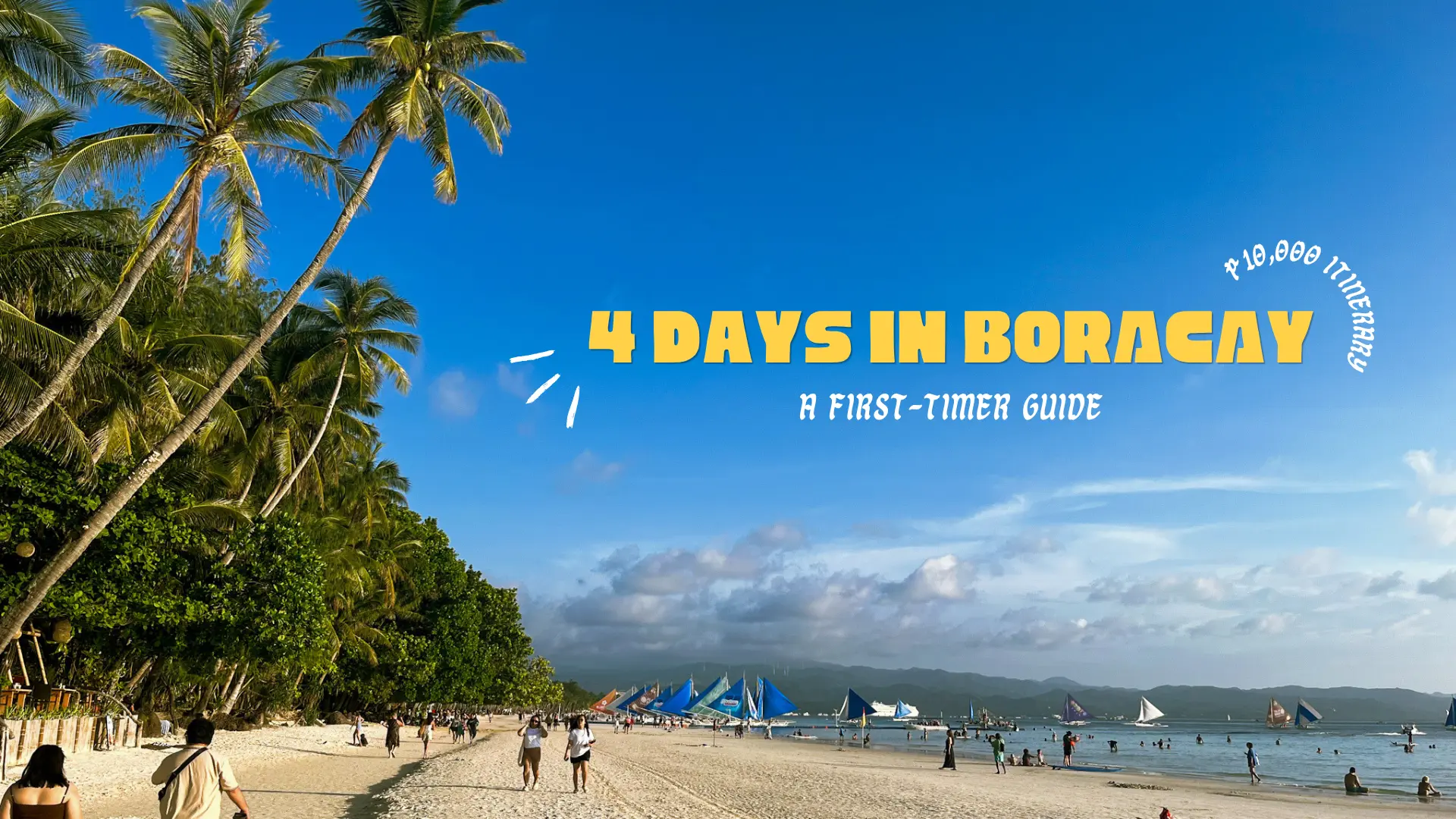

Boracay barely needs an introduction. With its powdery white sand and crystal-clear blue waters, this famous tourist destination on the northwest coast of Panay Island in the Philippines has long ranked among the world’s best beaches.
But despite its popularity and alluring natural beauty, it might surprise you that I’ve never put it on my local travel bucket list. I believed it was overrated and crowded, so I skipped Boracay for years until I realized I had visited almost every major tourist spot in the Philippines except this one.
Torn between the budding beach destination of Siquijor and the country’s transitional weather, I finally heeded Boracay’s call when it emerged as the better spot for a late-year trip in the Philippines. Little did I know that aside from ticking off a major tourist attraction, this trip would open my eyes to see Boracay in a different light.
Find out how I explored the island for the first time on this 4-day Boracay DIY itinerary, and how I squeezed it all into an all-in ₱10,000 budget.
📌 4-DAY BORACAY ITINERARY UNDER ₱10,000 AT A GLANCE
- Best Time to Go: June and October (Shoulder Season) – Low hotel rates, clear waters, and fewer crowds.
- Best Area to Stay: Hostels in Bulagbog Beach – Lower rates compared to the accommodations in White Beach.
- Money-Saving Sightseeing: DIY itinerary over day tours – Allows better flexibility, freedom, and budget-saving transit alternatives, i.e., walking.
- Getting Around Hack: Shared “Regular” E-Trikes – Flag down public trips along the Main Road instead of paying premium prices for chartered “Special” rides.
- Where to Eat on a Budget: Budget-friendly eateries and carinderias found in the island’s neighborhoods.
- Conscious Tourism Practice: Support the Ati Tribe Community – Visit the Ati Tribe Village in Manoc-Manoc to purchase handcrafted goods and learn about their heritage and ongoing struggle for ancestral land rights.
Table of Contents
Where is Boracay Located?
Tucked in the central part of the Philippines in the Western Visayas region, Boracay is located off the coast of the northern tip of mainland Panay Island under the municipality of Malay in the province of Aklan.
The island lies approximately 310 kilometers (192 miles) south of the capital of the Philippines, Manila, where most inbound international flights land, and 282 kilometers (175 miles) north of the metropolis of Cebu City, another central and key transportation hub in the Visayas region.
Best Time to Go to Boracay

With its western seaboard location on the map, Boracay experiences the same weather system as most parts of the Philippines.
November to May is the island’s dry season and is considered the best time to visit Boracay for its favorable weather conditions ideal for beach bumming, island-hopping, and water activities.
Nonetheless, travelers should take note of the island’s algae (locally called lumot) season, which typically runs from February to May and blankets the shores of the famous White Beach with green algae, impacting Boracay’s iconic white-sand scenery. It is highly recommended to visit outside this window if you’re interested in getting the island’s postcard-worthy shots.
The summer months of April to May are another period to avoid if you’re keen on having a serene and laid-back island experience. This period is known as Boracay’s peak tourist season, when accommodation prices surge and domestic foot traffic increases as locals head to the beach.
The rainy months of June to October are the island’s wet season, when Boracay receives the highest amount of rainfall and when water activities get limited and suspended by local authorities due to rough sea conditions.
However, if you don’t mind having a day of rain or passing showers during your trip, the transitional period between rainy and dry season and vice versa is also a good time to head to Boracay to score cheaper accommodation rates and fewer crowds in famous tourist spots. This is actually the same period when I visited the island for the first time—specifically in the last week of October—and the shoulder season felt like getting the best of both worlds.
But ultimately, the dry months of November to January are a recommended sweet spot to head to Boracay to savor its iconic crystal-clear waters and pleasant daily weather, minus the summer’s peak tourist season hustle and bustle.
Best Time to Go to Boracay Cheat Sheet
| Month | Climate Season | Beach Conditions | Travel Season Notes |
|---|---|---|---|
| January | ☀️ Dry (Amihan) | 🌊 Clear & Calm | ☀️ Sweet Spot/Moderate Rates |
| February | ☀️ Dry (Amihan) | 🌿 Algae (Lumot) Season | ☀️ Sweet Spot with Algae Season/Moderate Rates |
| March | ☀️ Dry (Amihan) | 🌿 Algae (Lumot) Season | 📈 Pre-peak Season/Moderate Rates |
| April | ☀️ Dry (Amihan) | 🌿 Algae (Lumot) Season | 🔥 Peak Tourist Season/High Rates & Foot Traffic |
| May | ☀️ Dry (Amihan) | 🌿 Algae (Lumot) Season | 🔥 Peak Tourist Season/High Rates & Foot Traffic |
| June | 🌧️ Wet (Habagat) | 🌊 Clear Waters Turning to Rough Seas | 💡 Shoulder Season/Low Rates (Best Budget Hack) |
| July | 🌧️ Wet (Habagat) | 🌊 Rough Seas & Rain | 🏷️ Off-peak Season/Low Rates |
| August | 🌧️ Wet (Habagat) | 🌊 High Rainfall | 🏷️ Off-peak Season/Low Rates |
| September | 🌧️ Wet (Habagat) | 🌊 High Rainfall | 🏷️ Off-peak Season/Low Rates |
| October | 🌧️ Wet (Habagat) | 🌊 Clearing Water | 💡 Shoulder Season/Low Rates (Best Budget Hack) |
| November | ☀️ Dry (Amihan) | 🌊 Clear & Calm | ☀️ Sweet Spot/Moderate Rates |
| December | ☀️ Dry (Amihan) | 🌊 Clear & Calm | 🎄 Holiday Peak/High Rates |
How to Get to Boracay
Prefer a quick visual walkthrough? Watch my transit vlog below covering the route from flight arrival to Boracay Island, or read on for the full step-by-step breakdown.
Flying into Boracay Airport

With its popularity among local and foreign tourists, getting to Boracay is seamless, with major local airlines operating multiple flights daily to the island’s nearest airport at Godofredo P. Ramos Airport (MPH), popularly known as Boracay/Caticlan Airport, in Caticlan, Malay, Aklan. This includes big operators like Philippine Airlines (operating under PAL Express), Cebu Pacific, and AirAsia.
The routes going to this destination are also often included in airline seat sales, allowing travelers to score round-trip flight tickets for as low as ₱2,000.
In addition to the usual Manila-departing flights, Boracay is well-connected to other major and regional tourist hubs, including Cebu City, Iloilo, Puerto Princesa, Clark, Coron, El Nido, and Davao City.
For reference from my recent trip to the island, I was able to score a round-trip flight ticket to Boracay from Manila for ₱4,751.24 on Cebu Pacific, booked a month before my scheduled departure.
Book your Manila to Boracay flight here!
Getting to Boracay Island from Caticlan Jetty Port
With the absence of a commercial airport on Boracay, the nearby Caticlan Jetty Port serves as the primary gateway and jump-off point to the island.
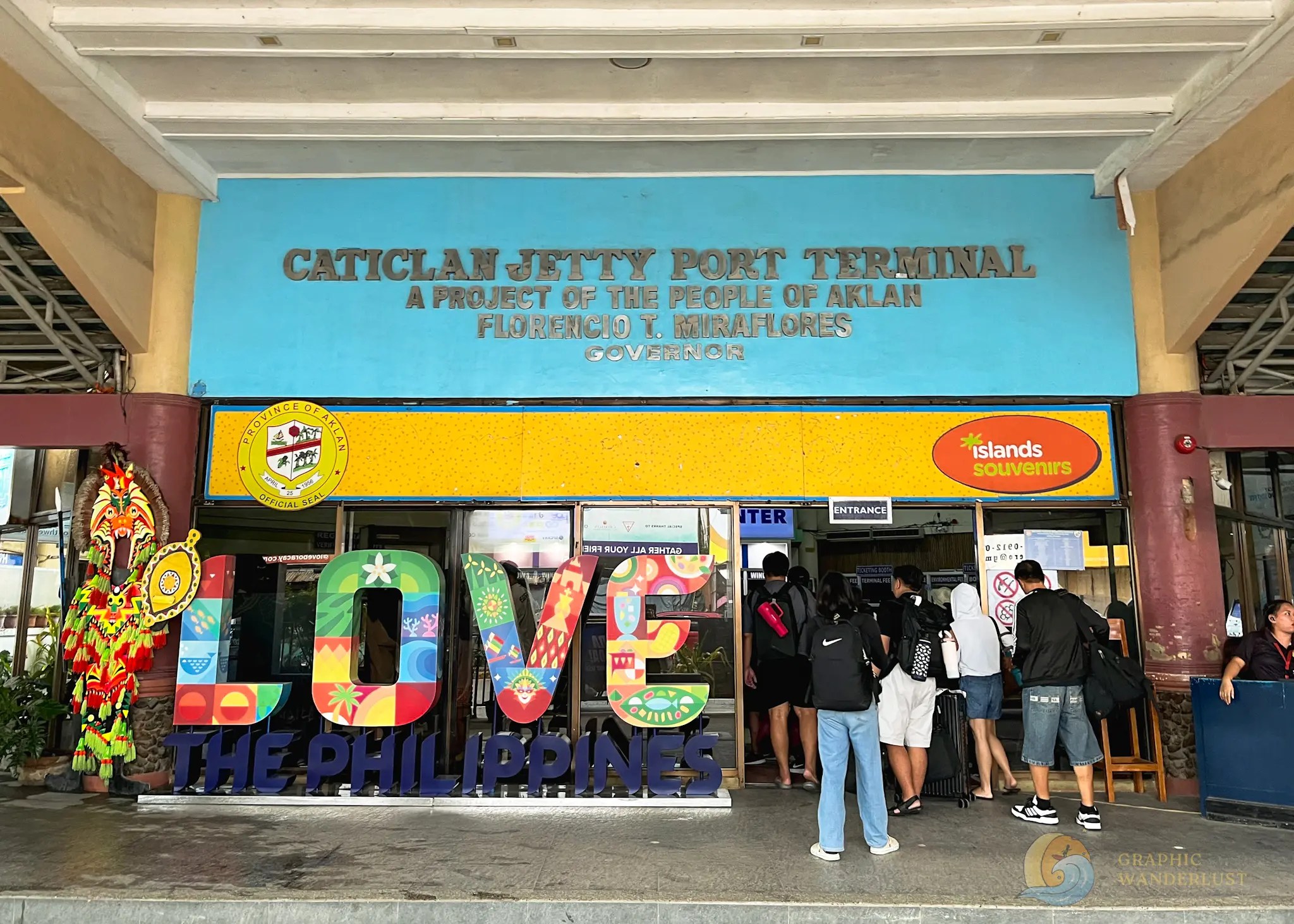
From Boracay Airport, one can reach Caticlan Jetty Port by boarding one of the shared shuttle vans going to it in the Arrivals Area for ₱80 or riding one of the parked tricycles located in the terminal outside of the airport for ₱75.
Once dropped off at the port, follow the listed steps below to board the boat heading to Boracay Island:

- Registration: Present a valid ID at the registration counter inside the port to be assisted in acquiring the required QR code for purchasing a boat ticket. For convenience, you can skip this step by registering online at lezzgo.ph before you arrive at the port and secure the QR code.
- Ticket Payment: Pay the boat, environmental, service, and terminal fees at the ticket booth counter along with the generated QR code during registration. As of the time of my visit, the following is the current total fee per tourist type:
- Boat Manifest: Lodge your name on the boat manifest to be assigned a boat and seat number that you’ll need for boarding.
- Boarding: Look for the name of the boat handed to you in the docking area and board it once found. When inside, locate the assigned seat number to you and hand the card to the personnel when collection starts.
| Tourist Type | Total Fees |
|---|---|
| Domestic | ₱385 |
| Foreign | ₱535 |
Travel time from Caticlan Jetty Port to Boracay Island takes up to five to ten minutes and terminates at either Cagban Jetty Port or Tambisaan Jetty Port, which varies depending on monsoon winds and is announced by local authorities. No need to worry, as each port always has e-tricycles for hire waiting to take passengers in need of transfer to their accommodation.

From the port, travelers have the option to hire a chartered e-tricycle going directly to their accommodation for ₱200 or ride the shared tricycle for ₱25-₱30, depending on the distance covered.
In my experience, the shared tricycle took a longer time to arrive at our booked accommodation as the driver needed to load and unload passengers along the way. But for budget travelers, this option significantly saves you a few hundred pesos. Nonetheless, if you’re traveling in a big group, the chartered e-tricycle will be worth the buck when divided among its members.
Where to Stay in Boracay on a Budget
Aside from its powdery white sand, another thing that never runs out in Boracay is the handful of accommodation options that you can choose from in the different areas and neighborhoods of the island.
For this budget-friendly trip, we’re going to skip the high-end and famous hotel chains and focus on the affordable ones that balance value and accessibility.
Read on to discover the best areas to stay for budget travelers and the advantages of staying in each neighborhood.
Station 3 (Best for Beachfront Views)
For budget-friendly beachfront accommodation, the lodging choices at White Beach’s Station 3 satisfy both value and views.
Running along the same white sand as the pricier and luxurious hotels and resorts in Stations 1 and 2, Station 3 offers cheaper alternatives without missing Boracay’s sunset views. Staying here also rewards travelers with a quieter atmosphere and easy access to a handful of dining spots, including well-known restaurants found along the other stations.
Highly-rated Budget Beachfront Accommodation at Station 3
Bulabog Beach (Best for Budget Travelers)
For those who don’t mind staying within walking distance from Boracay’s famous White Beach and prefer a quiet neighborhood with more affordable accommodation rates, the area near the island’s eastern-facing Bulabog Beach is a budget traveler’s usual base.
With lodging options located just a stone’s throw away from the watersports center on the island, accommodation rates in this neighborhood drop significantly when compared to those in White Beach while still providing quick access to the beach. Not to mention that Bulabog Beach is also known as the best spot to catch sunrise in Boracay.
This is actually the same area where I stayed on my first trip to the island—specifically at Happiness Hostel—and its location is within walking distance of the commercial strip of D’Mall and provides easy access to more affordable dining spots, including home-cooked meals in local carinderias.


Highly-rated Budget Accommodation in Bulabog Beach
Station 1 & 2 Inland Areas (Best for Accessibility)
Balancing affordability with quick access to White Beach and the island’s beating heart, the inland areas near Stations 1 and 2 are another budget accommodation hack when in Boracay.
Tucked within meters of the shores of White Beach or the island’s main road, lodging choices in these neighborhoods provide easy access to the island’s center and plying e-tricycles that can take you to the different attractions of Boracay, all within a budget-friendly nightly rate.
Highly-rated Budget Accommodation in the Inland Areas near Stations 1 and 2
Getting Around Boracay on a Budget
With its small total land area of only 10.32 square kilometers, Boracay is an island destination that can easily be seen within a day.
E-tricycles are the island’s major mode of transportation that takes both locals and tourists to the different attractions in Boracay, including the jetty ports for transiting travelers. These three-wheeled public utility vehicles are Boracay’s kings of the roads and can be classified into two, based on their offered services:

- Green/Blue E-tricycles: The most common vehicle you’ll see on Boracay’s streets, these small three-wheelers can accommodate chartered or special trips for point-to-point service or function as a regular commuter, locally called a regular trip, where you share the ride with other passengers.
Chartered trips start at ₱100 depending on the destination, while regular trips start at ₱15.
For sightseeing tours covering Boracay’s top tourist attractions, you can also rent these e-tricycles for inland tours starting at ₱500/hour, good for four people. - White E-tricycles: The locals’ daily transportation for going from one point to another; the bigger, white e-tricycles that ply along the streets of Boracay are the island’s regular commuter service that drops off and picks up passengers along the way. Similar to their green and blue counterparts, fares start at ₱15 per ride.
The island’s Hop-on-Hop-off Shuttle Service (HOHO Bus) is another good alternative for exploring Boracay Island. This air-conditioned point-to-point service has multiple stops located near top tourist spots and observes a regular trip schedule. Nonetheless, compared to the more common e-tricycles, HOHO rides are only available to pass holders, which can be purchased online or at an on-site sales booth, starting at ₱200 for a round trip.
For a budget-saving alternative, walking is also a popular choice for navigating Boracay, especially in the town center, where various retail and dining establishments dot its streets and stand side by side.
Best Free Things to Do in Boracay
With its popularity as a resort island destination, it’s easy to assume that attractions in Boracay are not free and require admission fees to enter. However, the island’s major tourist spots are actually open to the public and do not require any entrance fees to visit.
In this list, I curated the best free things to do in Boracay that you can include in your DIY itinerary if you have a full two and a half days on the island.
White Beach
The iconic and world-famous beach on the island, White Beach has become Boracay’s poster child, known for its scenic powdery white-sand shore, crystal-clear waters, colorful paraws (small outrigger boats), and majestic sunsets.


Located on the central western side of the island, White Beach stretches for approximately 4 kilometers and is subdivided into three areas, namely Station 1, Station 2, and Station 3, after the docking areas that used to drop off and pick up travelers at the beach during its pre-tourism period.
As time passed, each station developed its own distinguishing image and ambience, mainly attributed to the various retail, dining, and lodging establishments found in each area:
- Station 1: The upscale, wider, and quieter part of White Beach, home to the island’s high-end and luxury beachfront resorts and hotels.
- Station 2: The hectic and most commercialized area of White Beach where the famous retail strip of D’Mall is found and where mid-to-high-range beachfront resorts, hotels, and inns are located.
- Station 3: Another quiet part of White Beach in the south, boasting a rustic ambience and home to budget-friendly beachfront accommodations.
Contrary to the other islands and beach destinations I visited in the country, I also personally found the sand at White Beach top-tier with its powdery and very fine texture and cool temperature despite long heat exposure.
Willy’s Rock

Along with its postcard-worthy white-sand shore and clear waters, White Beach has also become synonymous with Willy’s Rock, a volcanic rock formation fronting Station 1, and famous for its grotto enshrining the Blessed Virgin Mary.
This free-admission Boracay landmark is a striking juxtaposition against White Beach’s soft sand and glassy waters and draws visitors and worshippers, especially during low tide.
Diniwid Beach
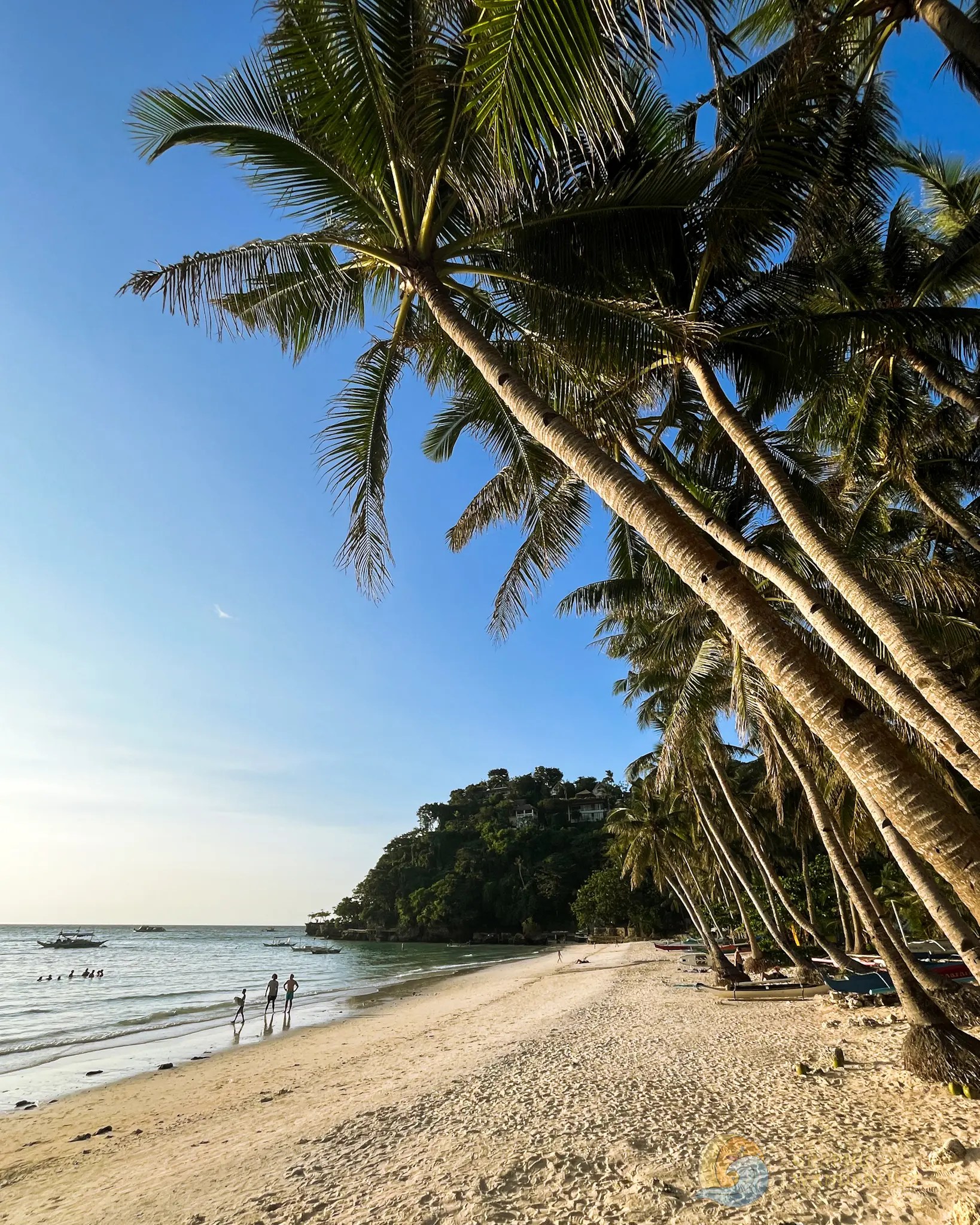
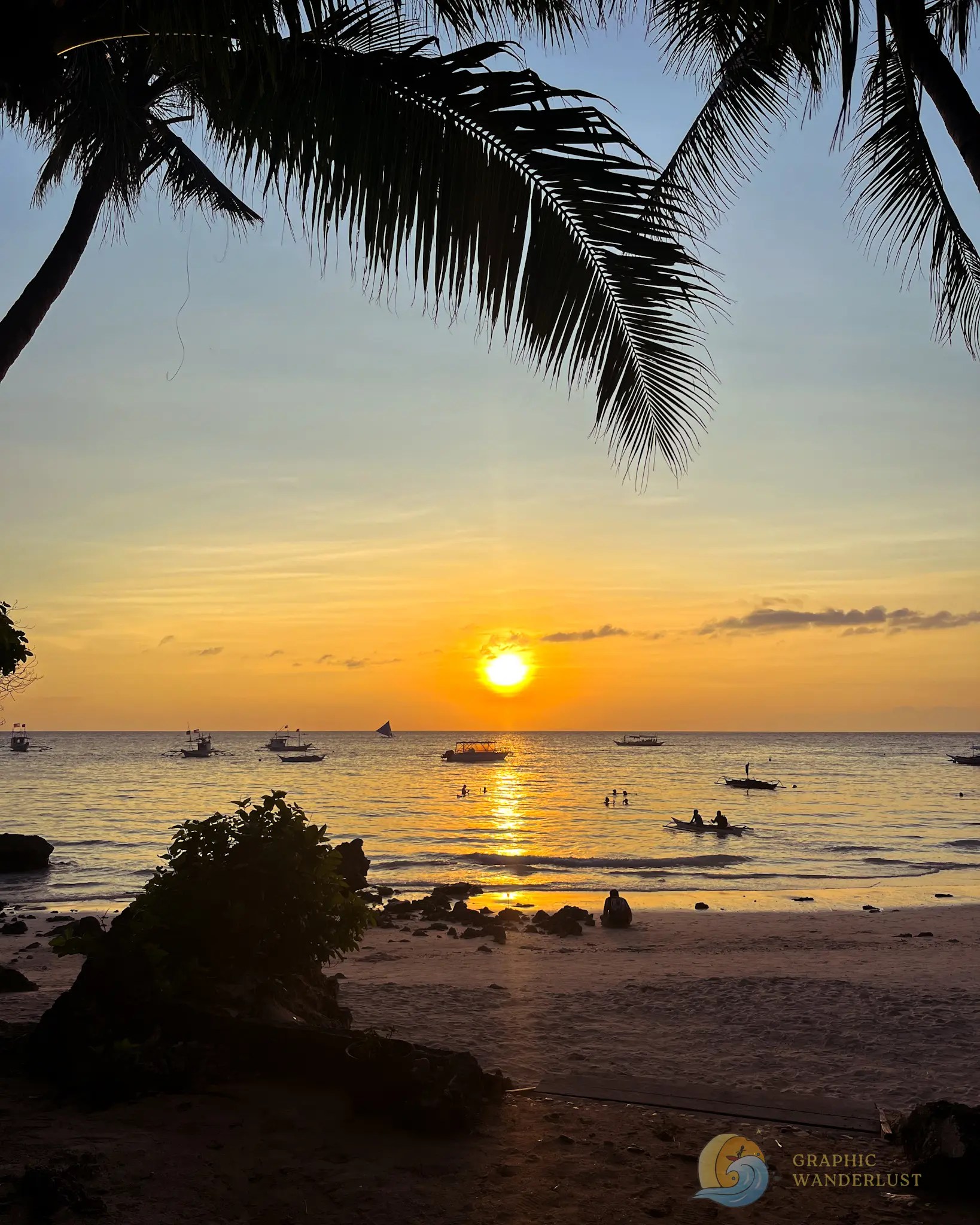
A small cove located just north of the famous White Beach, Diniwid Beach is another must-see Boracay tourist spot that shares the same characteristics as its popular counterpart, minus the buzz and crowd.
Unlike the commercialized ambience of White Beach, Diniwid Beach provides a laid-back, rustic, and quiet atmosphere, and offers stunning sunset views for travelers who want to skip the crowd at White Beach.
With its proximity to the latter, Diniwid Beach can be accessed by passing by Lambros Point, another free-access scenic tourist spot, and a short cliffside path bordering and connecting the two attractions.
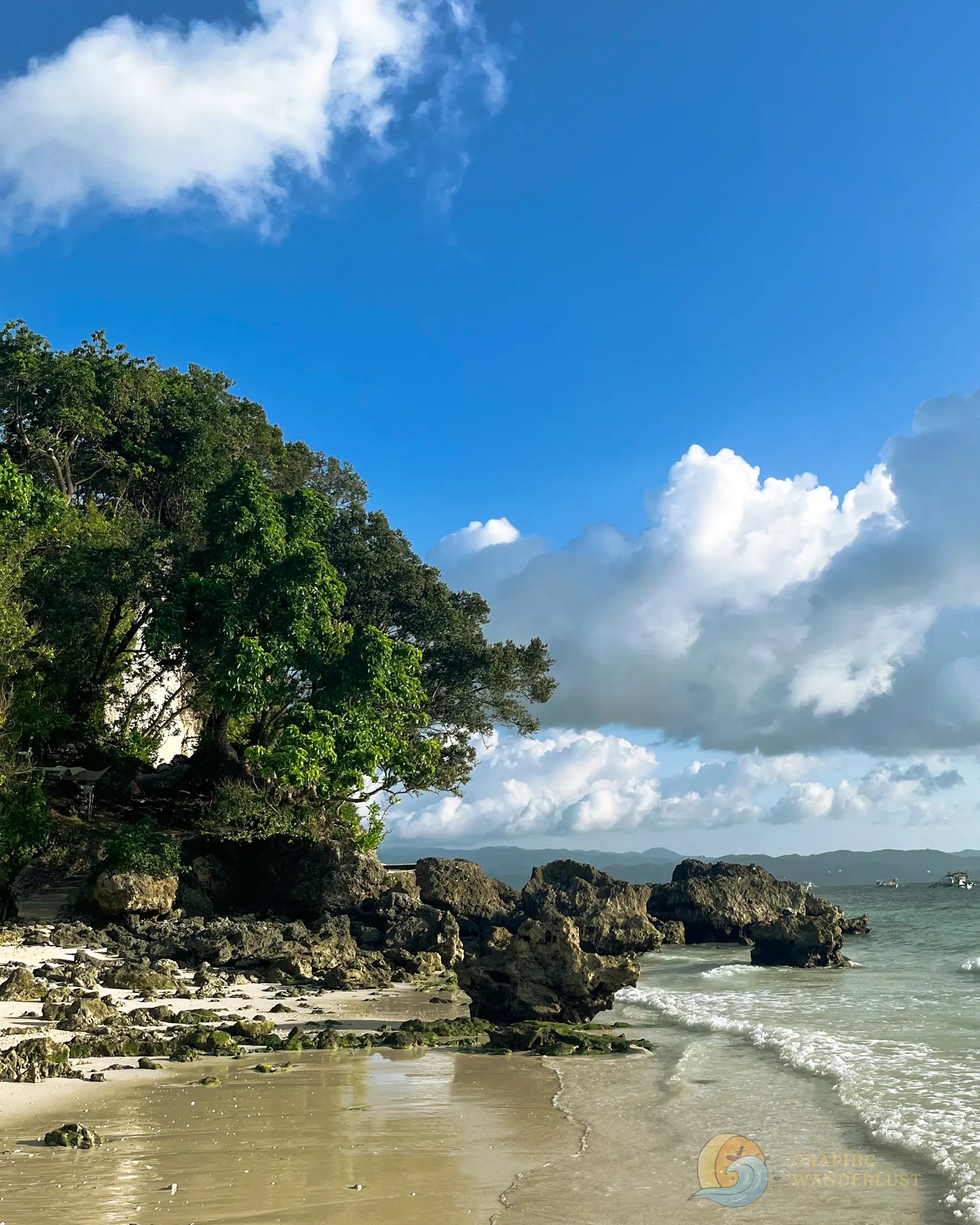
For travelers coming from the other parts of the island, you can also visit Diniwid Beach by hailing an e-tricycle going to it.
Puka Beach
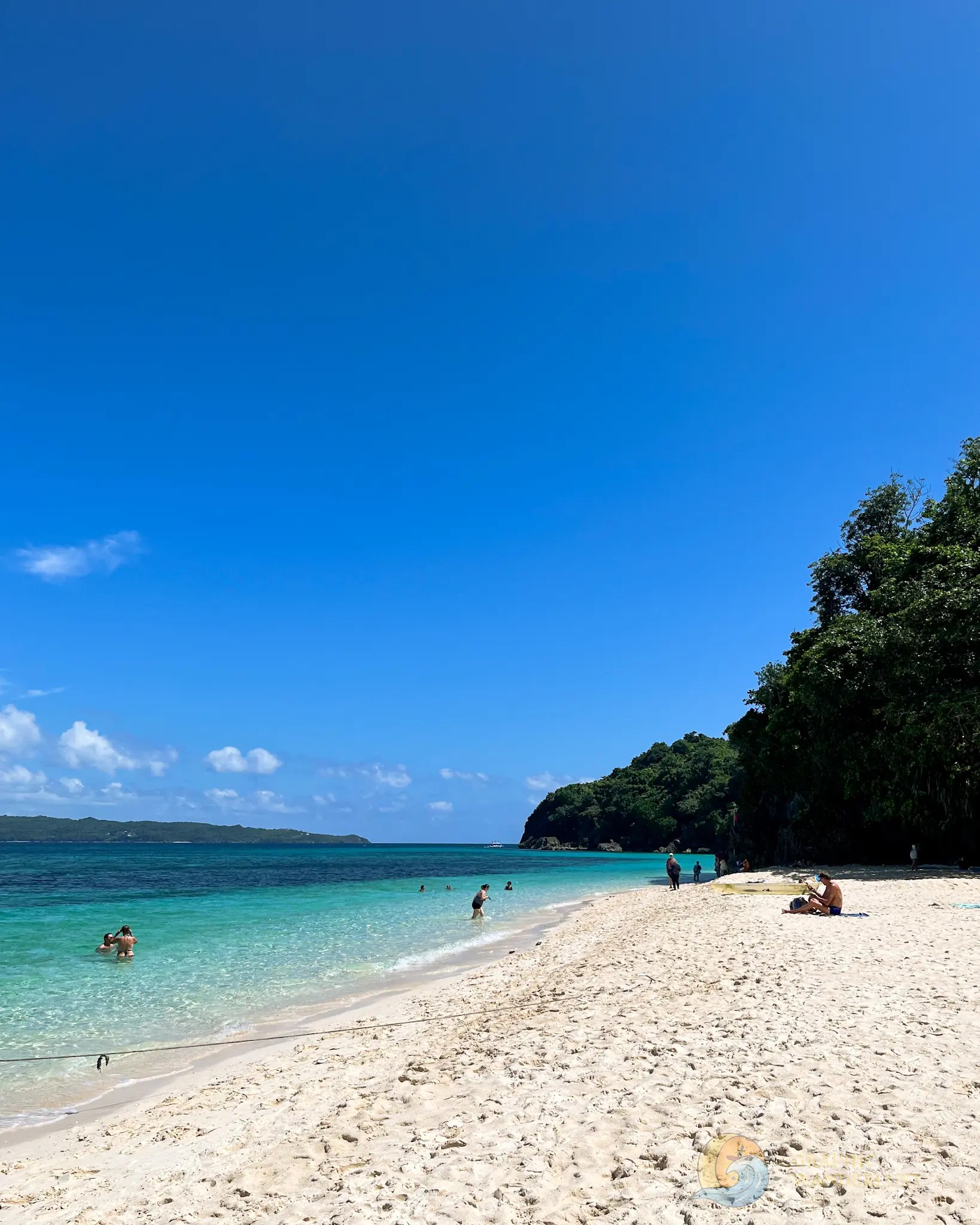
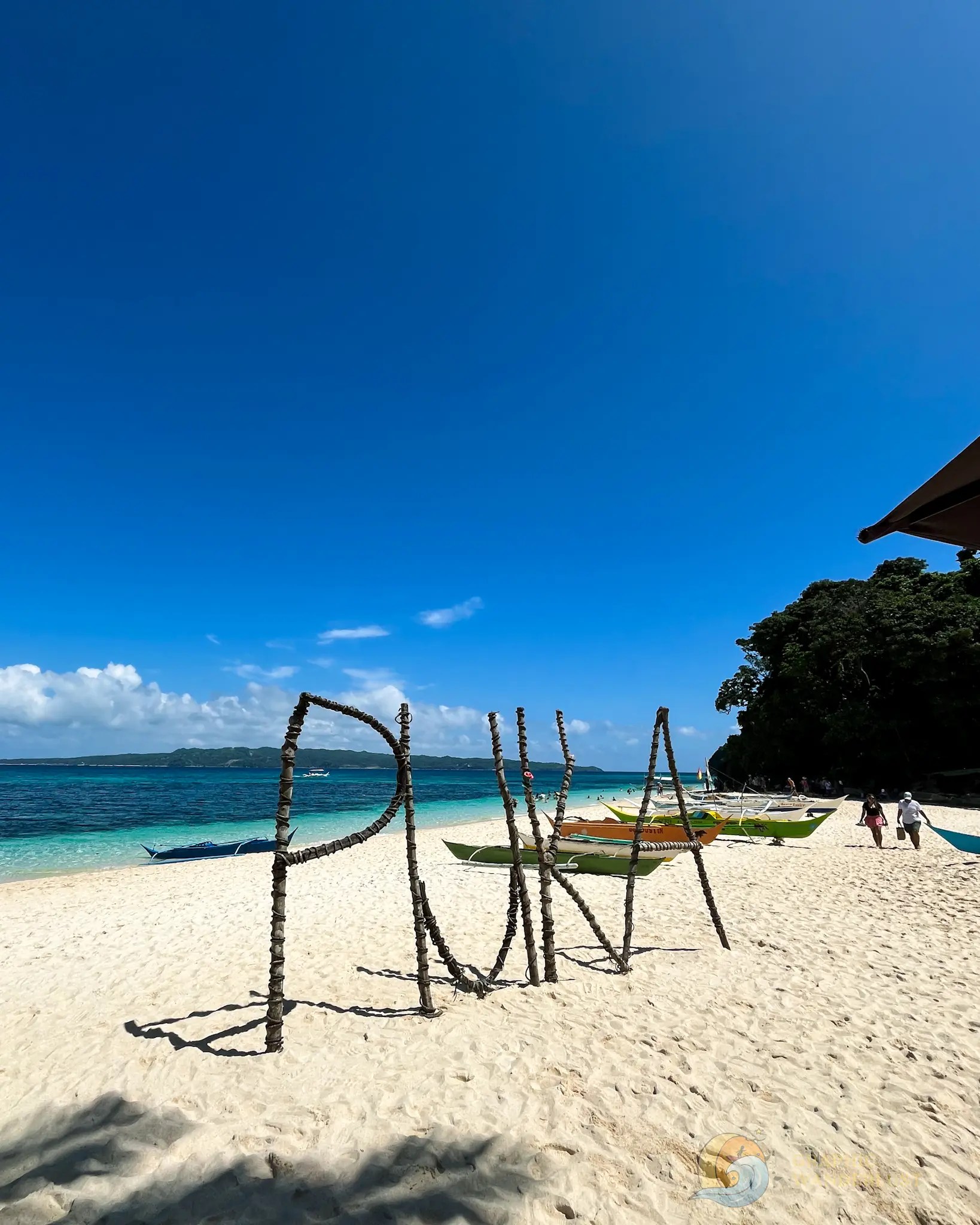
Named after the seashells that used to be abundant in the area, Puka Beach—locally known as Yapak Beach—is another Boracay top tourist destination that should not be missed in any itinerary.
Tucked at the northern tip of the island, this 800-meter beach boasts a white-sand shore (albeit coarser than White Beach’s) and clear turquoise waters, ideal for beach-bumming. Aside from its famous strip where most island-hopping tours dock, Puka Beach also has a few coves where tourists can escape the usual crowd.
From the town center, travelers can easily reach Puka Beach by hailing an e-tricycle for ₱300 or through inland tours, which make a usual stop at this famous tourist spot.
Ilig-iligan Beach

Maximize your trip to the north by dropping by a lesser-visited Boracay tourist spot known for its off-the-grid tropical ambience and uncrowded scenery at Ilig-iligan Beach.
Located at the northeastern coast of the island, this pristine beach in Barangay Yapak lies 1.7 kilometers from the famous Puka Beach and boasts rugged and pristine scenery, contrasting with the west’s famous White Beach.
Aside from its tranquil atmosphere, Ilig-iligan Beach boasts foliage-covered limestone islets and large coral stones by its shores, completing the place’s idyllic backdrop.

From Puka Beach, you can easily reach Ilig-iligan Beach by chartering an e-tricycle going to it or walk for half an hour for a budget-saving alternative.
In my recent trip to the place, we actually tried walking to it from Puka Beach, but because of the steep inclines found along the way, we eventually decided to ride an e-tricycle heading to it for ₱30.
Bulabog Beach
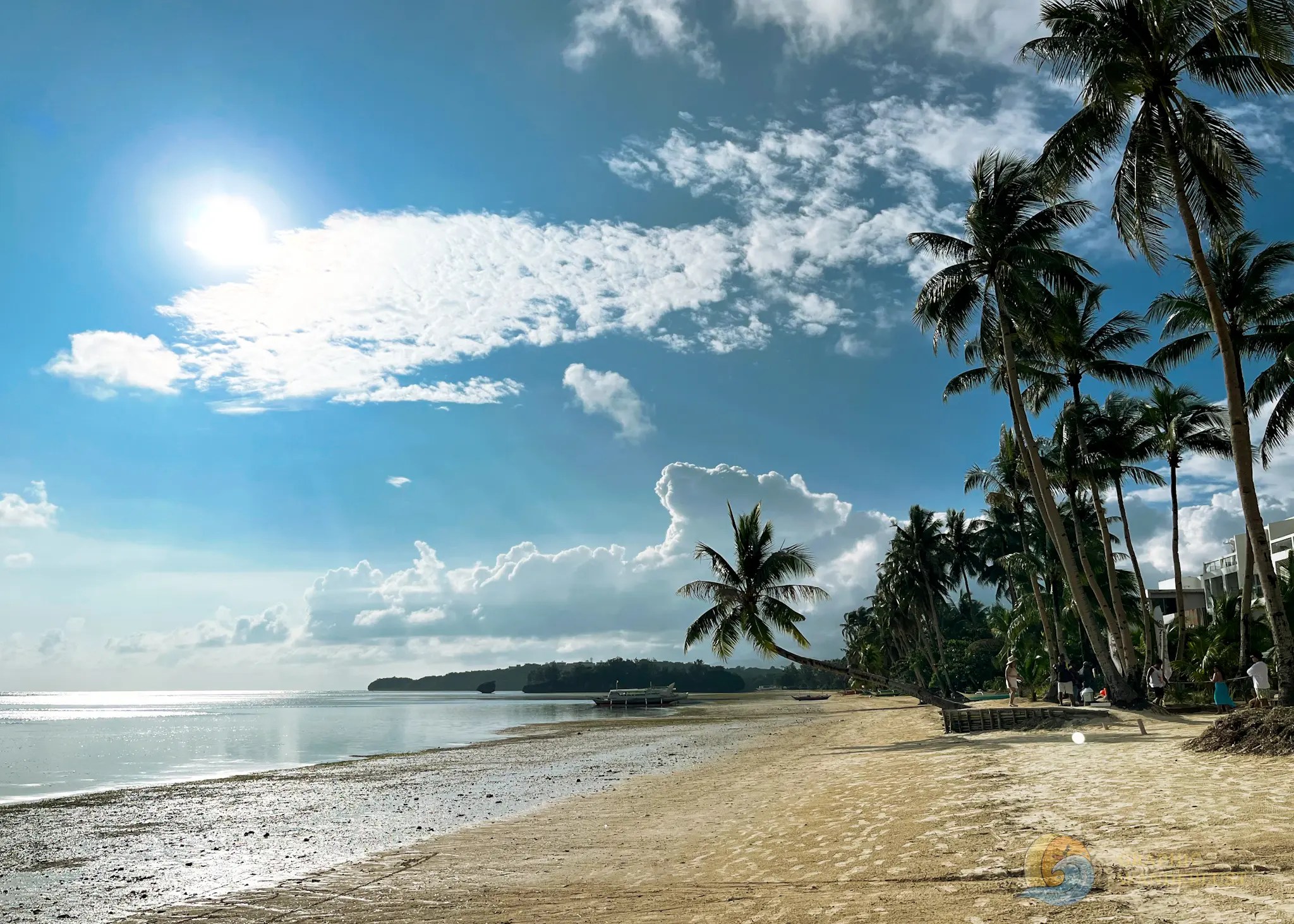
Known as the hub for watersports activities on the island, the eastern-facing Bulabog Beach contrasts Boracay’s famous White Beach with its quiet and chill coastal ambience, underscored by a canopy of kites in the sky.
With its location on the eastern seaboard, Bulabog Beach receives strong wind currents ideal for water sports like kiteboarding and windsurfing. It also serves as a respite for tourists during the rainy (Habagat) season, when water activities from White Beach relocate to Bulabog’s calmer, sheltered waters.

Furthermore, the beach is known to offer the best views for those who want to catch the sunrise on the island.
Ati Tribe Village

Typically overshadowed by the island’s golden sunsets and lively nightlife and tourist activities, the Ati Tribe Village in Barangay Manoc-manoc serves as an important reminder—not just of Boracay’s origins and its early inhabitants—but also of the relevance of preserving heritage and standing up for indigenous rights.
Located a couple of minutes away from the southern end of Bulabog Beach, this small neighborhood of the island’s original settlers—the Ati tribe—provides an opportunity for tourists to get to know Boracay’s natives and their culture and tradition through the Bihasin Ati Living Heritage Center, a small exhibition showcasing their rich heritage and collection of artifacts.


Aside from exhibiting the tribe’s culture and traditions, the center also highlights the Ati’s struggles for ancestral domain claims and discrimination, threatened by big corporations operating on the island and modern society’s skin-color stereotypes.

Admission to the village is free, but donations and purchase of the tribe’s woven handicrafts in the area are highly appreciated by the Ati themselves. (I have personally bought one of these woven products, and the appreciation and smile it brought to their faces were truly priceless.)
Where to Eat in Boracay on a Budget
After doing research prior to my trip to the island, it can be easily implied that Boracay’s dining scene is not cheap. As a matter of fact, I was surprised to realize that its famous restaurants can match the hefty prices in Manila’s business districts.
Nonetheless, that didn’t discourage me from exploring the island’s well-loved value dining spots and a few famous and higher-end ones that are worth splurging on. Read on to discover what these are in the following budget-friendly list:
Must-Try Dining Spots
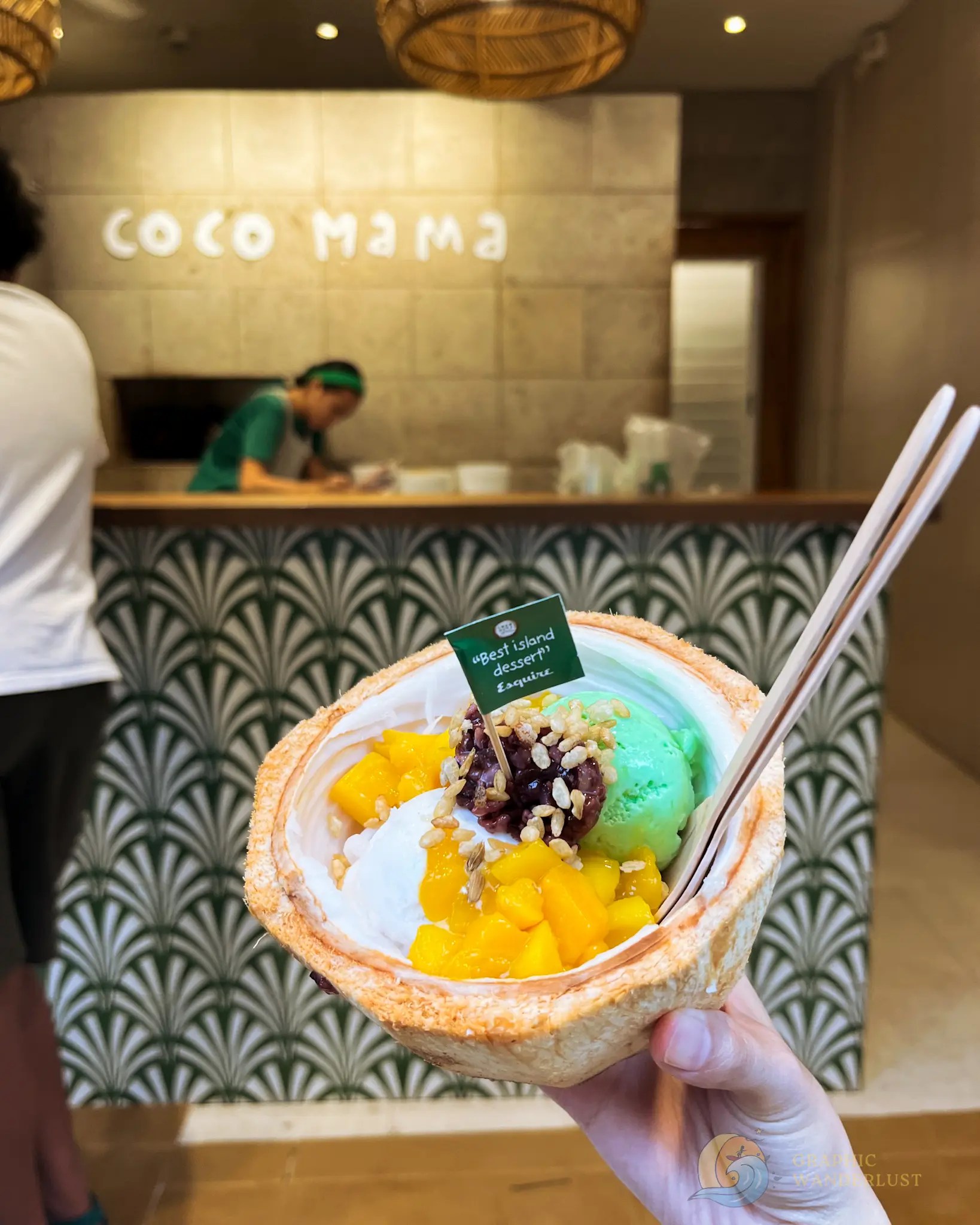
- Coco Mama: Boracay’s well-loved dessert store known for its coconut and pandan ice cream served in a shaved bowl of coconut, topped with rice cake, crispies, and mango bits for ₱220.
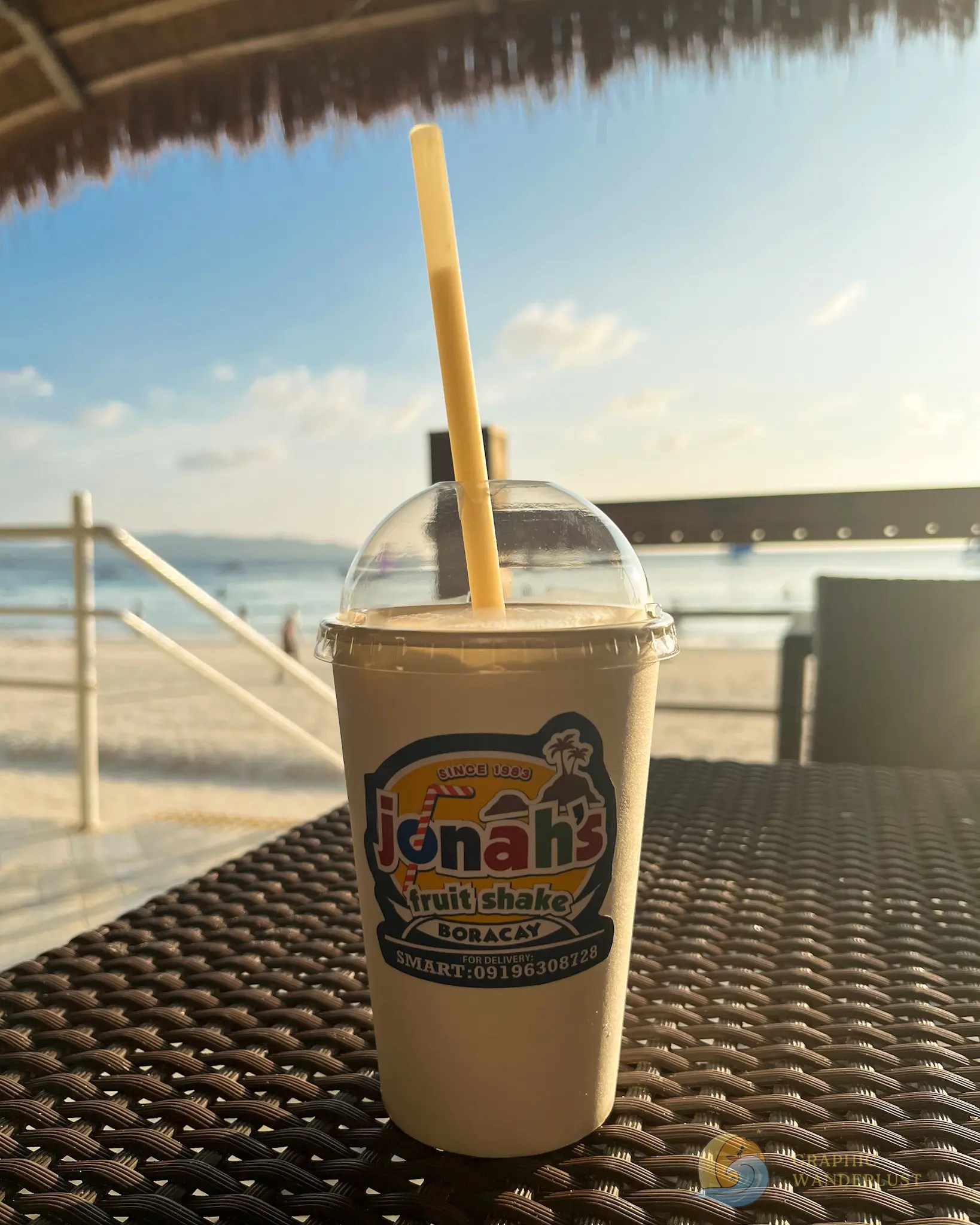
- Jonah’s Fruit Shake: A Boracay Island dining scene staple and frontrunner, serving refreshing fruit shakes starting at ₱170 and with numerous branches scattered in the town center.
Cheap Eats


- Real Coffee & Tea Cafe: A Boracay dining scene frontrunner established in 1996 and known for its Calamansi Muffin, costing ₱90.
- Kolai Mangyan: A Filipino casual restaurant famous for its budbud (rice toppings) meals starting at ₱140.
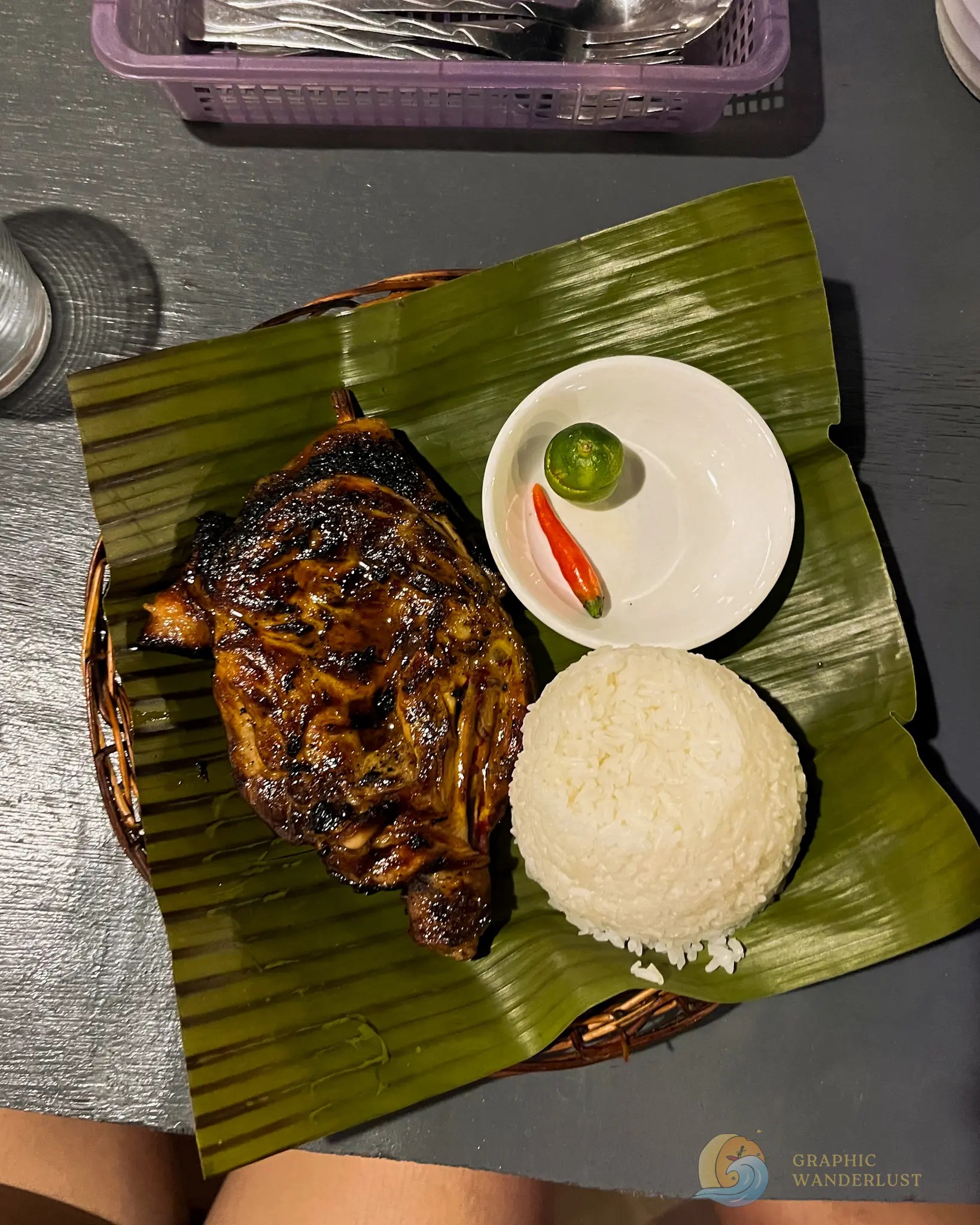
- Aidalicious (Bacoleño Chicken Inasal Bacolod): Another Filipino casual dining spot, famed for its chicken inasal (Filipino-style grilled chicken) meals, starting at ₱235.
- Merly’s BBQ: A small dining shack at Station 1, well-known for its Chori Burger, with longganisa (Filipino sausage) as its patty, which costs ₱80.
Splurge-worthy Restaurants


- Dinibeach Bar & Restaurant: The sole beachfront dining spot at Diniwid Beach serving grub and alcohol starting at ₱280. (Their nachos are a must-try!)
- Calma Cafe & Restaurant: One of Bulabog Beach’s well-loved beachfront cafes, boasting lush tropical scenery and serving coffee and meals starting at ₱160.
Sample 4-Day Boracay Itinerary Below ₱10,000
For a budget-friendly trip to the island below ₱10,000, here is the actual itinerary I followed for a first-timer 4-day Boracay DIY itinerary:
Day 1 – Arrival in Boracay & White Beach Sunset
8:45 AM – Arrival at NAIA Terminal 3
11:30 AM – ETD for Boracay Airport
12:45 PM – Arrival at Boracay Airport
1:30 PM – Arrival at Caticlan Jetty Port
1:55 PM – Arrival at Cagban Jetty Port
2:35 PM – Check-in at Happiness Hostel
3:20 PM – Head to D’Mall to grab late lunch
3:45 PM – Late lunch at Andok’s
4:00 PM – Desserts at Coco Mama
4:20 PM – Explore Station 2
4:55 PM – 5:45 PM – Sunset catching and fruit shake at Jony’s Restaurant
6:00 PM – 8:00 PM – Quick rest at hostel
8:15 PM – Dinner at Cafe Uno
9:00 PM – Drinks at Mai Tai Beach Bar
10:00 PM – Head back to hostel and rest
Day 2 – DIY Puka and Ilig-iligan Beach
7:00 AM – Wake up and prep
8:45 AM – Depart for the breakfast spot of the day
9:05 AM – Late breakfast at Real Coffee and Tea Cafe
10:10 AM – Head to Puka Beach via Chartered E-tricycle
10:30 AM – 12:30 PM – Arrival and beach bumming at Puka Beach
1:40 PM – Arrival at Ilig-iligan Beach
1:50 PM – Late lunch at Kaaya Restaurant
2:30 PM – 4:00 PM – Beach bumming at Ilig-iligan Beach
4:30 PM – Arrival at Station 1
4:35 PM – Drinks at Jonah’s Fruit Shake
5:00 PM – 5:45 PM: Sunset watching at Station 1
6:00 PM – Souvenir shopping at D’Mall
6:15 PM – Dinner at Aidalicious
7:00 PM – Souvenir shopping at D’Mall
7:15 PM – Head back to hostel and rest
Day 3 – DIY Bulabog and Diniwid Beach & Ati Tribe Village
6:00 AM – Wake up and prep
7:10 AM – Head to Bulabog Beach
7:20 AM – Arrival and sightseeing at Bulabog Beach
7:40 AM – Breakfast at Calma Cafe and Restaurant
8:45 AM – Arrival at Ati Tribe Village
9:00 AM – Walk to White Beach
9:35 AM – Buy calamansi muffin pasalubong at Real Coffee and Tea Coffee
10:30 AM – 12:00 PM – Arrival and beach bumming at Station 3
1:10 PM – Lunch at Mang Inasal at Station 2
1:30 PM – 2:00 PM – Stroll along Station 1
2:30 PM – Head to Diniwid Beach via E-Tricycle
3:00 PM – 6:00 PM – Beach bumming and sunset catching at Diniwid Beach
6:35 PM – Head back to Station 1
6:55 PM – Dinner at Kolai Mangyan
8:00 PM – Arrive back at the hostel, rest, and pack up
Day 4: Departure to Manila from Boracay
4:00 AM – Wake up and prep
5:05 AM – Depart for Cagban Jetty Port
5:25 AM – Arrival at Cagban Jetty Port
5:35 AM – Boat boarding
5:45 AM – Arrival at Caticlan Jetty Port
5:50 AM – Tricycle going to Boracay Airport
6:00 AM – Arrival at Boracay Airport
9:10 AM – ETD for Manila
10:25 AM – Arrival in Manila
4-Day Boracay Itinerary Budget Breakdown
For my four days on the island, here is my less than ₱10,000 budget breakdown of my recent trip to Boracay:
| Particulars | Amount |
|---|---|
| RT Manila-Boracay Flight | ₱4,751.24 |
| Airport Meal | ₱147.00 |
| Shared Tricycle to Caticlan Jetty Port | ₱75.00 |
| Boat, Terminal, Environmental & Service Fee to Cagban Jetty Port | ₱385.00 |
| E-Tricycle to Happiness Hostel | ₱30.00 |
| Andok’s Lunch | ₱145.00 |
| Coco Mama (Shared) | ₱110.00 |
| Cafe Uno Dinner | ₱393.00 |
| Mai Tai Mocktail | ₱243.00 |
| Real Coffee & Tea Cafe Breakfast | ₱253.00 |
| Shared E-Tricycle to Puka Beach | ₱150.00 |
| E-Tricycle to Ilig-iligan Beach | ₱30.00 |
| Fresh Coconut (Shared) at Ilig-iligan Beach | ₱50.00 |
| Kaaya Restaurant Lunch | ₱275.00 |
| Shared E-Tricycle to Station 1 | ₱30.00 |
| Jonah’s Fruit Shake | ₱180.00 |
| Aidalicious Dinner | ₱259.00 |
| Ref Magnet Souvenir | ₱100.00 |
| Calma Cafe and Restaurant Breakfast | ₱435.00 |
| Ati Tribe Village Coin Purse and Donation | ₱120.00 |
| Mang Inasal Lunch | ₱150.00 |
| Dinibeach Nachos & Aperitzer | ₱541.78 |
| E-tricycle to Kolai Mangyan | ₱100.00 |
| Kolai Mangyan Dinner | ₱140.00 |
| E-tricycle to Cagban Port | ₱100.00 |
| Boat, Terminal and Service Fee to Caticlan Port | ₱220.00 |
| Tricycle to Boracay Airport | ₱50.00 |
| Souvenir Delicacies | ₱240.00 |
| Airport Breakfast | ₱144.00 |
| Grand Total | ₱9,847.02 |
It’s amusing to think that after years of exploring the Philippines, I only recently made it to Boracay—a place that is usually the starting line for most Filipino travelers.
Nonetheless, I also think that without my prior experience and knowledge of the country’s other destinations, I wouldn’t get to appreciate the island’s innate beauty and realize the contrasting reality of Boracay: behind its majestic sunsets, world-class white-sand beaches, and mesmerizing crystal-clear turquoise waters lies the harsh reality and treatment of the marginalized community of the island’s Ati tribe and their continuous struggle to have a place in their own ancestral land.
This further reinforces my belief that travel is indeed political, no matter how little you consider it to be. It’s either you’re living within the comforts of your own privileges or intentionally turning a blind eye to a system that keeps on oppressing the vulnerable and marginalized.
Ready to explore Boracay in a mindful, conscious light? Which spot are you most excited to see? Let me know your thoughts in the comments below!
If you also find this post useful, you can support me in creating more travel and hiking guides in the future! Just tap on my Ko-fi or Buy Me a Coffee profile to get started, or share this post with your friends or socials for free!
Discover more top tourist spots in the Philippines!





Leave a Reply