

As the Philippines started easing from the drastic effects of the pandemic, more and more provinces have started reopening their tourism, first to locals and eventually to international travelers who want to experience the tropical adventure that the country has.
Further into the latter part of 2021, restrictions have started to relax and RT-PCR and antigen tests were lifted for fully vaccinated individuals when visiting select provinces making domestic travel more accessible. One of these easy-entry destinations is the province of Bohol.
Located at the central part of Visayas region, Bohol is widely known for its unique Chocolate Hills and as home to the small primates called tarsiers. The province has also gained popularity for its picturesque white sand beaches and rich marine life diving spots.
I was planning to visit Bohol last December 2021 but due to some problems encountered along the way and a super typhoon hitting the province, I was forced to postpone it until I learned that it has reopened again after the devastation and made it my destination for my short break from work last February.
Within two weeks, I was able to book my roundtrip flight tickets, reserved a hotel room and scored tour packages good for two days.
2021 vs. 2022 Airport Operations
Almost a year after I have last been in an airport, I was surprised with the handful of changes that happened during this span of time.

First is the number of people. Back in 2021, when we were going to Coron, Palawan, the airport was nearly empty with few personnel and travelers seen around. But recently, baggage drop-off counters were back with long queues and chairs at boarding gates were filled with passengers waiting for their flights. Restaurants and food kiosks that were closed during our last visit were also already open and operating signaling regular foot traffic.
Second is the travel requirements. Compared to last year when the personnel checked our travel requirements one-by-one at the bag drop-off counter, NAIA Terminal 3 is very lenient now in checking requirements that we did not experience have anyone check our vaccination cards. Probably due to the fact that we did not have checked in baggage, all we needed to present was our boarding passes.
We also had similar experiences at Bohol-Panglao International Airport during our arrival and departure making me think that air travel is almost back to normal now.
3 Days and 3 Nights in Bohol
Typically, travelers make Bohol a side trip when visiting the nearby province of Cebu and spend around two days exploring the island. This timeframe may be enough to see the famous tourist spots in the area but may not be when you want to fully appreciate the beauty of Bohol.
Since we wanted to have a peaceful and slow vacation, we decided to stay in the province for three nights and explore its famous land attractions. We skipped the island hopping part since I went with my mom who has phobia of the water but that did not stop me from falling in love with Bohol.
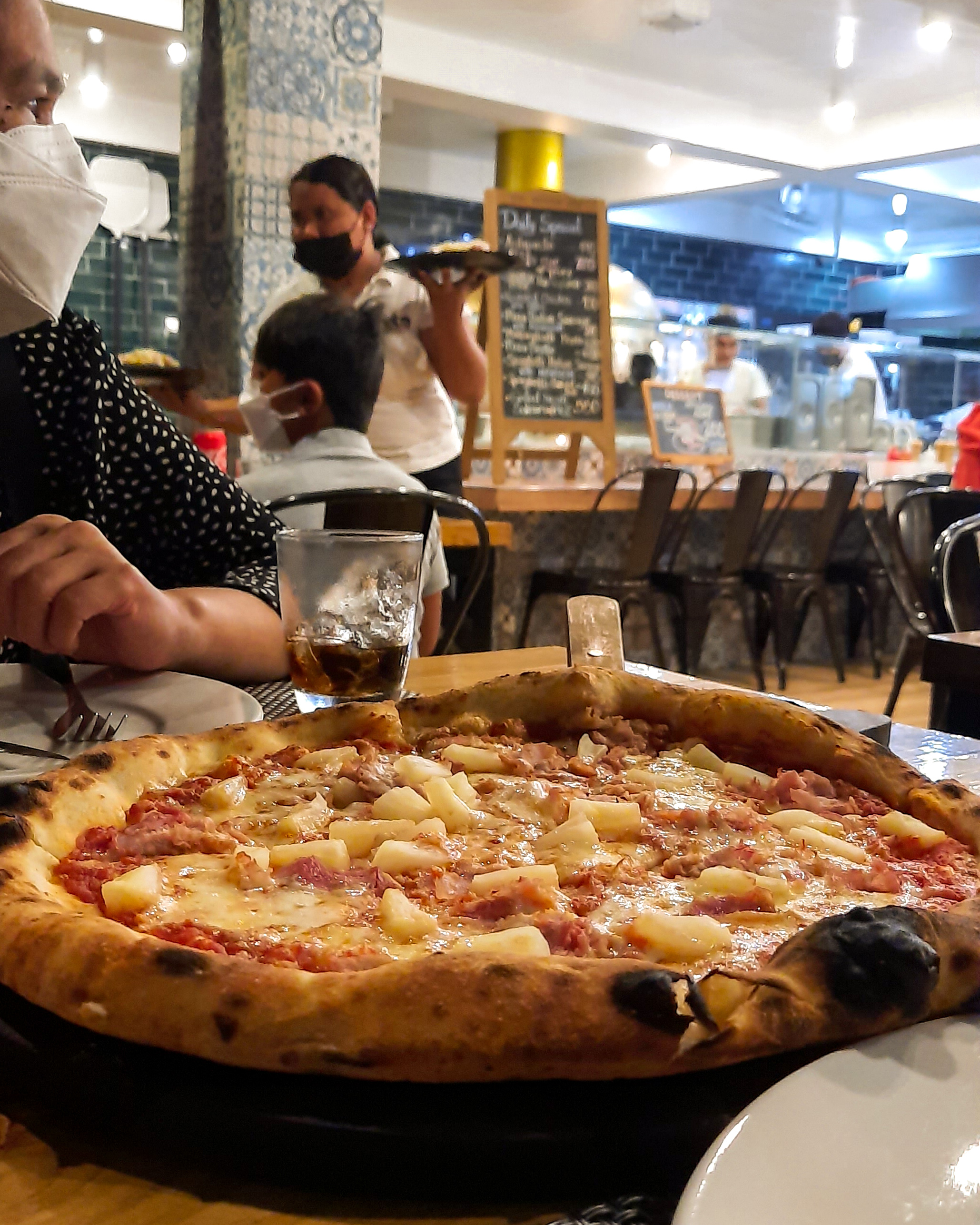
We arrived late afternoon in the province so it did not take long for us to start our Bohol experience, first in an Italian restaurant called Toto e Peppino. We were originally planning to have dinner at the more famous Giuseppe Pizzeria and Sicilian Roast, but it was too far from our location and were really hungry at that time. During our visit, we tried Toto e Peppino’s Spaghetti Carbonara (₱380/US$7.28) and brick oven Hawaiian Pizza (₱480/US$9.19).

Since it was our first time visiting Bohol, we couldn’t skip the part of seeing its famous Chocolate Hills and tarsiers that are part of most tour organizers’ Countryside Tour. Aside from these, the latter also includes trips to Bilar Manmade Forest, Loboc River, Baclayon Church and Blood Compact Shrine.
Prior to our departure for Bohol, I’ve already booked a tour online with one of the accredited travel and tour operators in the province that you can find at the Bohol Tourism website. But upon reaching the place, I realized that booking a tour service isn’t really necessary because (1), unlike in other destinations, it is not a requirement and (2) there are a handful of tour services being offered by tour organizers most especially around the Alona Beach area. But if you want a hassle-free trip, I definitely suggest booking your tour services beforehand.
For this trip, I booked Seashine Travel and Tour Services who became our tour guide and transport service for both our Countryside and Panglao Land Tour and airport transfers.
Our first whole day in Bohol was spent discovering the things that made the province famous for like the well-known Chocolate Hills.

Located at the center of Bohol in the municipality of Carmen, I was so keen of seeing this famous tourist spot because, as I was growing up, I always saw these series of hills in my textbooks and was curious on how it looked in real life. I was also curious on what its color will be during our visit knowing that the hills change color from green to brown and vice versa depending on the season.
Honestly, I did not have that “wow” moment when I saw these land formations in real life but I was more amazed with the greenery surrounding the hills considering that a typhoon struck the province two months earlier. I was also amazed on how steep each hill is, making me think that it will be difficult to hike it.
Our second stop for the day was seeing tarsiers in a zoological and botanical garden called Bohol Enchanted in the municipality of Bilar.

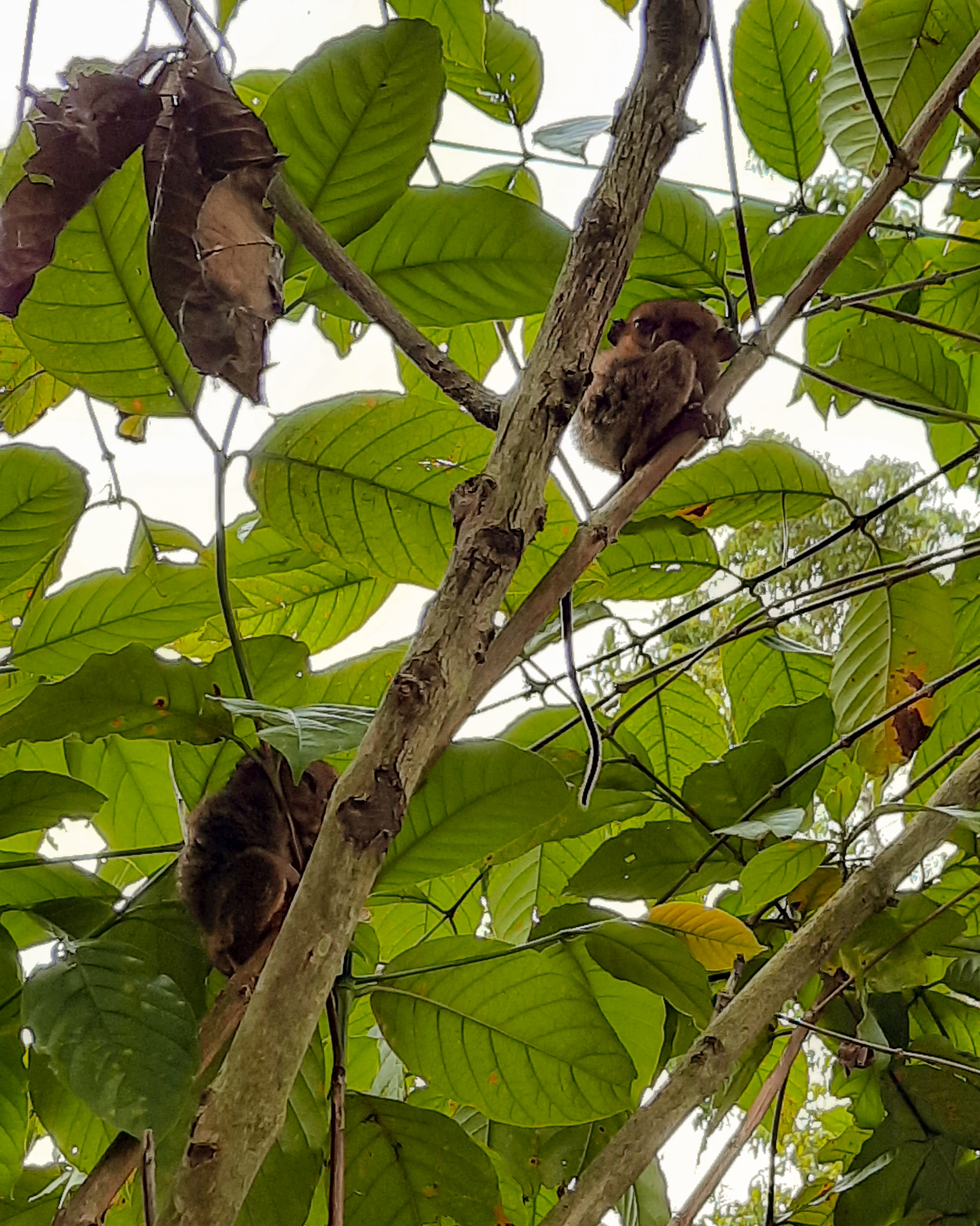
Unlike with Chocolate Hills, I was amazed upon seeing these nocturnal animals because they are really small in real life—only a few inches in size—and cute while hanging on a tree branch. They also look very unique with their big brown eyes and long tail. According to our guide, there were eight tarsiers in the area before Super Typhoon Odette hit the province and only four returned to the place. It was also nice to learn that the tarsiers are being conserved well with the staff letting them free to roam and feed themselves and asking visitors to be quiet when seeing the animals.
Aside from tarsiers, Bohol Enchanted houses other different kinds of animals like butterflies and rabbits. There’s also a small carinderia-style dining spot at the entrance that serves affordable Filipino and Western dishes where we also had our lunch.


Another destination that I was looking forward to see is Bilar Manmade Forest found in the municipality of the same name. What make this tourist spot unique are the towering green trees that border this long curving national road and that were planted by locals 25 years ago.
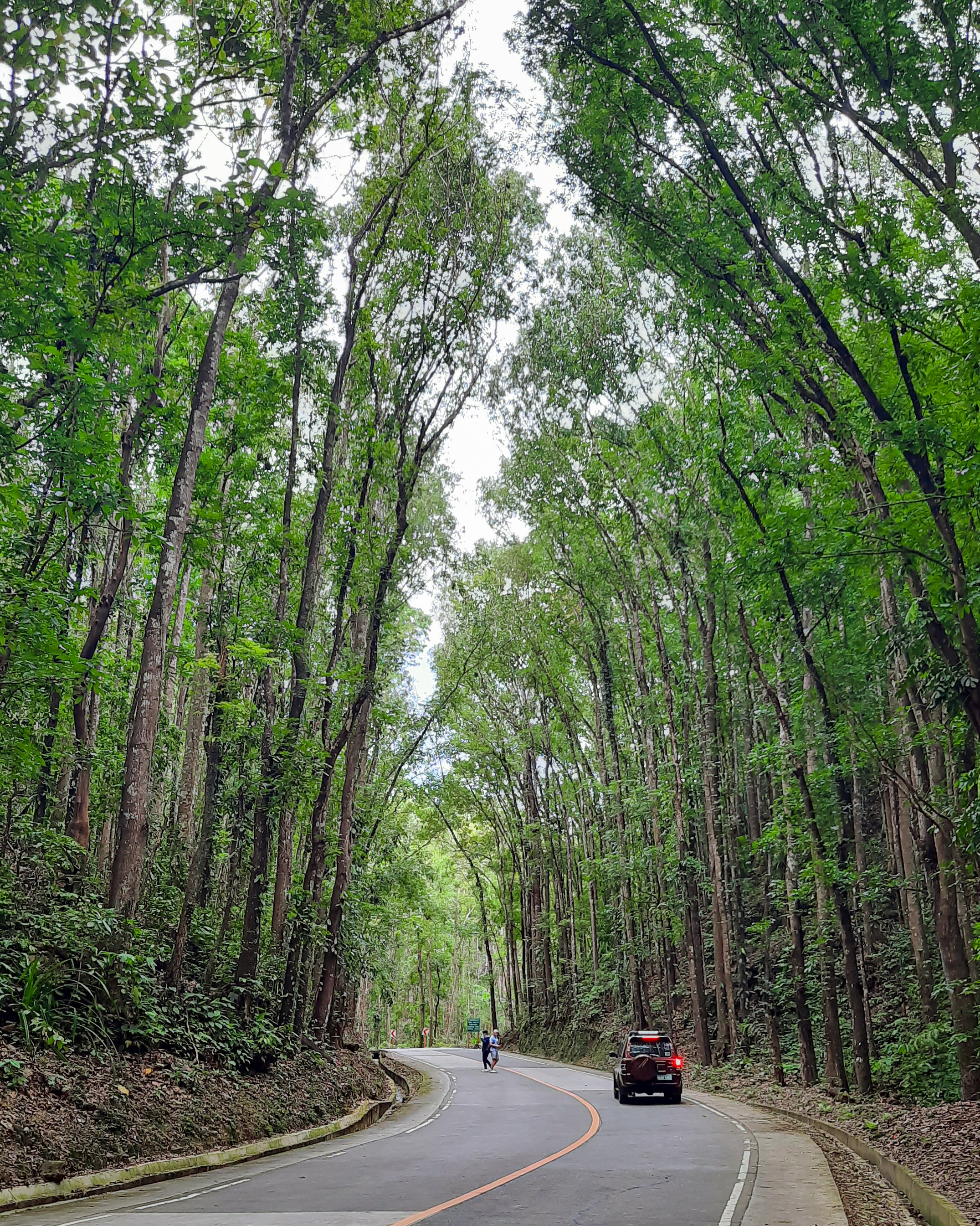

Apparently, there’s really not much to do in the place aside from photo ops—that one needs to be cautious of doing as there are a handful of vehicles that pass by the area—but if you’re a nature lover like me, it will make you think how a small act of planting a tree can make a great difference in the future when combined together. It was also amazing to see how locals restored the tourist spot after being damaged by the typhoon a few months ago though there were some trees that retained its slanting positions as a damage from the storm.
I was also looking forward to see Loboc River and its enchanting green waters but since we did not had lunch at the famous Loboc Floating Restaurant and was too early for the river’s March reopening, we weren’t able to stop by at the place and visit it. But as we made our way to our next destination, we had a chance to get a glimpse of this natural beauty most especially when we crossed the bridge in Loboc town.
The last few hours of our tour were spent visiting Baclayon Church, an 18th century Catholic church made of corals and played an important role in the birth of Christianity in Bohol and a mini zoo called Xzootic Animal Park and Butterfly Garden in the municipality of Loay.

Honestly, the latter is my least favorite part of this trip as I don’t support the idea of caging animals in a zoo most especially when the animals are not well-taken care of which, unfortunately, was what I saw in Xzootic Animal Park. The python snakes were impressively large but they don’t seem to be enjoying their current habitat and seemed stressed. The monkeys and crocodile also looked the same. The only animals that seem to be fine with their habitat are the peacock and the chickens but aside from them, the place looks depressing.
We were also supposed to drop by at the historic Blood Compact Shrine, a monument dedicated to the friendship treaty between Bohol leader Datu Sikatuna and Spanish explorer Miguel Lopez de Legazpi in the 16th century, but our tour guide has said that the tourist spot was under renovation at that time and we just headed to a souvenir shop instead before ending our first day of tour.
Since there wasn’t any tour that included a visit to it and it was a walking distance from our accommodation that time, my mom and I also dropped by at the famous white sand Alona Beach located at the town center of Panglao after our tour.
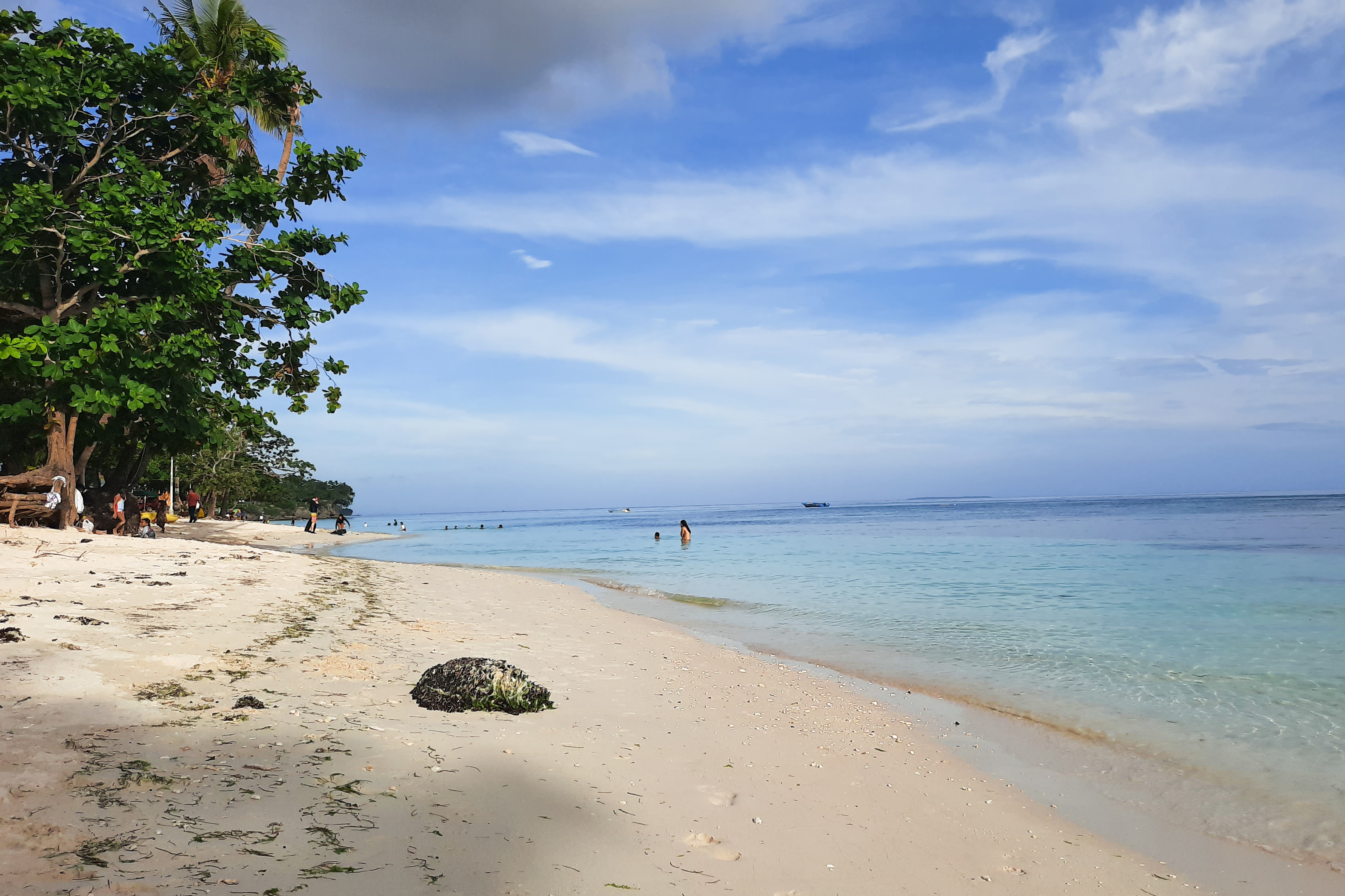
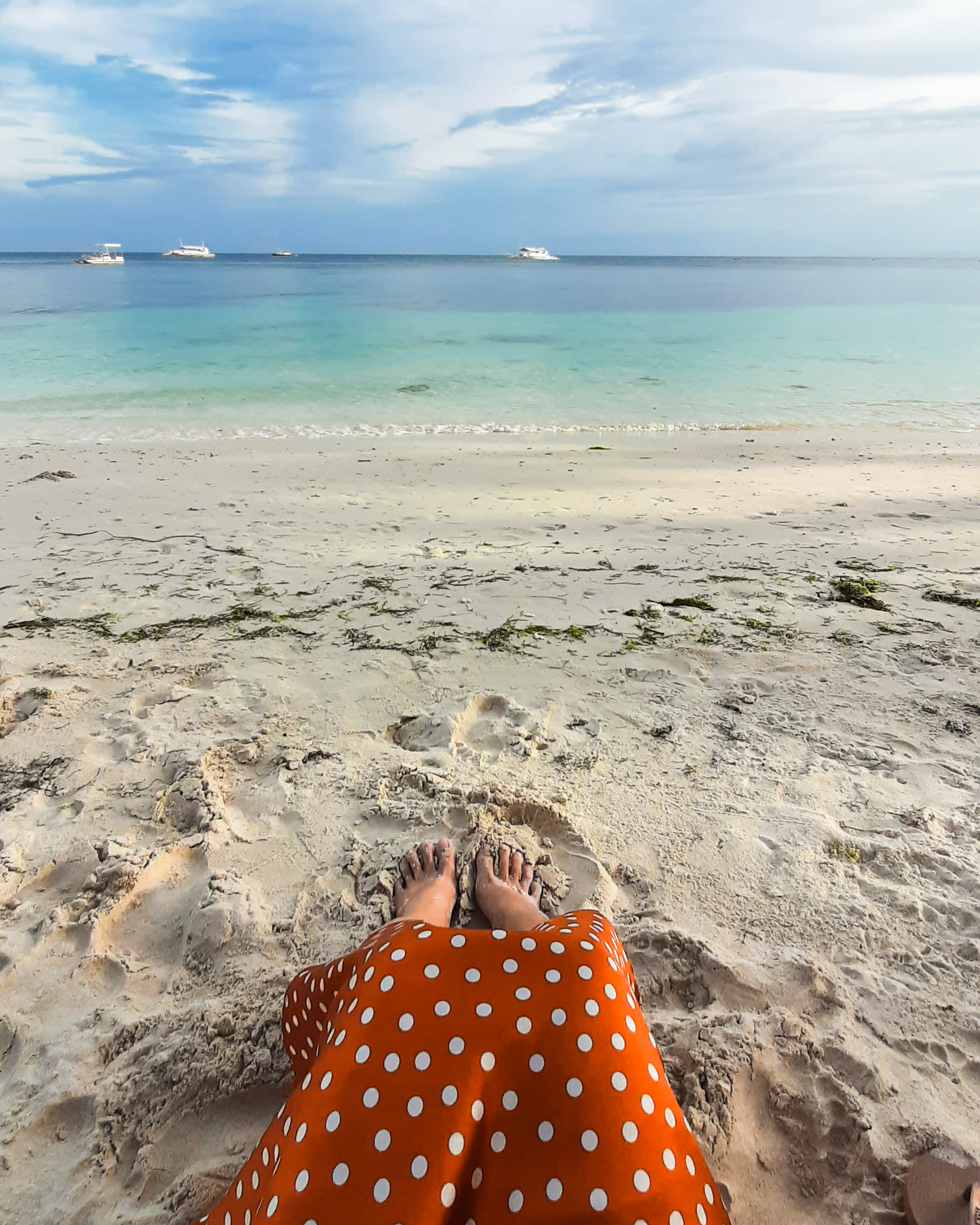
Frankly, I don’t have high expectations about the beach prior to our visit since I know it is commercialized so when I saw its beauty in real life, I was surprised. Alona Beach is impressively clean despite being dotted by bars and restaurants along its shore. Its main highlights are its clear blue waters and powdery white sand. Though there may be some few distractions like the seasonal and natural green algae and its small beach strip, the place is beautiful, calming and relaxing and best visited late in the afternoon.

Our second day in Bohol was spent exploring the island of Panglao and is commonly known as the Panglao Land Tour. This package includes visiting the Panglao and Dauis churches, Moadto Strip Mall, Hinagdanan Cave, Bohol Bee Farm and the island’s white sand beaches.
Honestly, I was more excited to do this tour than the one we had the day before because it will be my first time to go inside a cave and I was craving to lounge at the beach and as it turned out, the experience was remarkable.
Our tour started with a quick drop by at the historic Panglao Bell Tower. Built in the 19th century, this hexagonal watchtower is located near and facing Panglao Bay and is dubbed as the tallest one in the Philippines. Adjacent to the tower is a Catholic church built in the same century and the place of worship of most locals around the area. Unfortunately, we weren’t able to get inside the church as it was closed during our visit.

Another place that we also failed to enter since it was closed is the Moadto Strip Mall. A seaside mall fronting a white sand beach, this shopping and dining spot houses various restaurants while offering a view of the nearby sea. Honestly, I wasn’t that keen to visit the place beforehand until we took a peek inside and found out how beautiful it is and I suddenly wished that the establishment was open.


Moving on with one of the island’s highlights and famous attractions, our disappointment from our first two destinations was replaced with our amazement with Hinagdanan Cave. Located at the municipality of Dauis, this limestone cave is popularly known for its stalactite formations and clear blue green lagoon.

Probably one of the places that really made me say “Wow” during this trip, Hinagdanan Cave felt very surreal for me. I felt like I was inside a magical place that is far away from civilization and is inhabited by fantasy creatures. Its blue green waters is very enchanting and inviting that it will make one want to jump in it. The experience is further added with the majestic stalactite formations and holes in its ceiling where light passes through and illuminate the cave.


Probably the only downsides for me of the cave was the smell that comes from the birds’ wastes that fly in and out of the area and the temperature of the water since it is not that cold. But if you don’t mind these and want to fully experience its waters, there’s an additional ₱75 (US$1.44) as swimming fee. You can also hire a guide to narrate to you the history of the cave and to take your pictures who accepts tips for any amount.
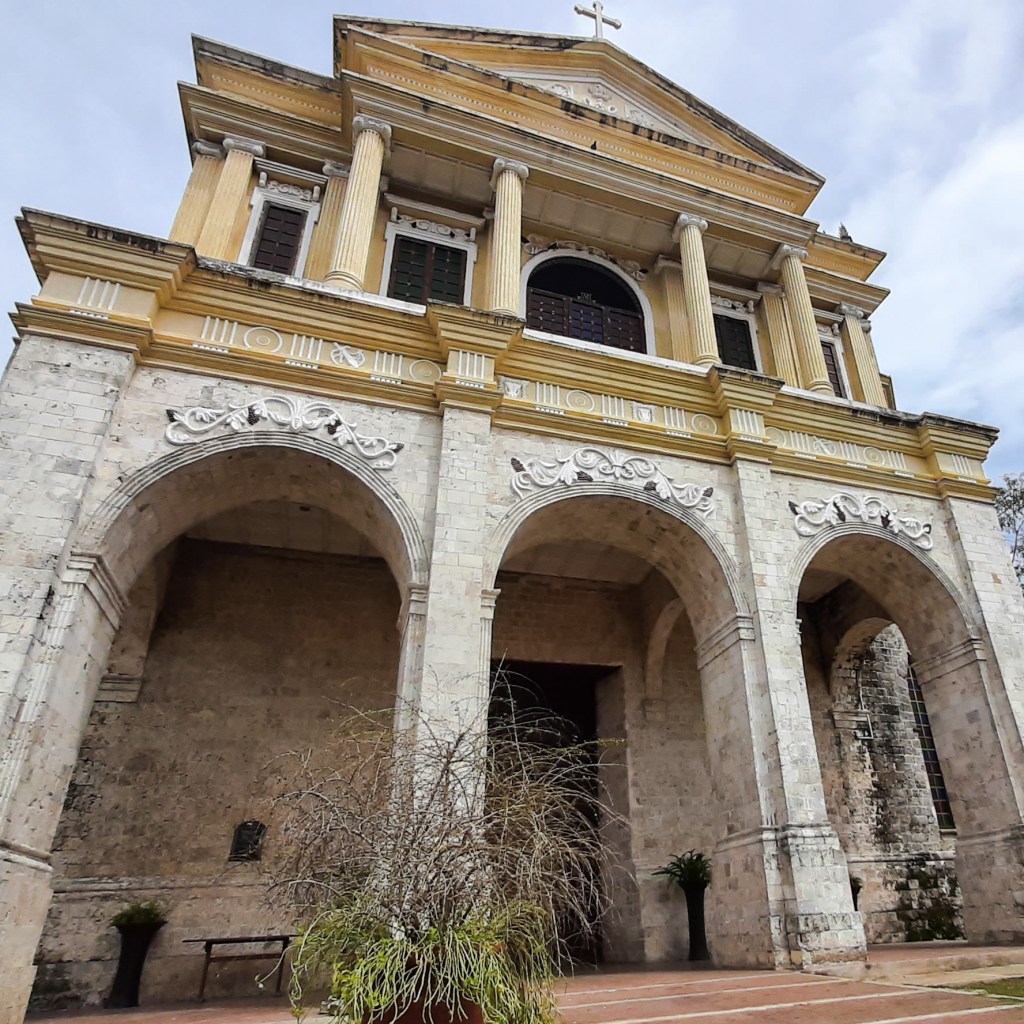
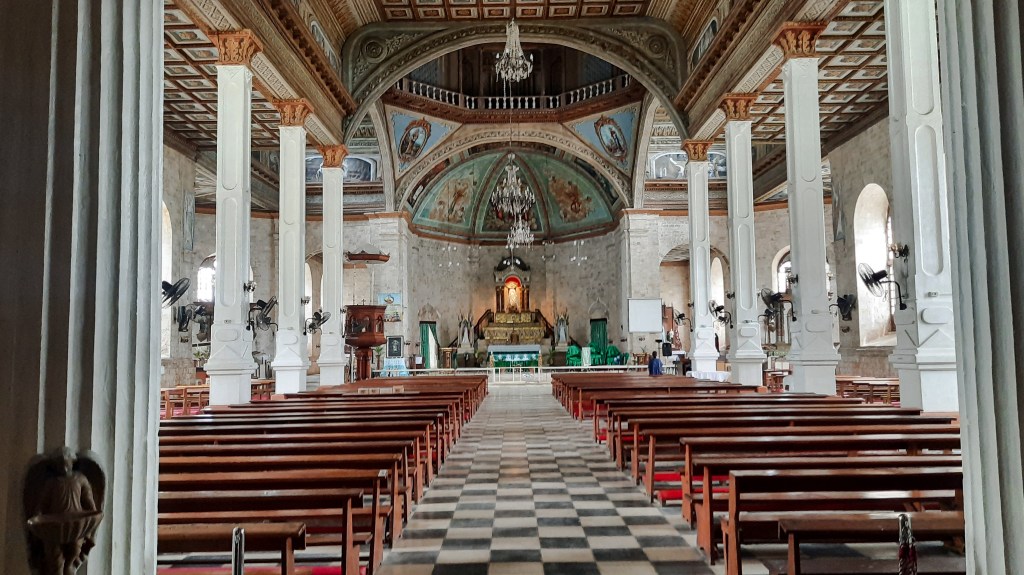
Another church and destination in the island of Panglao is Dauis Church located in the municipality of the same name. A Catholic church built in the 19th century, I was also amazed with the beauty of this neoclassical architecture most especially in the stylized ceiling art of its central nave and aisles.

If there is one place that I would definitely go back to in Bohol, it would be Bohol Bee Farm still in the municipality of Dauis and where we had our lunch during our Panglao tour.


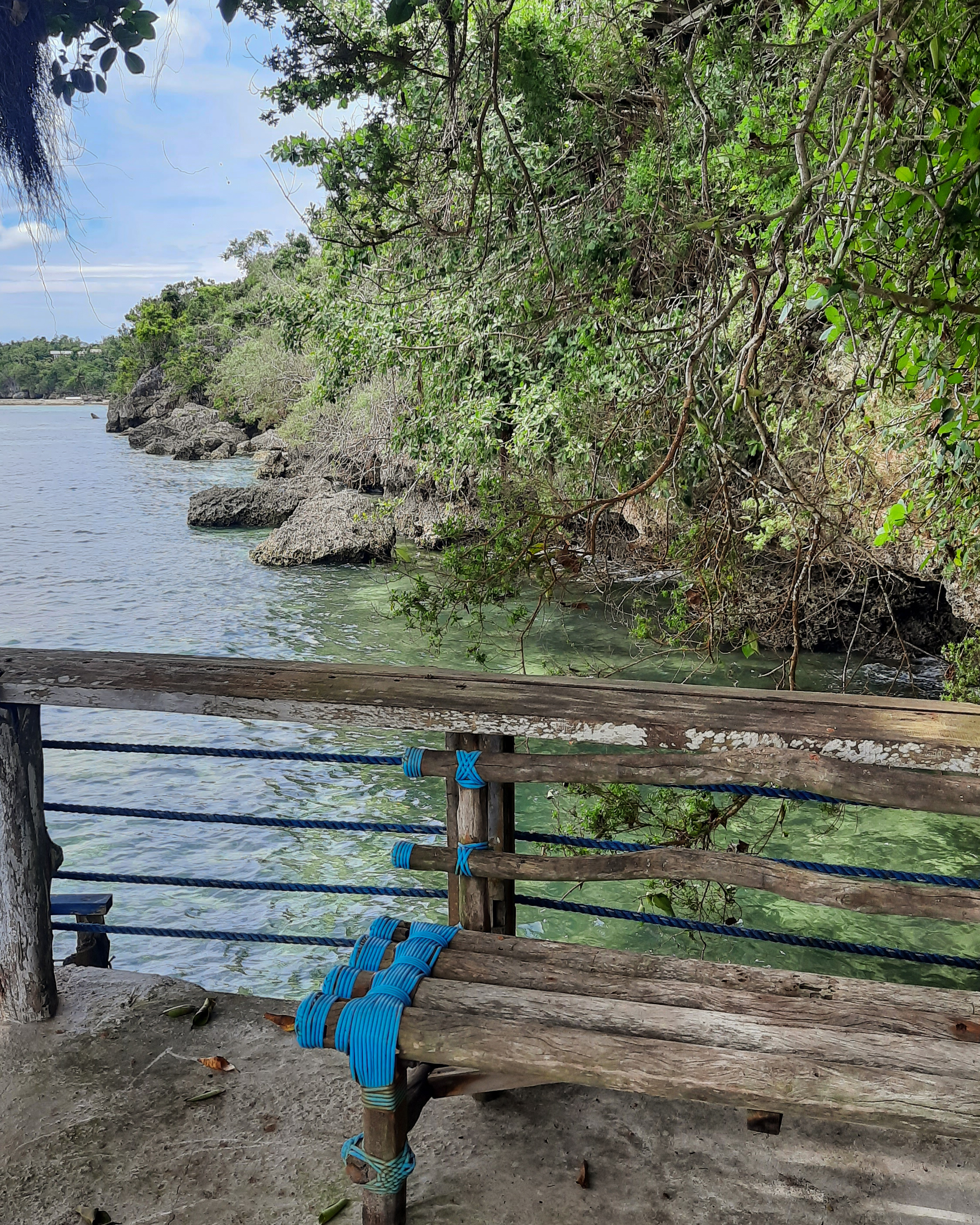
A restaurant/resort/organic farm perched on a cliff, Bohol Bee Farm offers a panoramic view of the nearby Bohol Sea and Pamilacan Island. The place also prides itself of their organic dishes made with ingredients from their farm and their unique ice creams from Buzzz Café with flavors like malunggay, durian and dragonfruit.
For our lunch, we tried their Grilled Squid (₱480/US$9.19) and Durian (₱80/US$1.53) and Dragonfruit Ice Cream (₱80/US$1.53). There was also a complementary bread as appetizer served with a butter sourced from their farm.
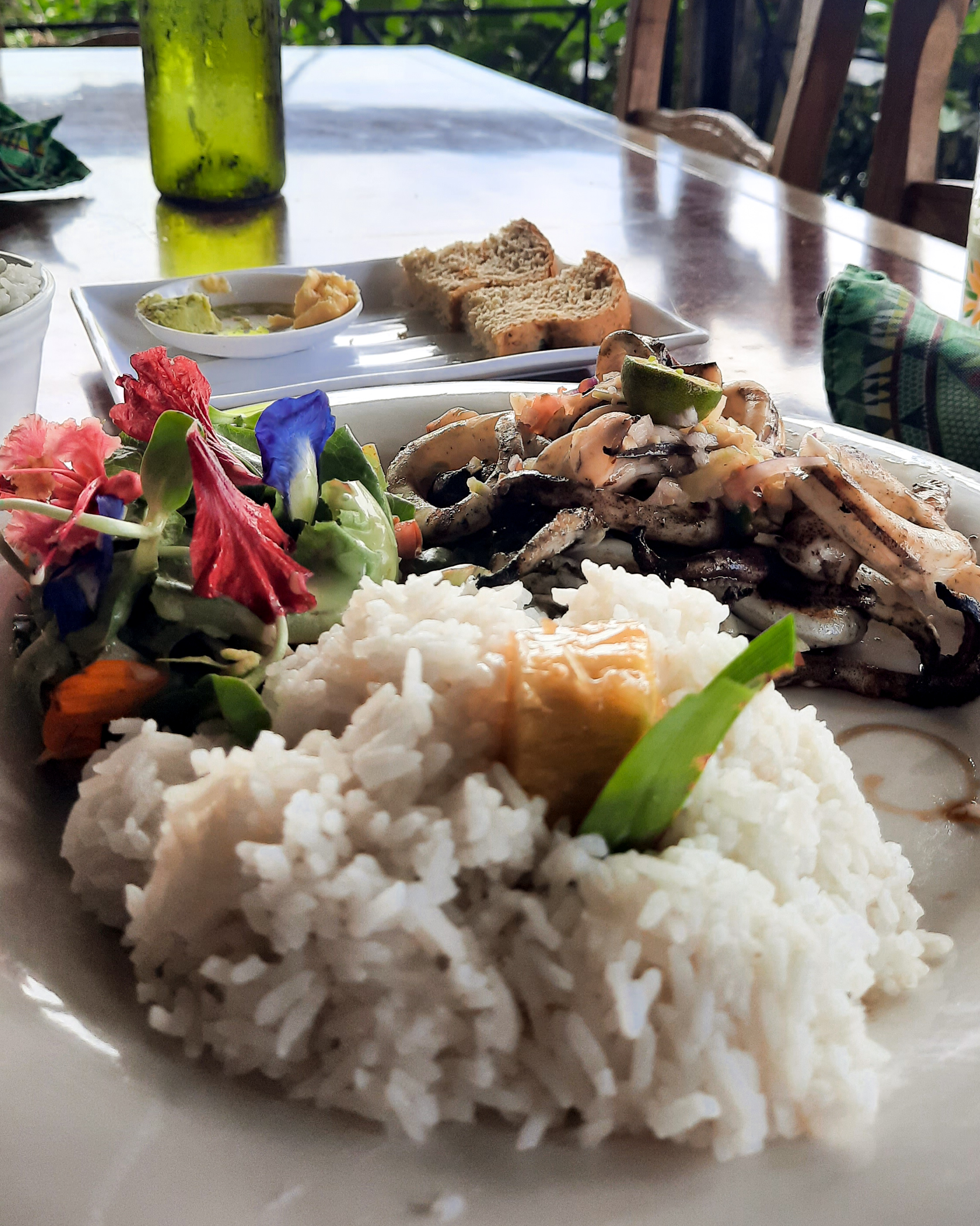

An optional destination that requires an additional entrance fee of ₱100 (US$1.92), we wrapped up our Panglao tour at the white sand Dumaluan Beach.
Contrary to Alona Beach, Dumaluan’s area is relatively larger, farther from commercial spots and is filled with more sand. However, there are some things that made the beach a bit lesser than the first.

Unlike with what I’ve read in articles and reviews online, Dumaluan Beach is not that untouched and is already commercialized. There are already a handful of restaurants and resorts sitting in front of the beach and is a popular go-to place of locals in the area making the beach a bit crowded sometimes. There are also animals like dogs freely walking around that we even saw one releasing its waste in one part of the beach. Its waters is not that clean as well as there are twigs floating in it and there were more dried green algae washed up along its shores compared to Alona Beach. However, the place still offers that lazy beach vibe when you find a good and clean spot to lounge around.

Although our three-day trip was a bit tainted by the effects of the typhoon that hit the province two months earlier, I can still describe Bohol as a magical place considering the unique experience you’ll have upon visiting the province. Personally, I went to Bohol without much expectations but left it with a memory of a beautiful place that exceeded my expectations most especially its beaches. If I’ll be given the chance to come back to it in the future, I will come back to Bohol and see the other places I missed during this visit.
Expenses
For our three-day stay in Bohol, here’s our approximate expenses for two persons during our whole trip:
| Particulars | Amount |
| Roundtrip flight (MNL-TAG; TAG-MNL) | ₱3,848.88 |
| 4D3N Accommodation | ₱4,197 |
| Countryside & Panglao Land Tours | ₱4,200 |
| One-way airport transfer | ₱300 |
| Dumaluan Beach entrance fee (including van parking) | ₱300 |
| 3D3N Meal | ₱2,829 |
| Pasalubong | ₱734 |
| ₱16,408.88 (US$314.26) |





Any thoughts?