

The heritage town of Taal in Batangas is often overlooked and misinterpreted as referring to the more famous Taal Volcano and Taal Lake, which actually sit quite a distance away from this charming historical village.
Known for its well-preserved Spanish colonial houses and as home to balisong (butterfly knife) and barong tagalog (traditional Filipino woven shirt) artisans, I have to admit that a few years back, I was unaware of its existence until I saw a friend visit it and realized that there is a place in South Luzon that resembles Calle Crisologo in Vigan, Ilocos Sur in the north. Ever since, the town has become a side note on my to-do list until I finally took the chance to see it with my own eyes.
Curious to learn more about this underrated, charming historical village in Batangas? Read on to find out more about it, or watch the video below for a quick overview of this trip!
Table of Contents
About Taal
Most people’s confusion about the location of Taal is valid because, contradicting its name, the town and municipality sit closer to the nearby Balayan Bay than Taal Lake.
However, what most people do not know—and to validate their initial impression—Taal used to be located in the southwest portion of the lake in the present-day municipality of San Nicolas.
Due to its hazardous location, and with the destructive eruption of Taal Volcano in 1754, Spanish local authorities were forced to find and relocate to a higher and much safer place to house the then capital of Batangas. (Yes! Taal also played the important role of being the capital of the province before.)
Ever since, Taal’s current location has witnessed some of the Philippines’ most important historical events, including serving as one of the key bases of operations for the Filipino revolutionary group Katipunan during the Philippine Revolution.
How to Get To Taal from Manila
Located only two hours away from Manila, the Heritage Town of Taal makes a good choice for a quick day trip or weekend getaway for people in search of an escape from the city or travelers looking to further explore the country without going too far.
The most convenient option to travel to the town is by driving a private vehicle and taking the South Luzon Expressway (SLEX) and Southern Tagalog Arterial Road (STAR) Tollway, and turning to the Lipa exit before continuing to the National Highway leading to Taal.
For commuters, a mix of provincial buses and local jeepneys is the usual option to reach Taal, with various routes to choose from based on one’s location in Manila.
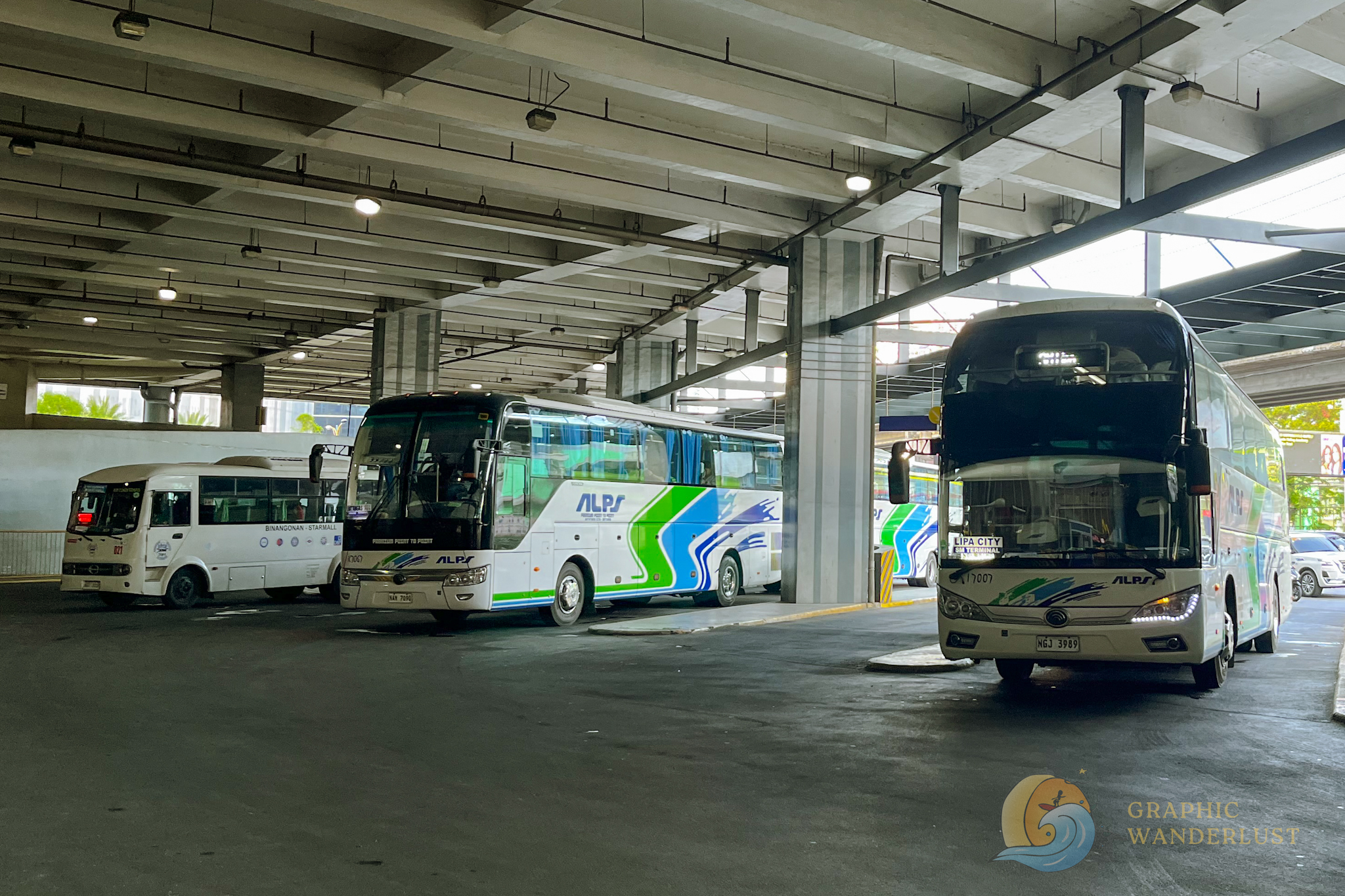
For our visit, we opted to ride a Lipa-bound bus in SM Megamall, which dropped us off at SM Lipa Grand Terminal, where different public vehicles going to the various parts of Batangas await passengers. We boarded the modern jeepney headed to Lemery which also passes through the heritage town, and which dropped us off exactly at our booked accommodation.
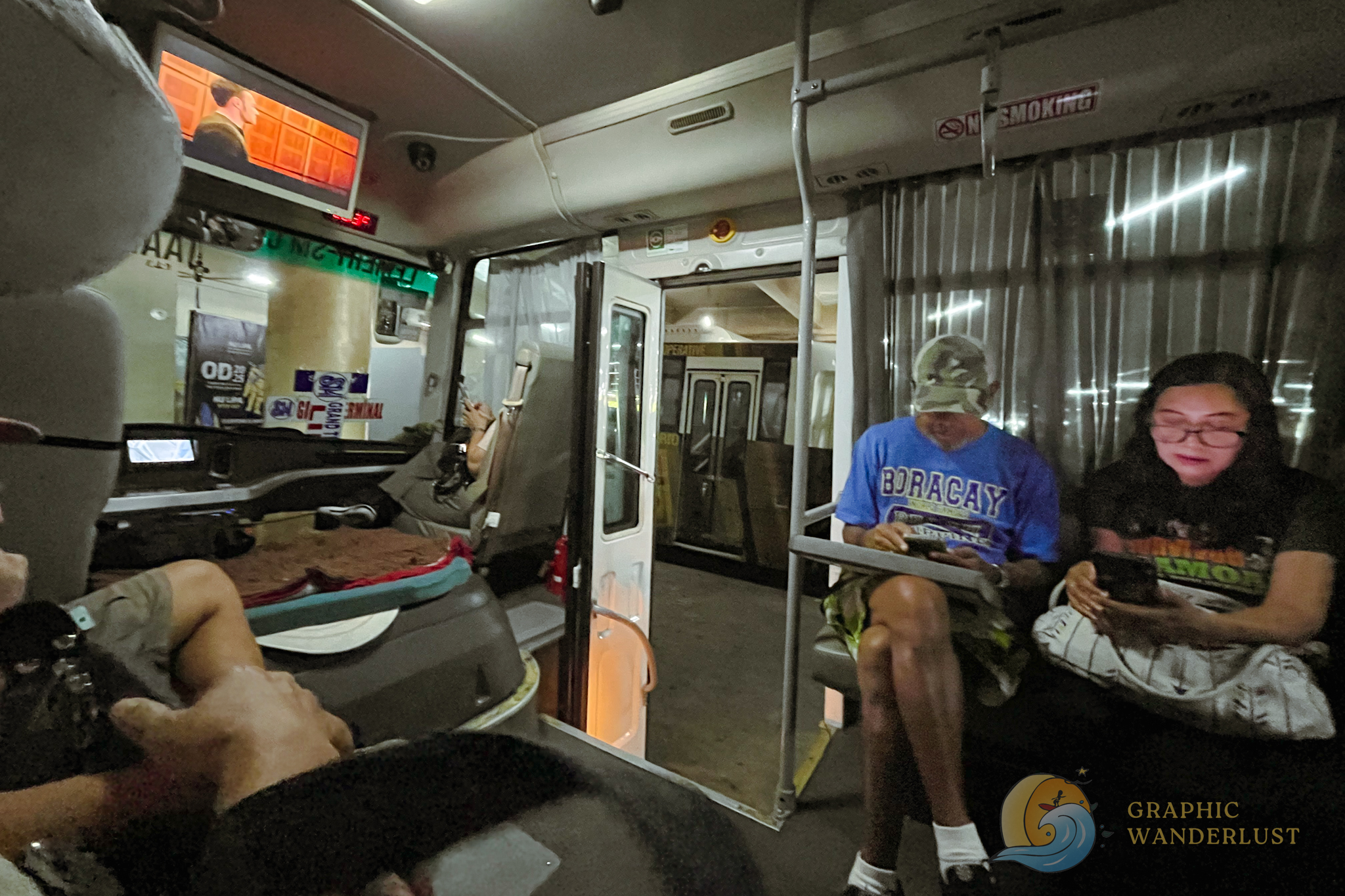
Lemery-bound buses in Parañaque Integrated Terminal Exchange (PITX) and Buendia in Taft Avenue are also other options for people coming from the south of Manila. Just advise the bus conductor that you’re heading to Taal so they can drop you off near the town, from where you can take a tricycle or jeepney to the main center.
Places to Visit in Taal Heritage Town
The Heritage Town of Taal is famous for its beautiful and well-preserved Spanish colonial houses, commonly referred to in Filipino as bahay na bato (stone house). Many of these are ancestral homes that have been passed down from one generation to the next, with some families opening them to the public for viewing.
But aside from these historic ancestral houses, there are also other points of interest in the village that are worth a visit. Find out more about them in this list:
Ancestral Houses and Museums
Villavicencio ‘Wedding Gift’ House
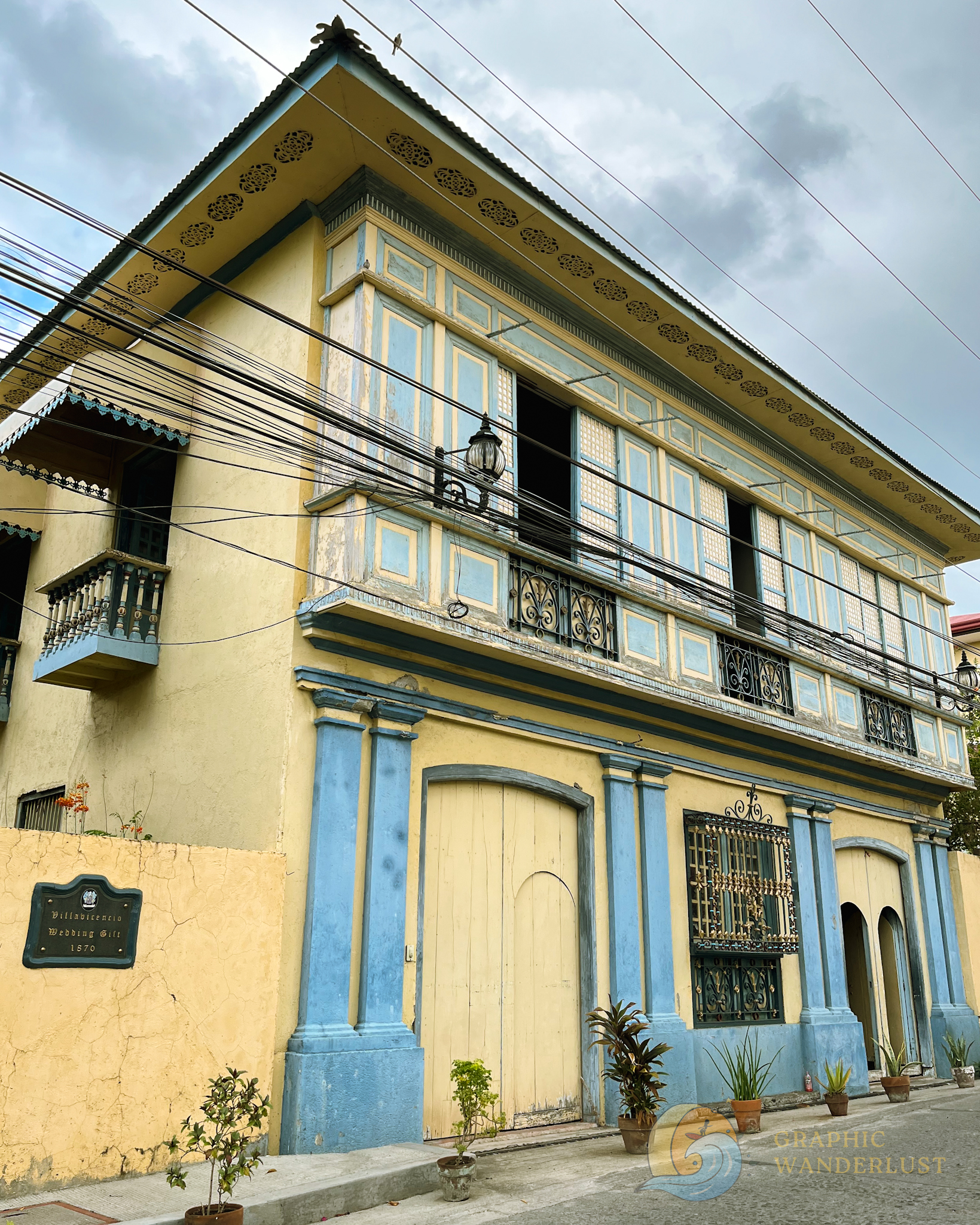
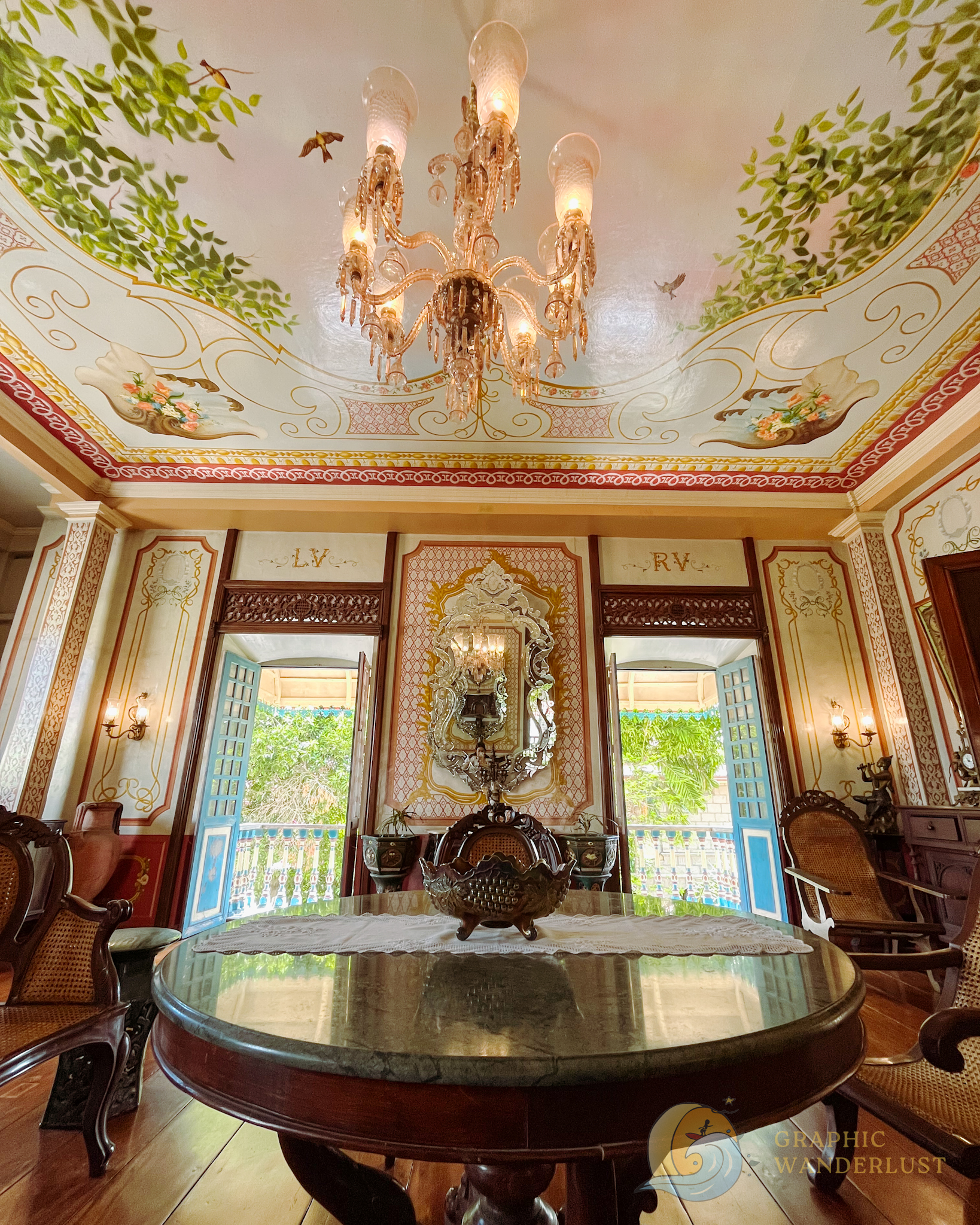
A head-turner in the usual dark brown and white palette of ancestral homes in Taal, the Villavicencio ‘Wedding Gift’ House stands out because of its distinct bright colors.
As its name implies, the house was a wedding gift of Taal nobleman, Don Eulalio Villavicencio, to his wife, Doña Gliceria Marella, to celebrate their marriage in 1871.
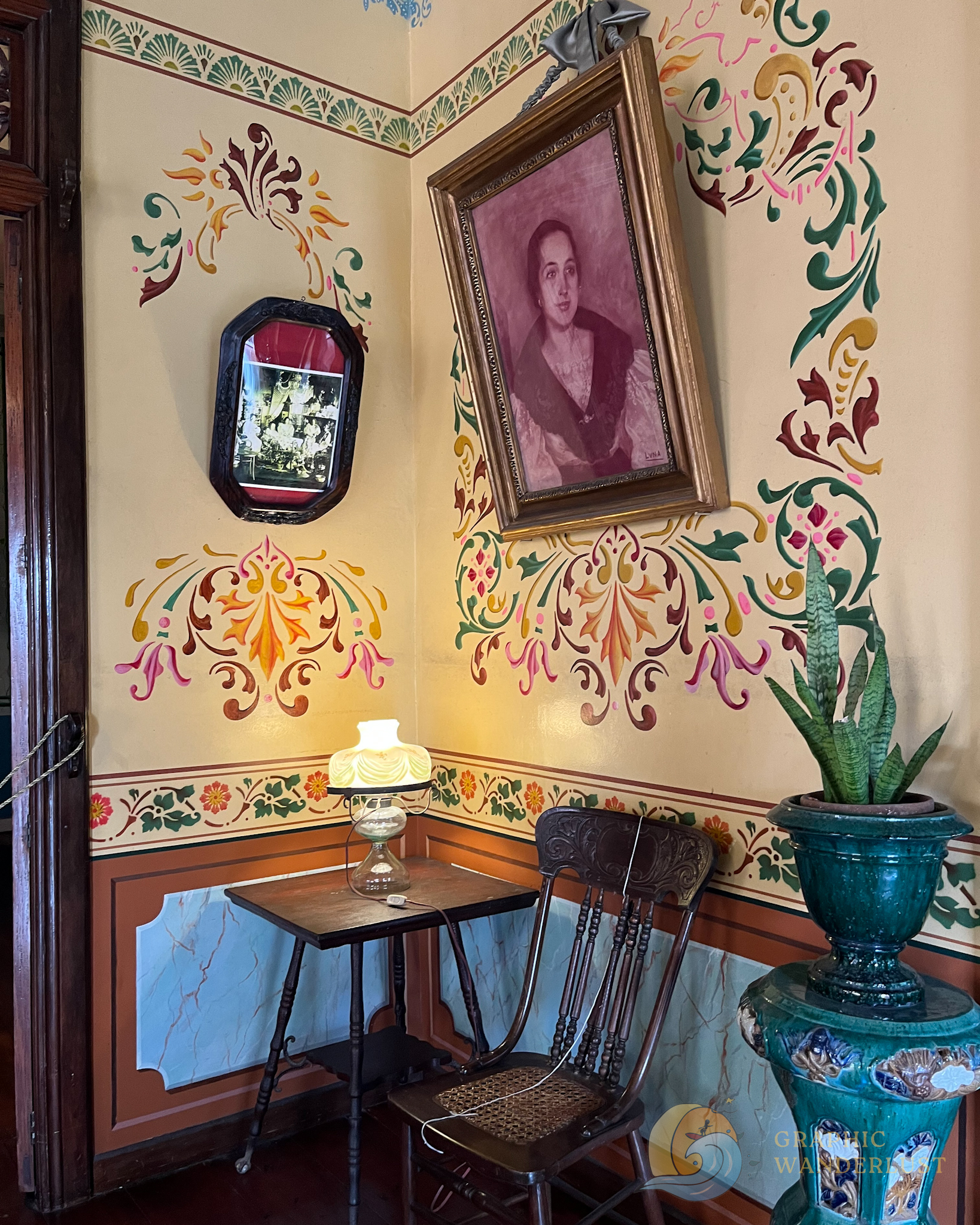
The main highlight of the house is its distinct bright colors, which were originally made from floral grounds before being replaced by modern paint during its restoration.
The meticulous and ornate hand paintings on the walls and ceilings of the house are another eye-catching feature whose restoration was supervised by the late Filipino historian and antiquarian Martin Tinio Jr., who also worked on the more famous Casa Manila in Intramuros.
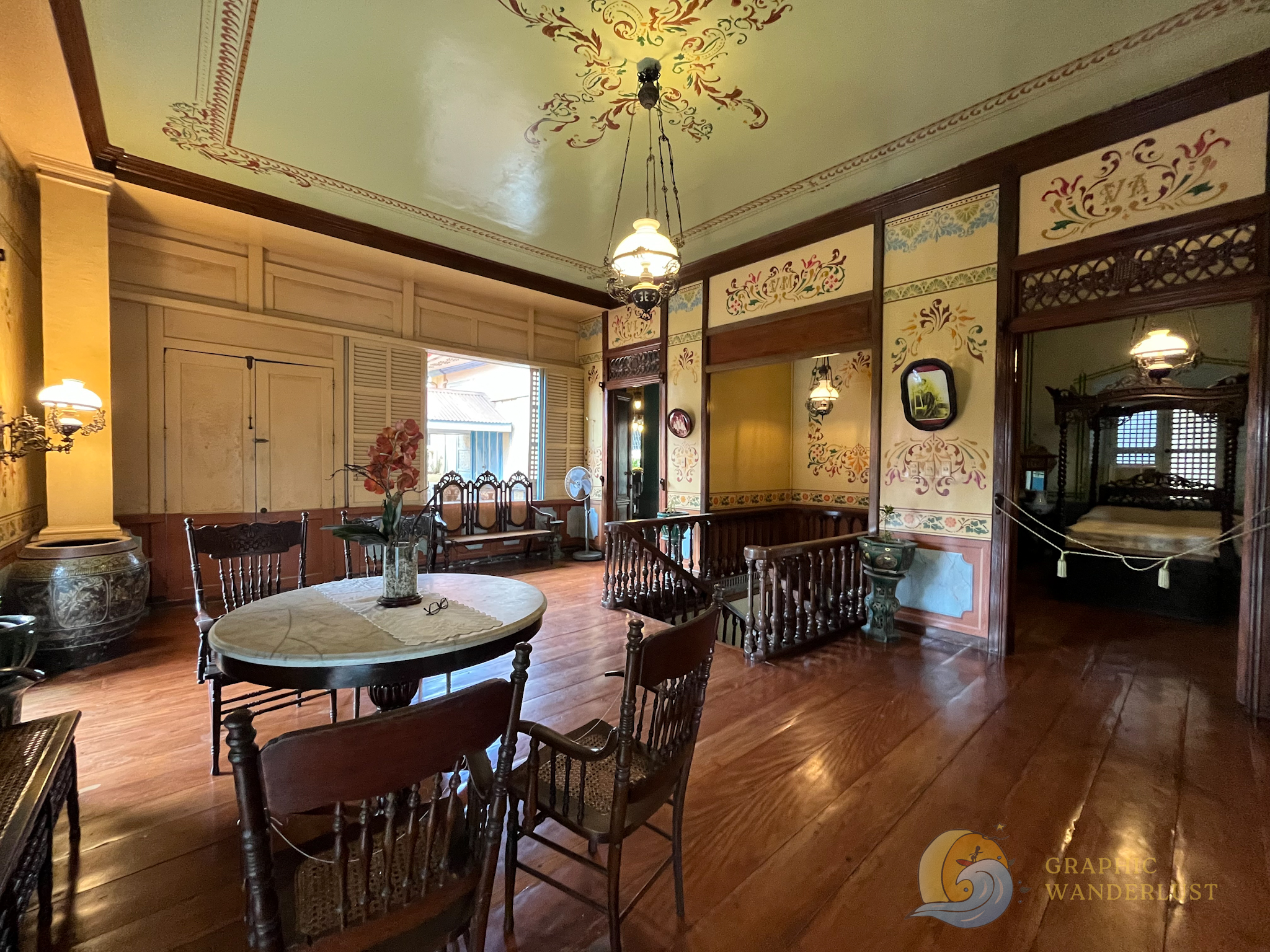
Aside from owning a charming and unique bahay na bato in Taal, the Villavicencio couple is also known as big supporters of the Philippine Revolution, Katipunan, and to José Rizal‘s two famous novels, Noli Me Tangere and El Filibusterismo, mostly aided through monetary donations.
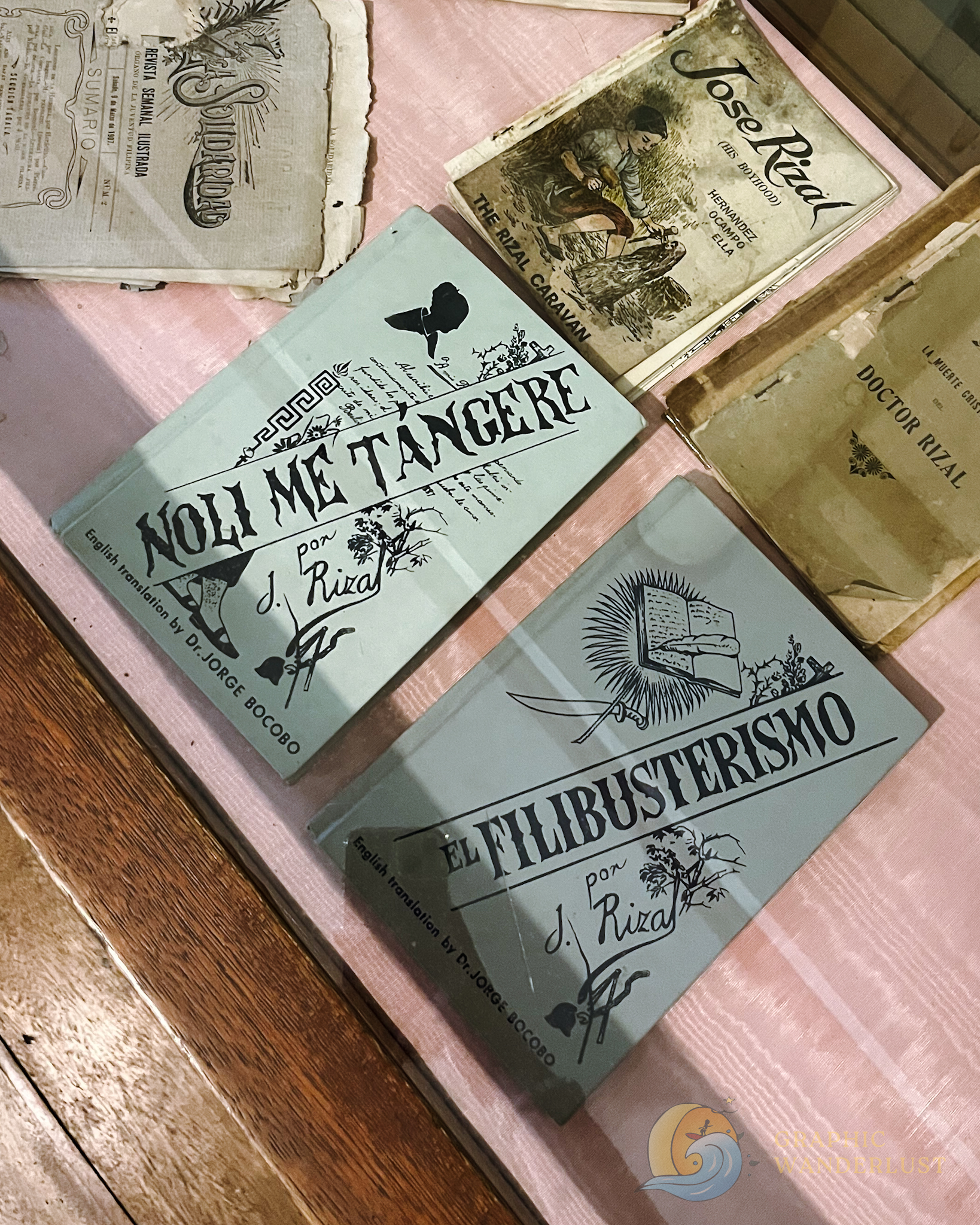
Find out more about the Villavicencio couple’s contributions to the Philippine Revolution
The Villavicencio couple played an important role in the Philippines’ history with the various supports that they have given to the Katipunan during the Philippine Revolution including financial donations, a steamship converted to a war vessel and even their namesake ancestral home, Casa Villavicencio, located just beside the ‘Wedding Gift’ House which became secret meeting spots of Filipino hero, Andres Bonifacio, with other Katipunan members.
The couple is also known for providing financial support for the publication of national hero José Rizal’s famous novels, Noli Me Tangere and El Filibusterismo, whose original English-translated versions were gifted to them by Rizal as a token of his gratitude.
As a result, the couple’s contributions to the fight for reform and freedom in the Philippines earned Doña Gliceria the title “Godmother of the Philippine Revolution”—a recognition of her unwavering patriotism and support for the revolutionary cause.
Today, the Villavicencio ‘Wedding Gift’ House serves as both a museum and a bed and breakfast for tourists looking to discover more about Taal.
The place has also been recently popularized as the shoot location of local 2022 TV series, Maria Clara at Ibarra, with some parts of the house shot as Maria Clara’s bedroom and Kapitan Tiago’s dining hall.
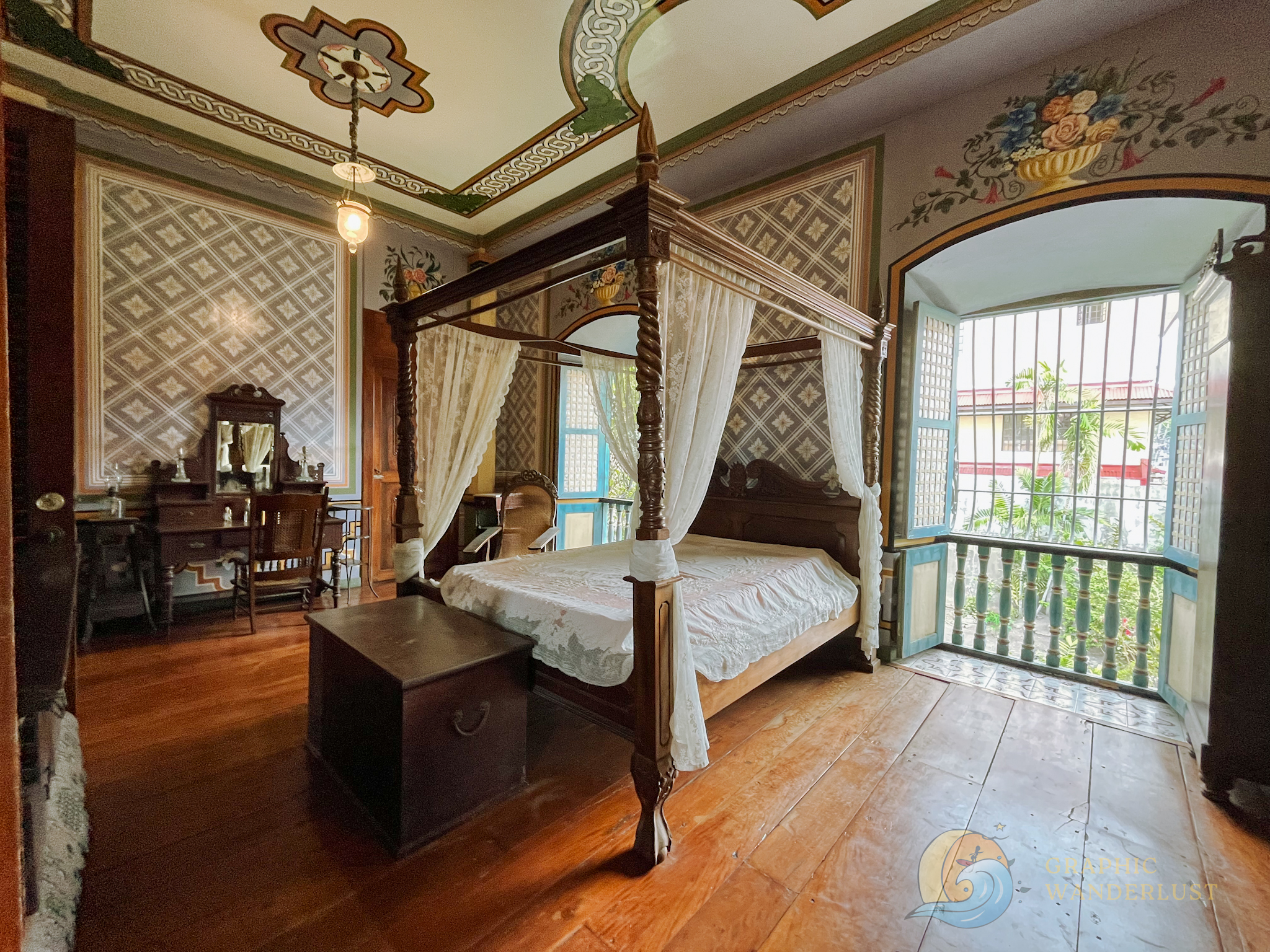
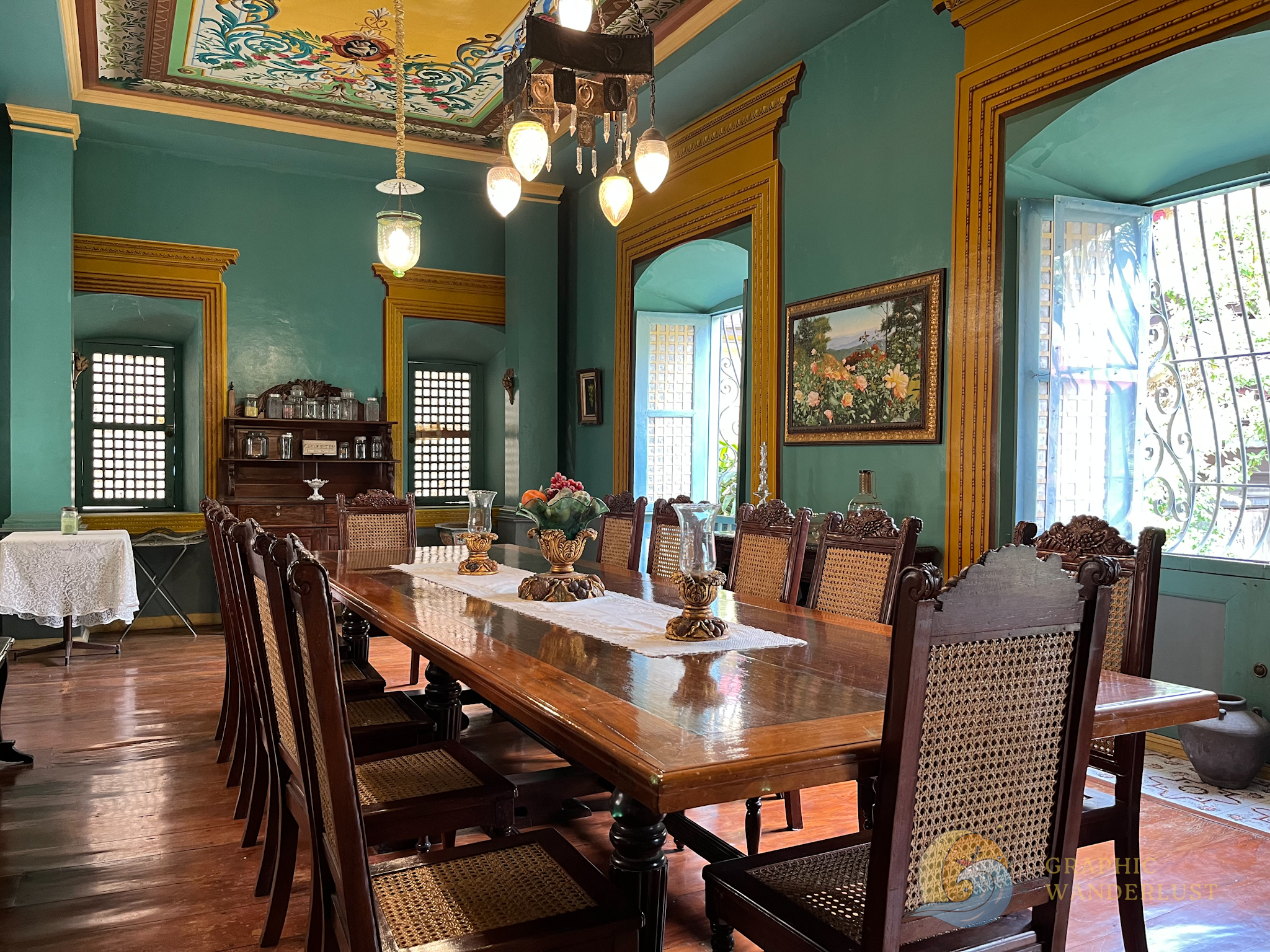
Entrance fee costs ₱100 for walk-in visitors, while overnight guests can book their reservations on their Facebook page, Taal Villavicencio Wedding Gift House.
The nearby famous ancestral home of the family, Casa Villavicencio, is currently not open for walk-ins and also requires a booking to visit.
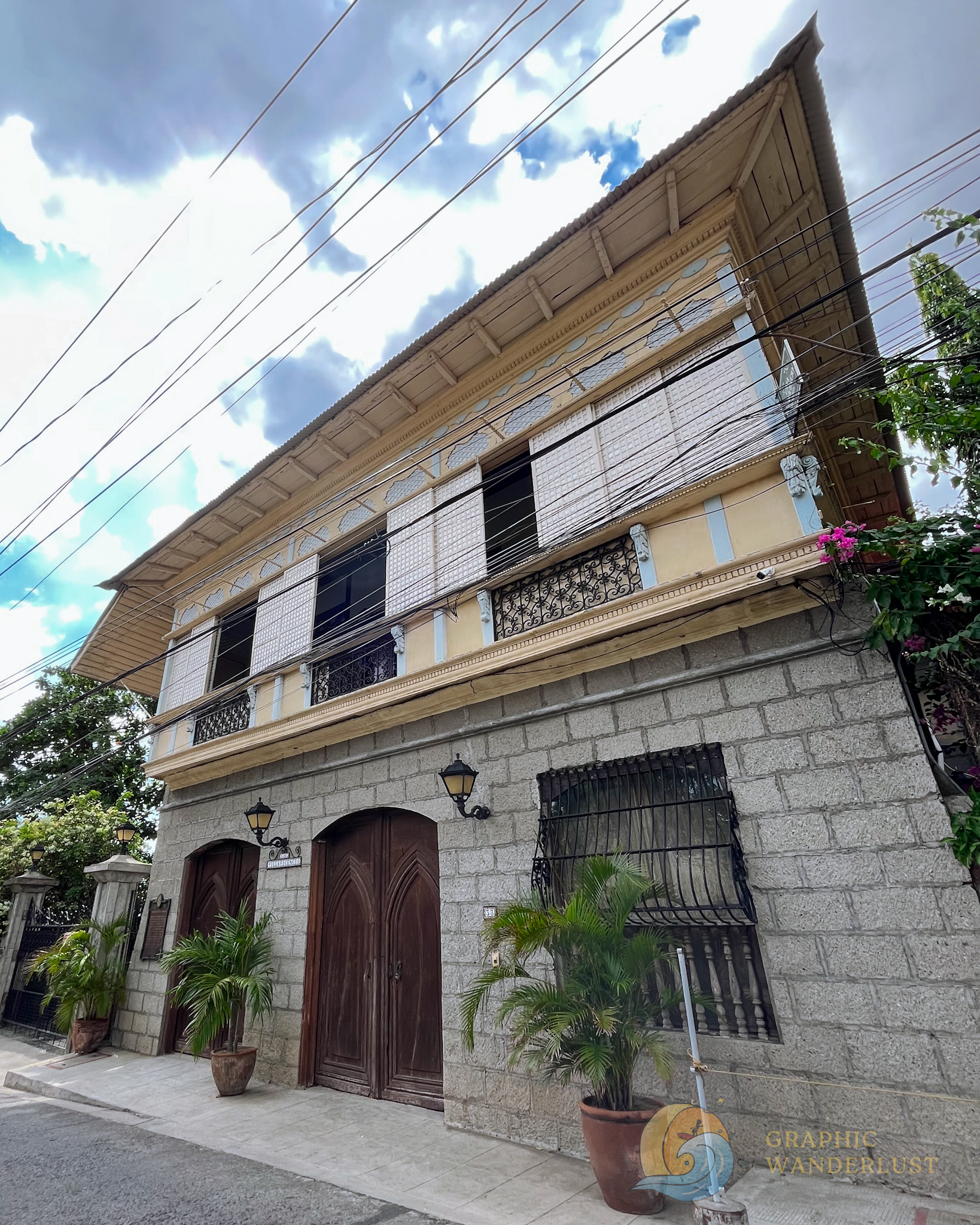
Museo nina Leon at Galicano Apacible
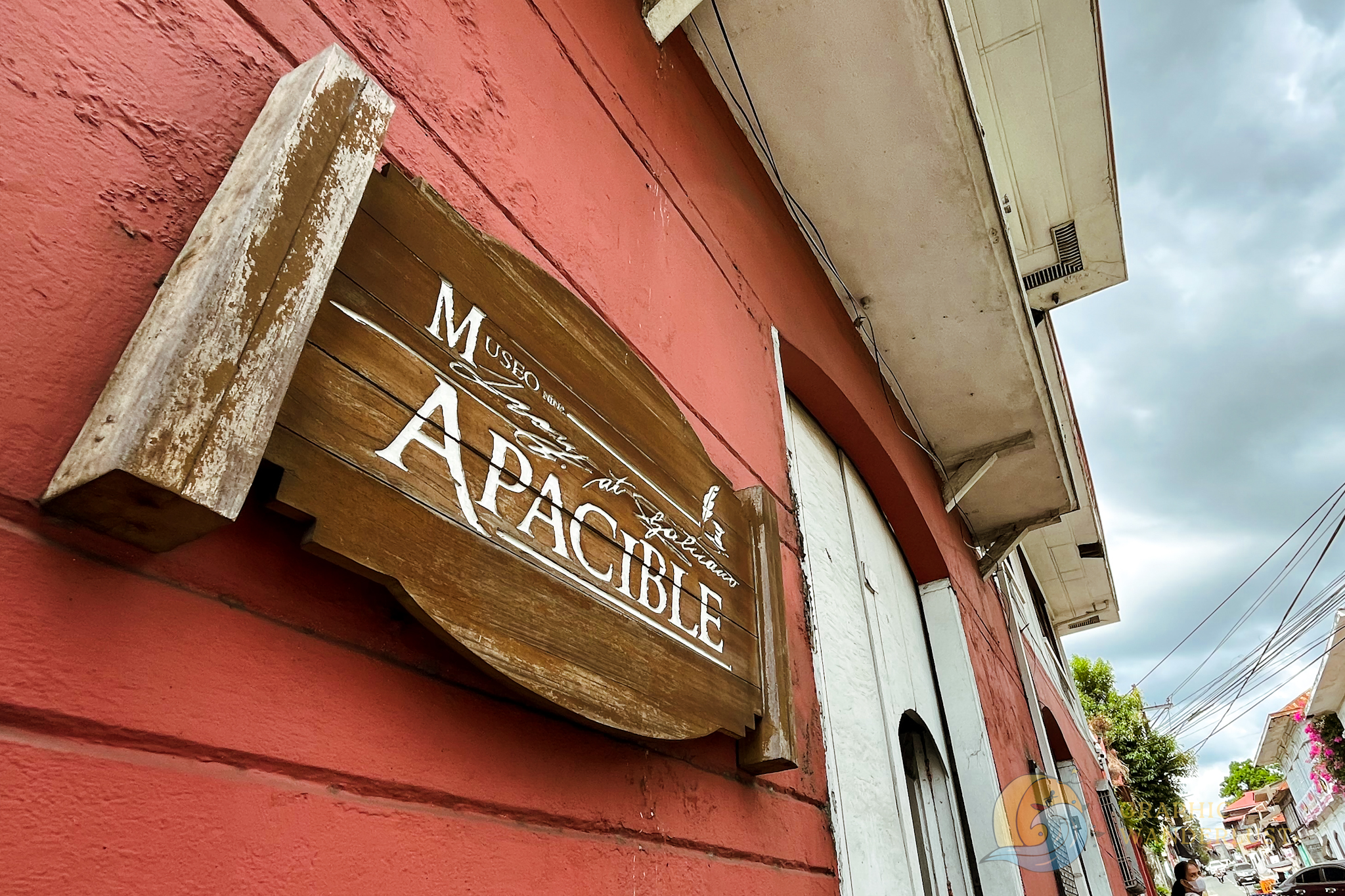
Another contrast against the traditional styles of bahay na bato in Taal town, the Museo nina Leon at Galicano Apacible (Leon and Galicano Apacible Museum) is dressed in a mix of Spanish colonial and Art Deco aesthetics.
Originally bearing a Spanish colonial style, the house was renovated in the 1930s and redesigned with Art Deco elements. However, its interior mostly stays true to its Spanish colonial architecture as seen in the presence of a grand staircase entrance, antesala (receiving area), and a very spacious sala (living room). Filling these are antique wooden furniture, imported dinnerware, and pieces of jewelry that belong to the Apacible family.
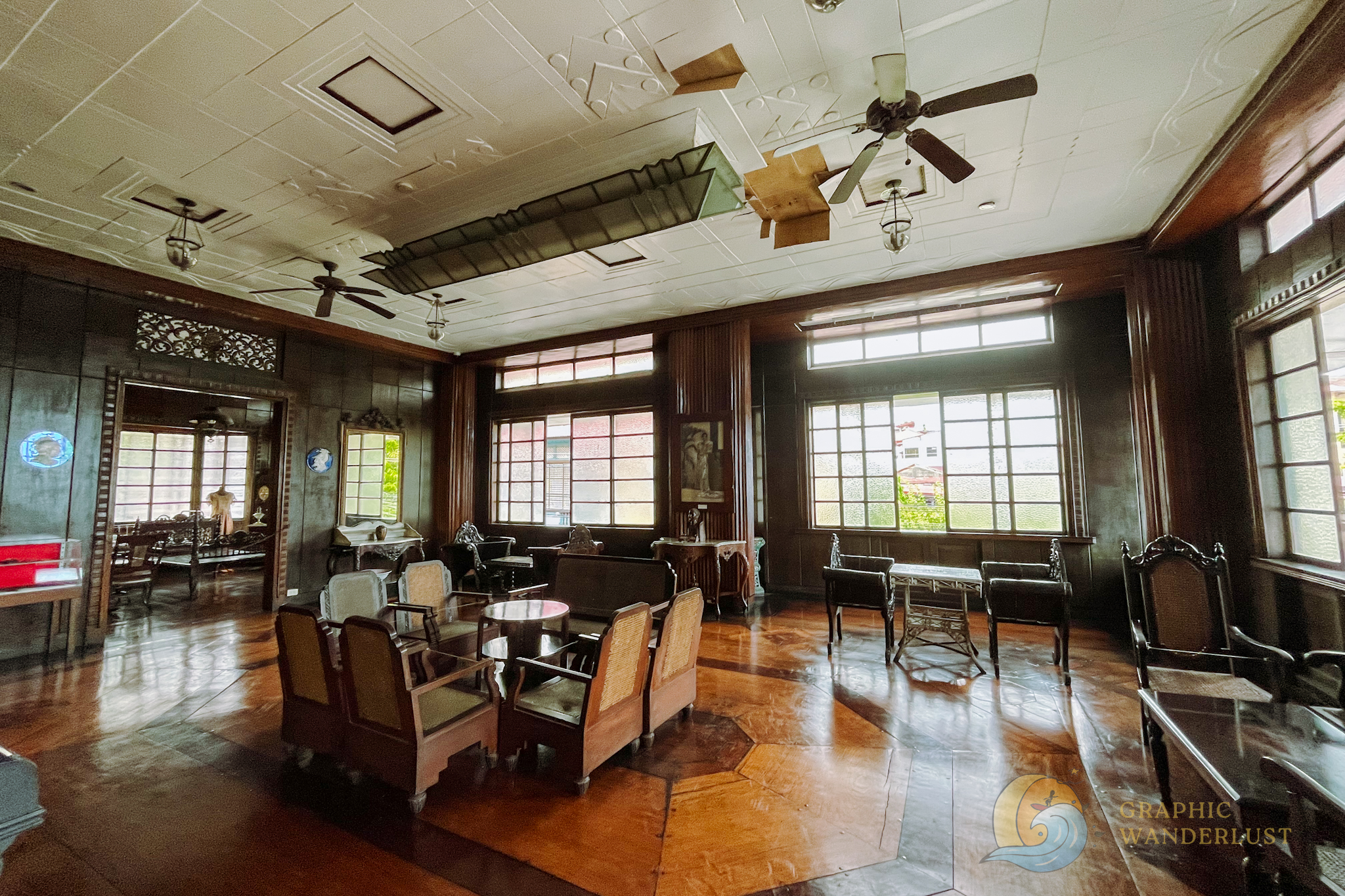
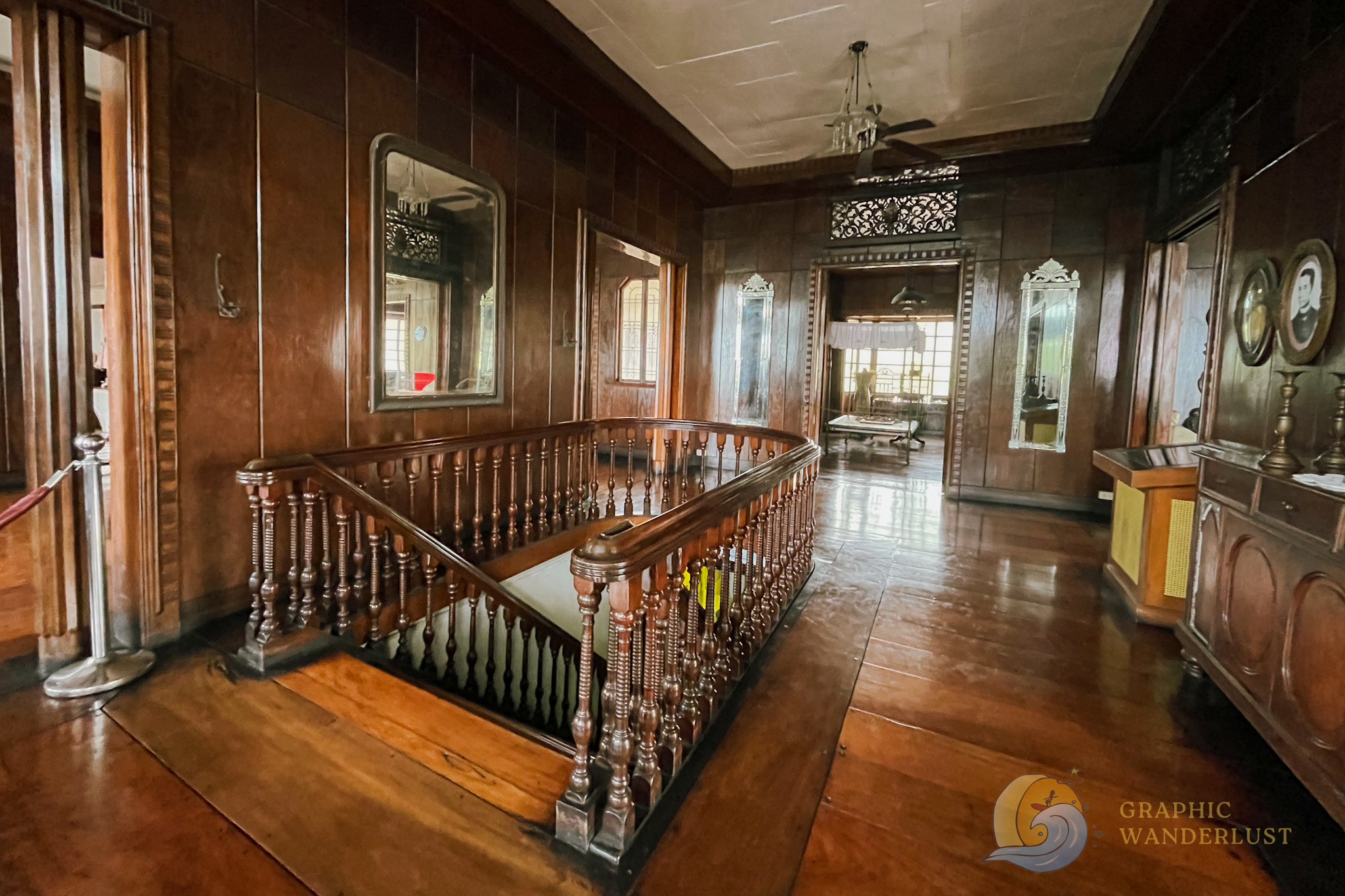
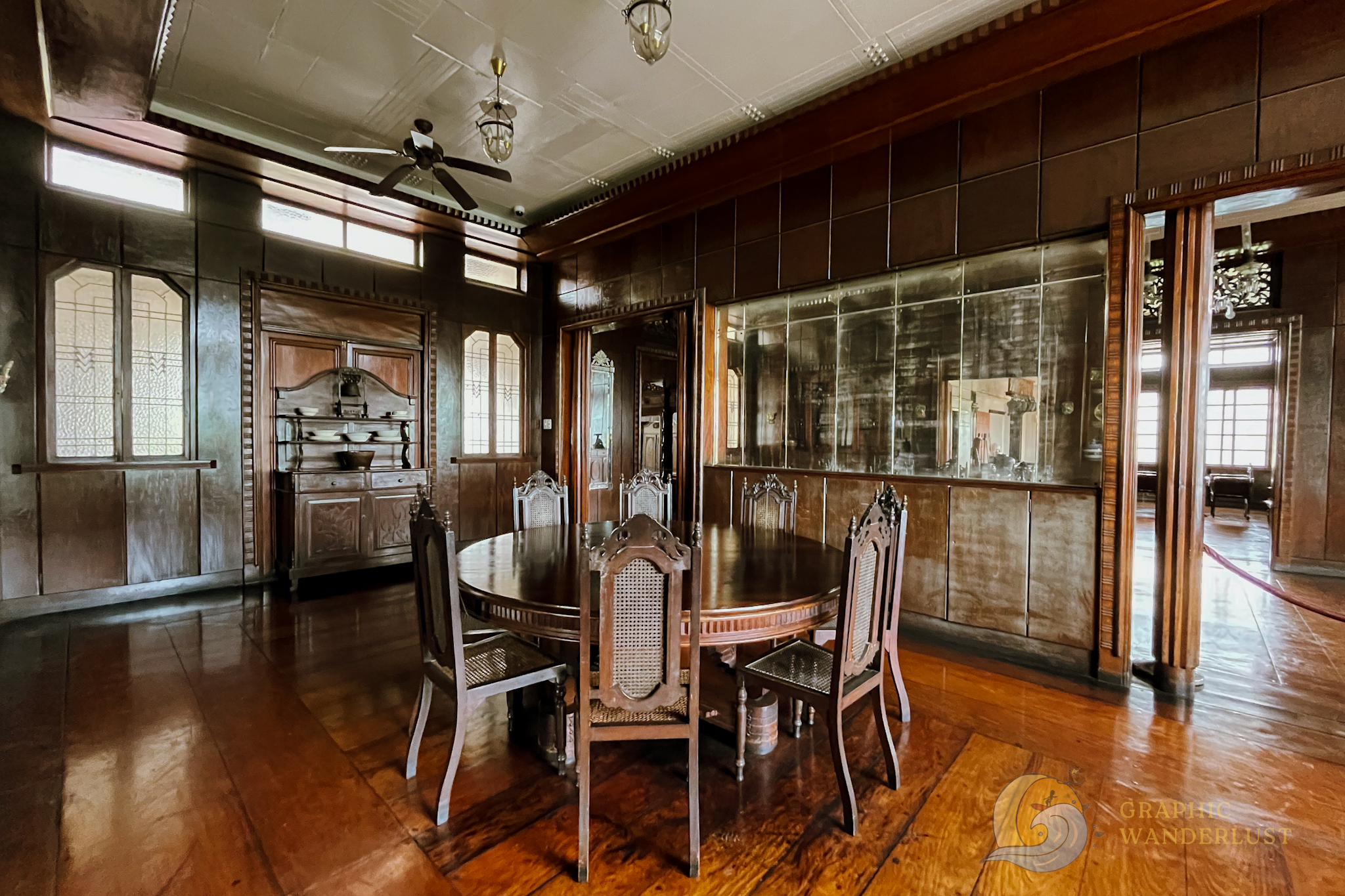
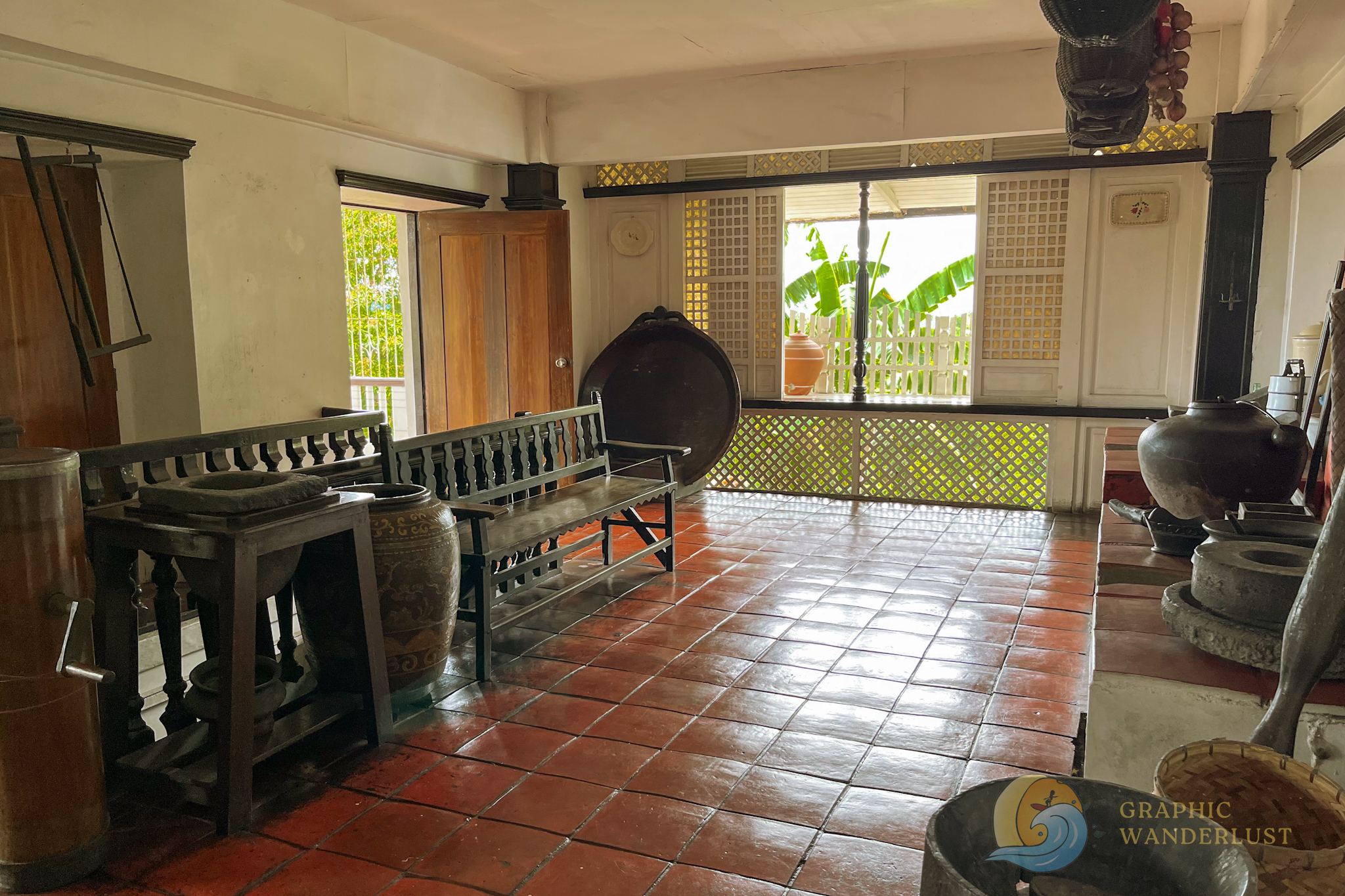
The house is now turned into a museum and gallery under the care of the National Historical Commission of the Philippines and named after the Apacible brothers, Leon and Galicano who, alongside famous national heroes, José Rizal, Miguel Malvar, M.H. del Pilar and Graciano Lopez-Jaena, played important roles during the Philippine revolution and the country’s reform movements.
Learn more about the Apacible brothers and their contributions to Philippine history
The older Leon Apacible was a Batangas judge, regiment commander during the Philippine Revolution under General Miguel Malvar and was the representative of Lepanto (modern-day Bontoc), Mountain Province in the Malolos Congress.
Galicano Apacible was a doctor and the president and co-founder of the student reform movement Asociación Filipina Solidaridad en Barcelona, and the newspaper La Solidaridad during his studies in Spain. He worked alongside famous national heroes José Rizal, M.H. del Pilar, and Graciano Lopez-Jaena in reporting the state of the Philippines under the Spanish government and promoting liberal ideas, resolutions, and progress. He also served as the chairperson of the Hong Kong-based Comité Central Filipino during the height of the Philippine Revolution and eventually became a politician.
Due to the brothers’ strong links to reform and revolutionary movements, the Apacible house also stood as a witness to the different meetings that happened within its walls during the Spanish colonial period.
Admission to the place is free for visitors and comes with a guide who will show you around the house and talk about the brothers’ lives.
Galleria Taal
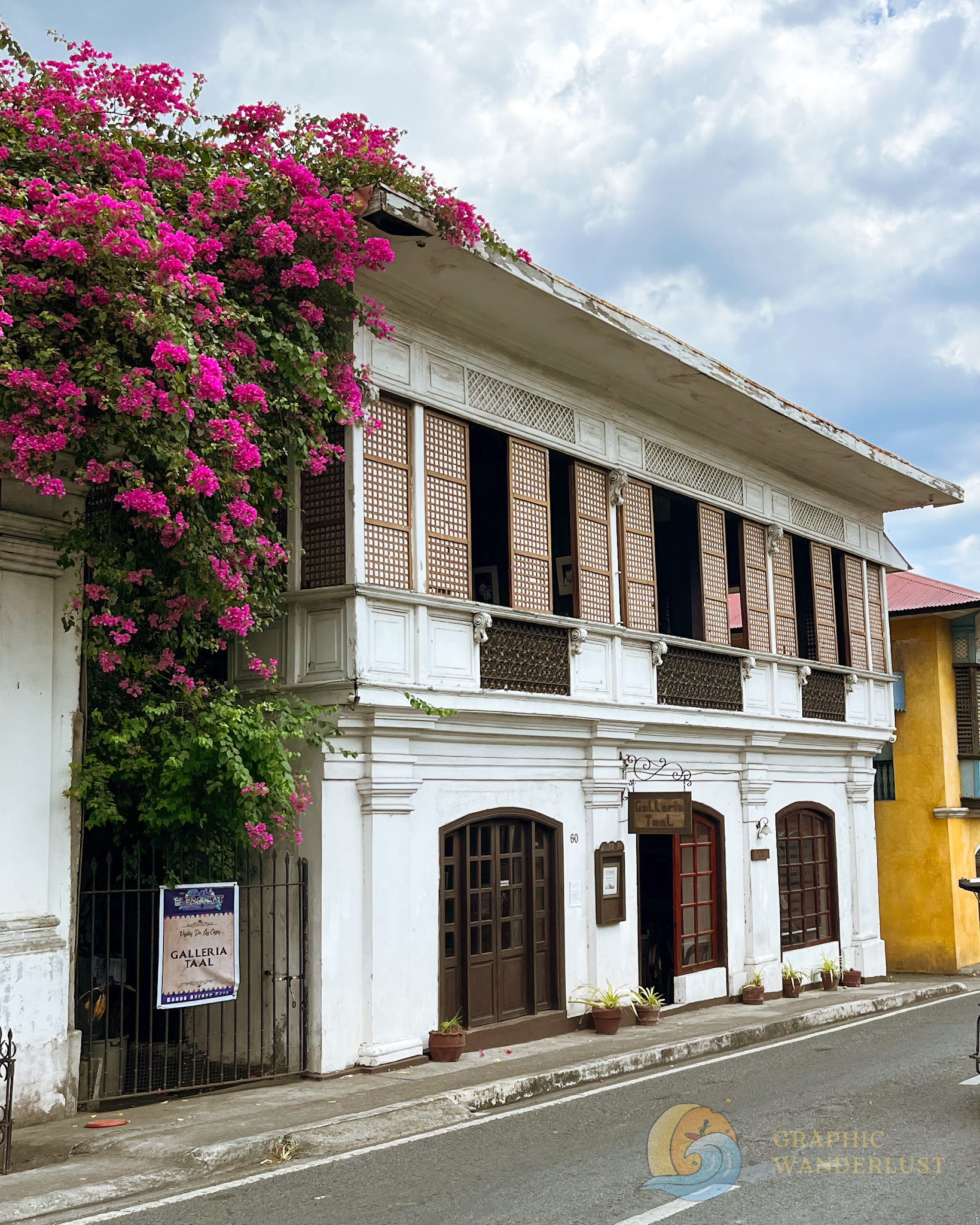
Dubbed as the first camera museum in the Philippines, Galleria Taal is home to the vast vintage and modern camera collection of Taal clan descendant, Manny Inumerable.
Located inside the 19th century Ilagan-Barrion Ancestral House, the camera collection sits inside a traditional Spanish colonial style home whose wooden plank walls are adorned with historic vintage photographs including a replica of Jose Rizal’s execution in then Bagumbayan (now Luneta Park) and images of former late presidents Ferdinand Marcos Sr. and Corazon Aquino with their families.
Taking center stage at its wood-planked and capiz window-bordered second level are rows of vintage and rare camera models encased in glass, which include accordion-style cameras dating back 19th century and limited release styles such as the gold-plated Nikon FA SLR camera with lizard skin casing.
We weren’t able to drop by at the place during our visit, but entrance costs ₱100 and comes with an accompanying guide.
Agoncillo Heritage House
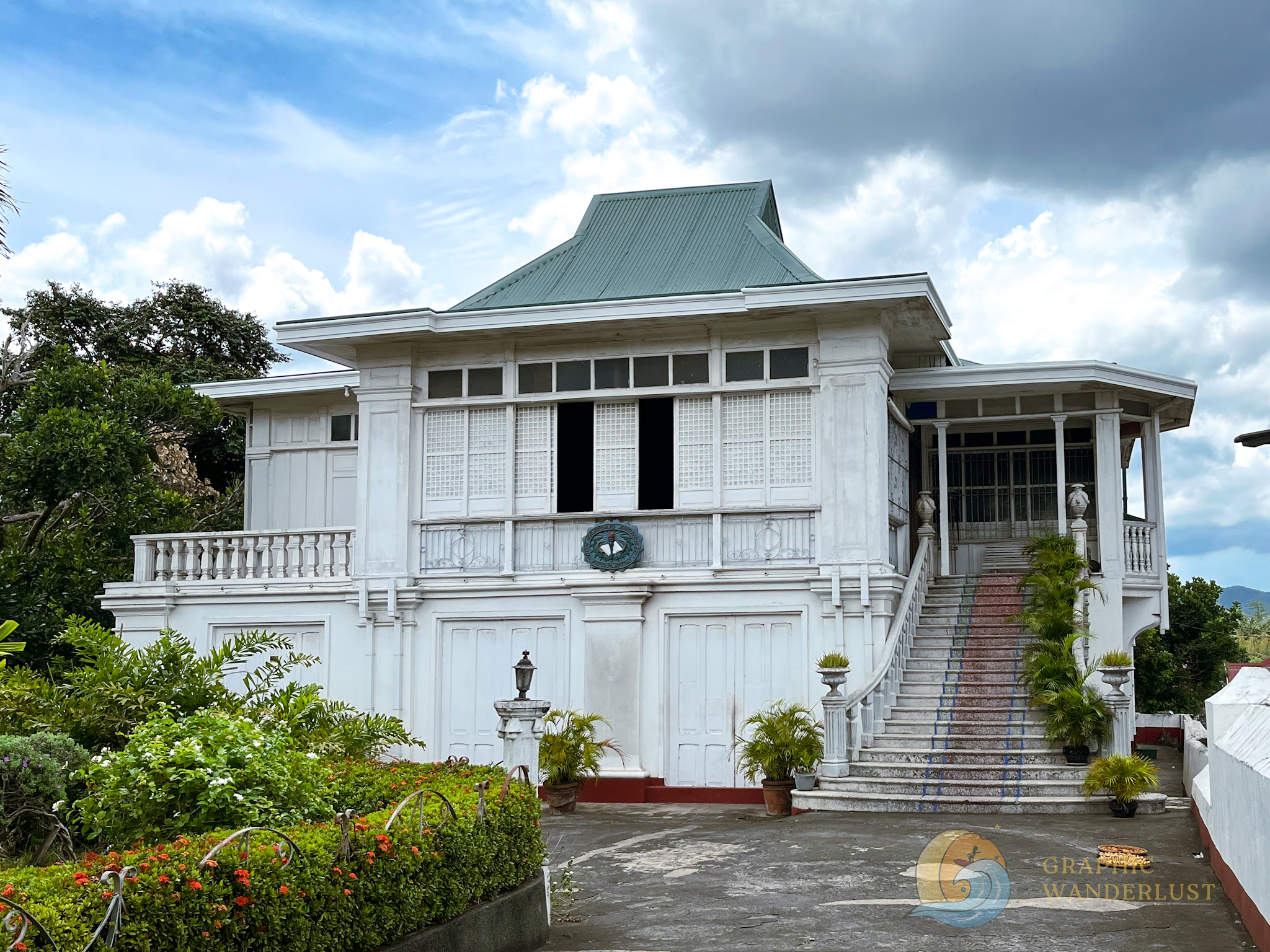
One of the few places that I hoped to explore during my recent trip to Taal, but wasn’t able to because an appointment was required, the all-white façade of Agoncillo Heritage House is one of the first few buildings that will welcome travelers visiting the town.
Contrary to the popular ancestral homes in Taal, The White House, as locals call it, is dressed in American colonial and Edwardian styles, which reflect the period when it was constructed.
Unlike Spanish colonial architecture, the Agoncillo Heritage House has a simpler and more functional design, accommodating the region’s tropical climate as seen in its large capiz sliding windows, airy rooms, and subtle decorative details. Its interior is adorned with Edwardian and Spanish-inspired furniture and belongings of the Agoncillo family.
A large bronze statue of Taal statesman Don Gregorio Agoncillo is found in front of the house as recognition of his contributions to the history of the Philippines.
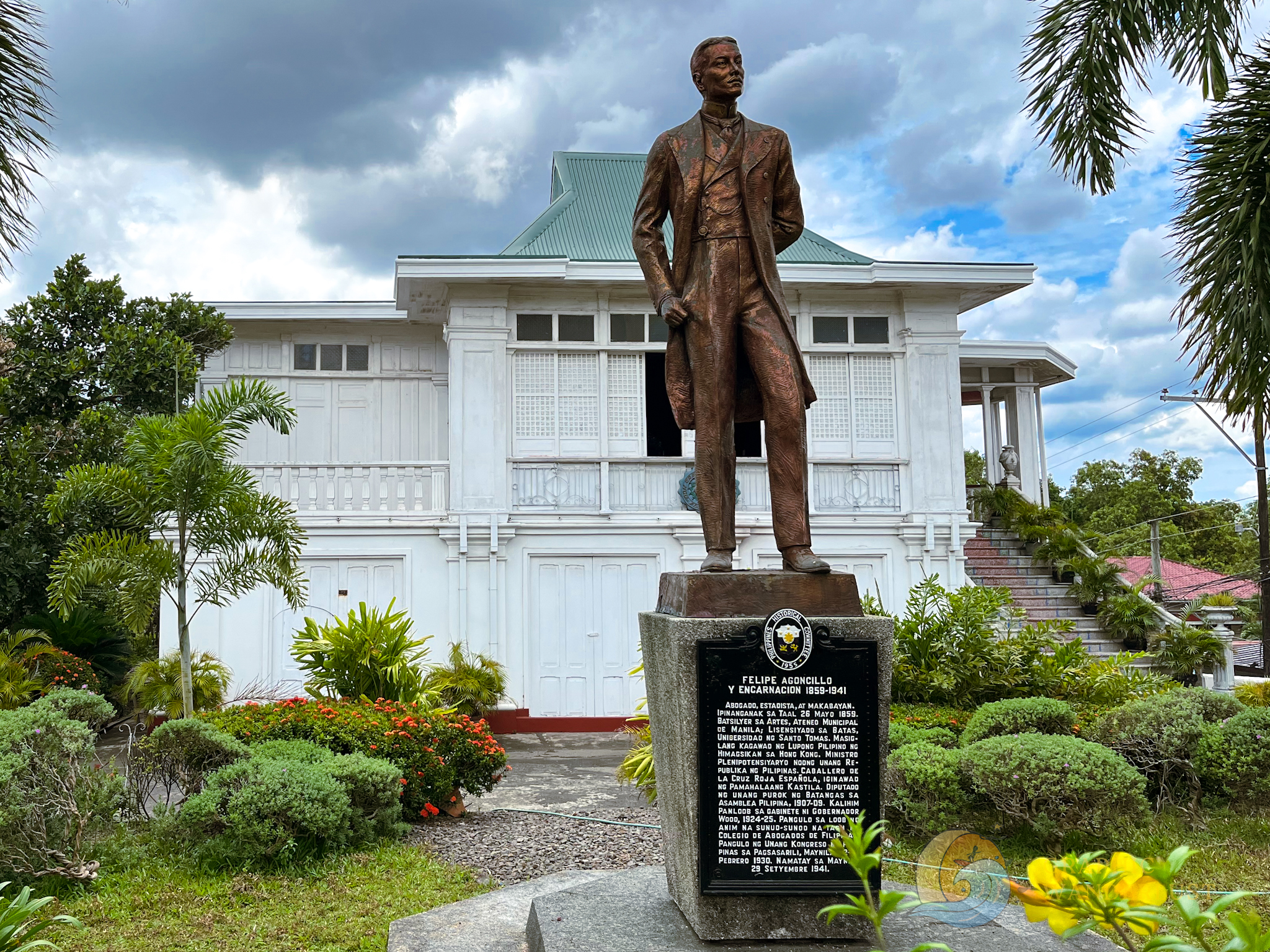
Learn more about Don Gregorio Agoncillo and his contributions
Taal statesman Don Gregorio Agoncillo is known for his support of the Philippine Revolution, being a member of former president Emilio Aguinaldo‘s revolutionary council, and for his role in the Treaty of Paris that declared the transfer of government of the Philippines from Spain to the United States. He is also locally credited for modernizing the sugar cane industry.
Museo nina Marcela Mariño at Felipe Agoncillo
Another Spanish colonial ancestral house that I wasn’t able to see because it was closed during my visit, the Museo nina Marcela Mariño at Felipe Agoncillo (Marcela Mariño and Felipe Agoncillo Museum) should not be missed, if possible, because of its former owner’s important and significant contribution to the Philippines.
Built in the late 18th century by Marcela’s grandfather along the banks of Pansipit River, the Mariño heritage house is one of the first and oldest bahay na bato in Taal town.
The house boasts a traditional Spanish colonial style with its first level stone walls and characterizing large capiz sliding windows on the second level. Its interior is adorned with antique wooden furniture and belongings of the Agoncillo family.
Similar to the Apacible house, the building is under the direction of the National Historical Commission of the Philippines, which also included galleries showcasing the couple’s life and contribution to the country, including Marcela Agoncillo’s greatest gift—the Philippine flag, which also has its own section depicting its development.
In recognition of her significant contribution to the country, a large bronze statue of Marcela Agoncillo was erected within the grounds of the ancestral home.
Find out how Marcela Agoncillo ended up sewing the first Philippine flag and Felipe Agoncillo’s contributions to the country
Felipe Agoncillo was the country’s first diplomat after being appointed as the ambassador of the Philippines to the United States and European nations under General Emilio Aguinaldo. As a diplomat, he worked on the recognition of the Philippines’ independence by other countries. He also played a role in the rejection of Treaty of Paris, which transferred the power of Spain to the United States to govern the Philippines, founding the Hong Kong-based Comité Revolucionario Filipino with General Emilio Aguinaldo during the height of the Philippine Revolution, and was also famous for his pro bono work providing free legal services to the poor as a practicing lawyer and winning their cases.
His wife Marcella Agoncillo, is dubbed the Mother of the Philippine Flag after sewing the first version of it in 1898.
After realizing her expertise in needlework, General Emilio Aguinaldo, who frequented their home in Hong Kong for meetings of the Comité, tasked her to create the first Philippine flag which she sewed using silk cloth with the help of her seven year-old daughter, Lorenza, and José Rizal’s niece, Delfina Herbosa de Natividad. The three were able to finish the flag within five days, which was unveiled and waved for the first time in present-day Cavite City to celebrate the victory of the Battle of Alapan on May 28, 1898.
Similar to the Museo nina Leon and Galicano Apacible, entrance to the place is also free to the public.
These are just some and the famous Spanish colonial houses in the Heritage Town of Taal. Other noteworthy ancestral sites include Villa Tortuga and the Goco Ancestral House, which require an appointment for visiting.
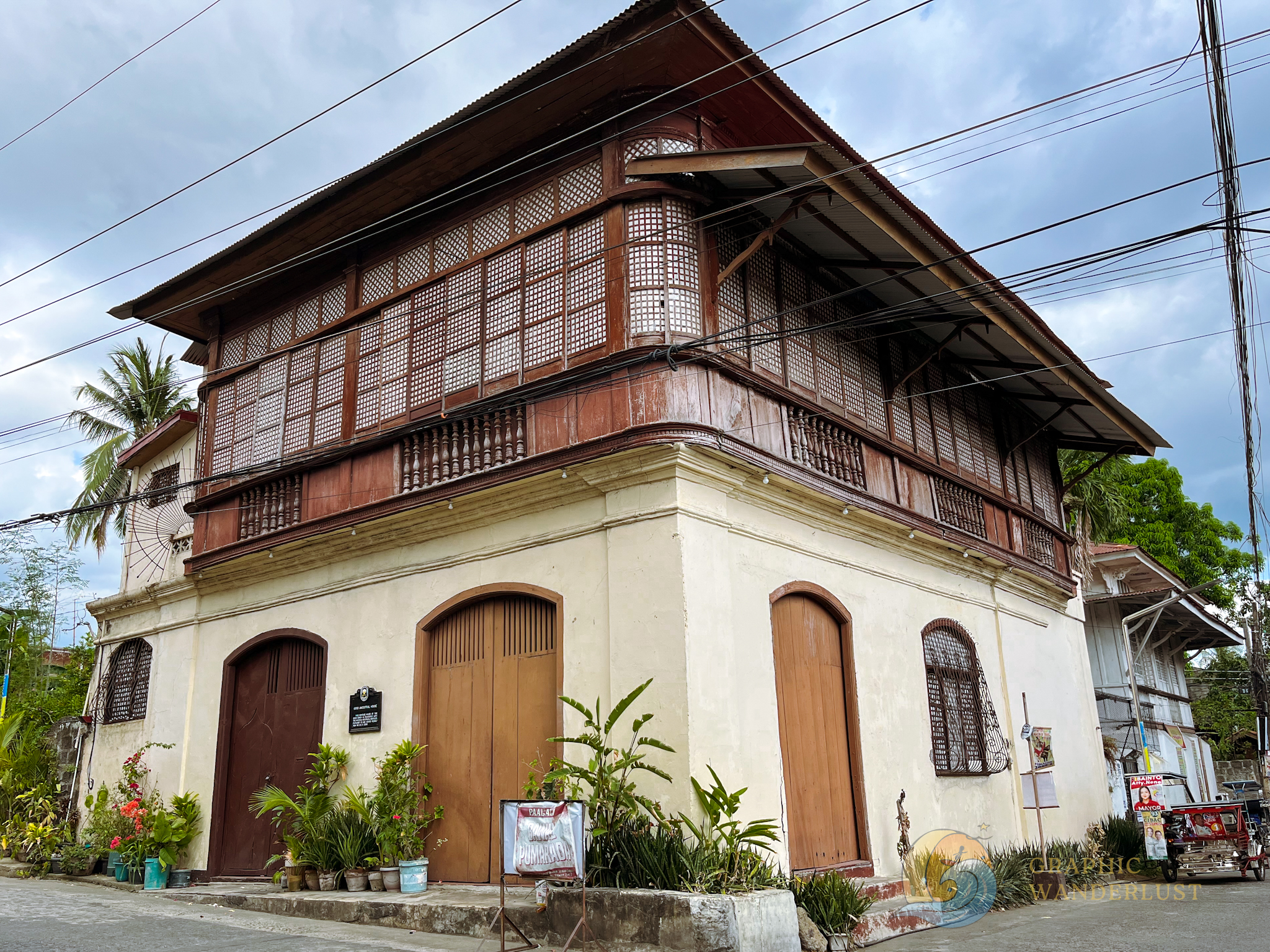
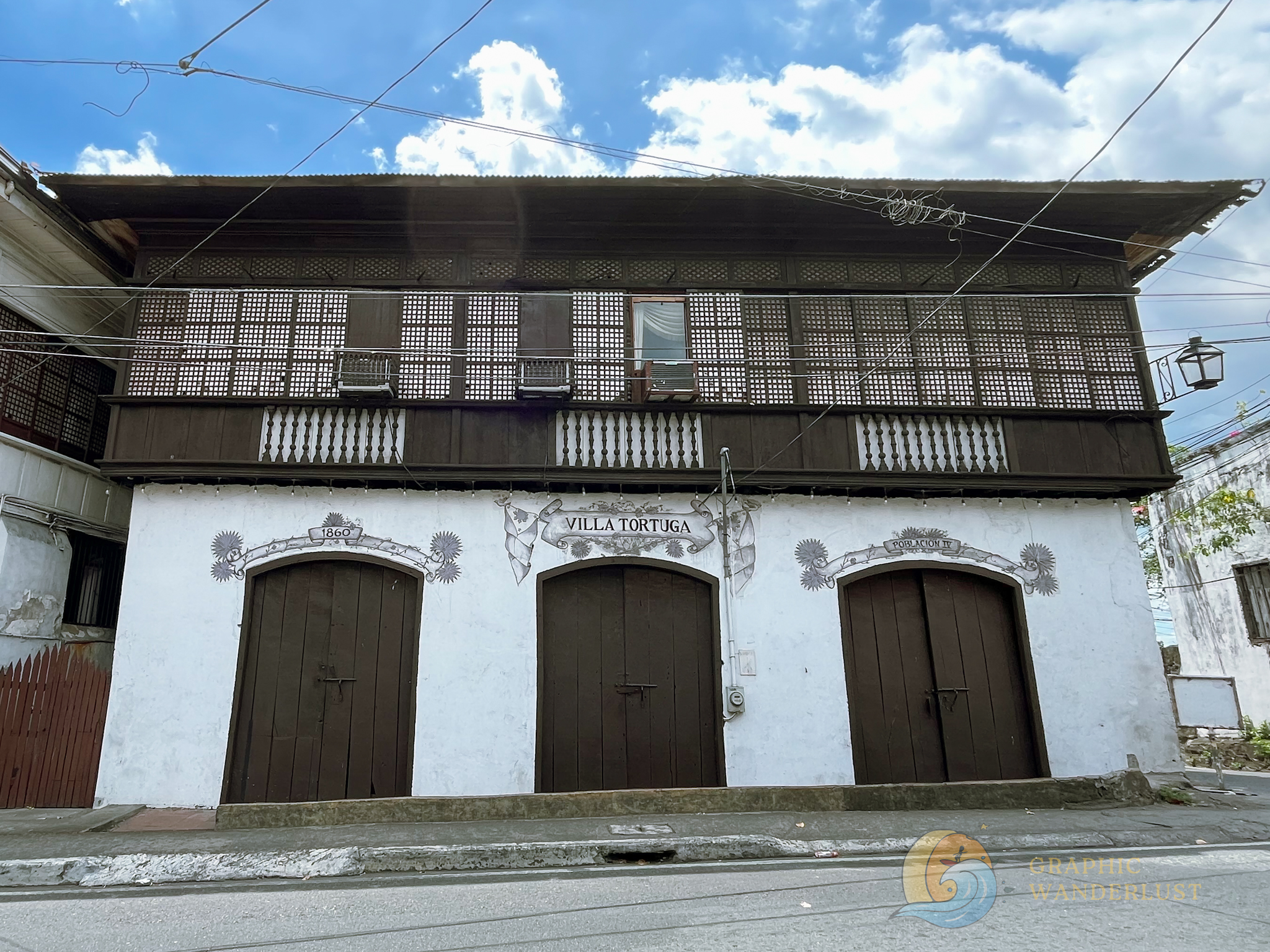
Other ancestral houses were turned into bed and breakfasts, accommodating travelers who want to stay in the town, while some remain as private homes passed down from one generation to the current one.
Religious Sites
Taal Basilica
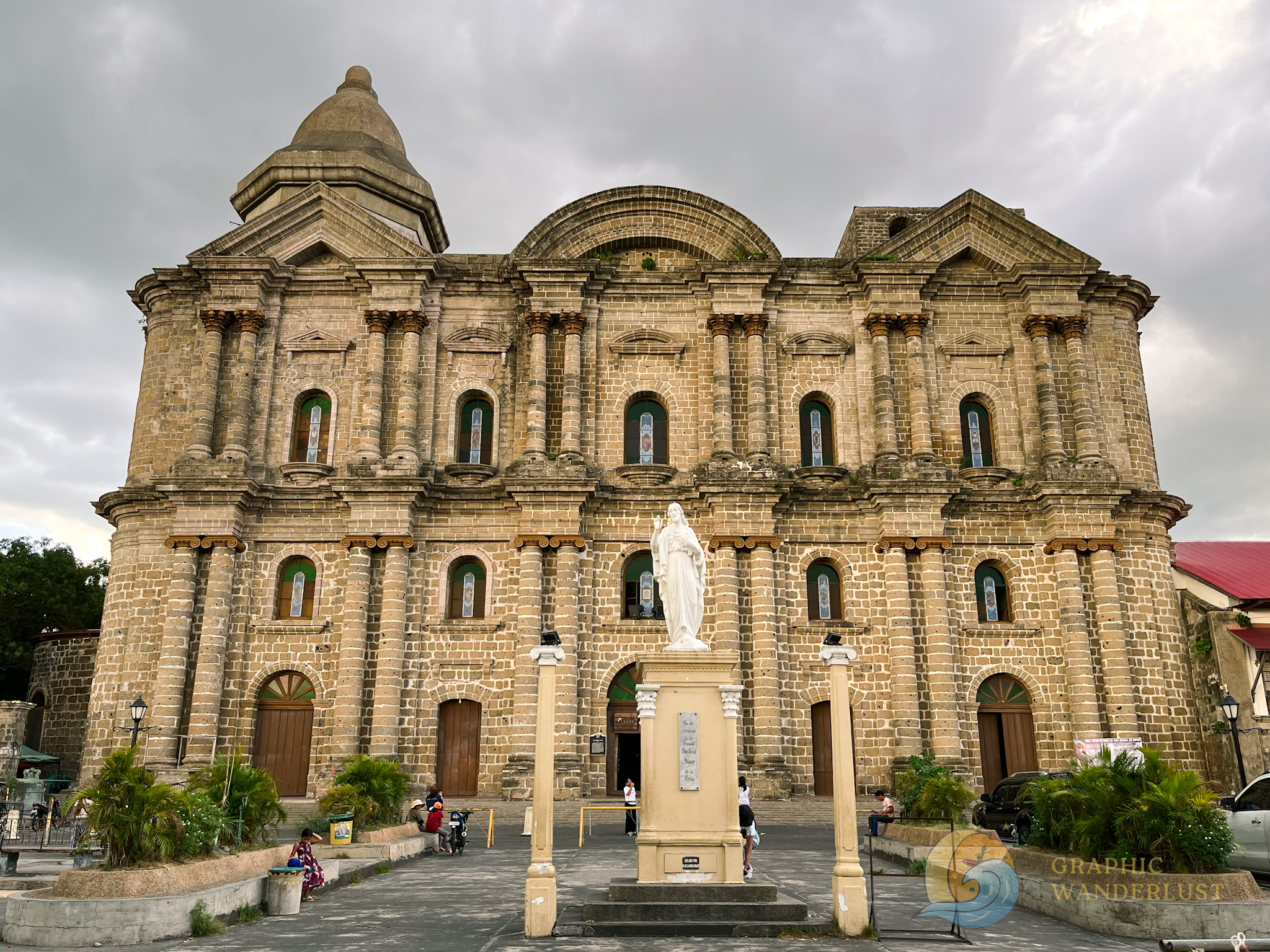
Towering over the whole town and overlooking the nearby Balayan Bay, the Minor Basilica of St. Martin of Tours, or simply Taal Basilica, is the main highlight of the heritage town.
Sitting at an elevated point, the basilica’s location is the result of Taal Volcano’s 1754 eruption after local authorities decided to rebuild the destroyed original church in San Nicolas to future-proof the building from natural disasters.
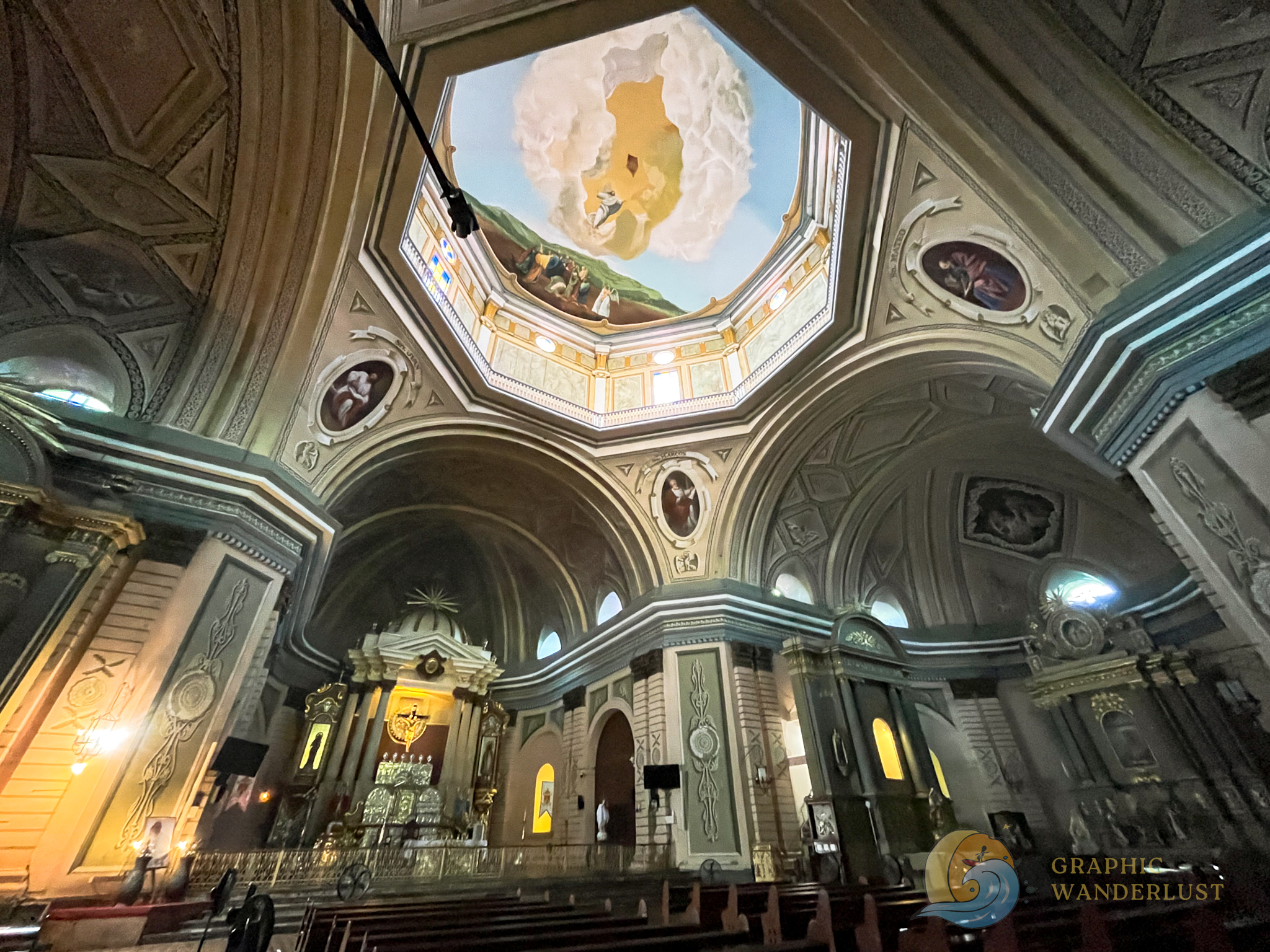
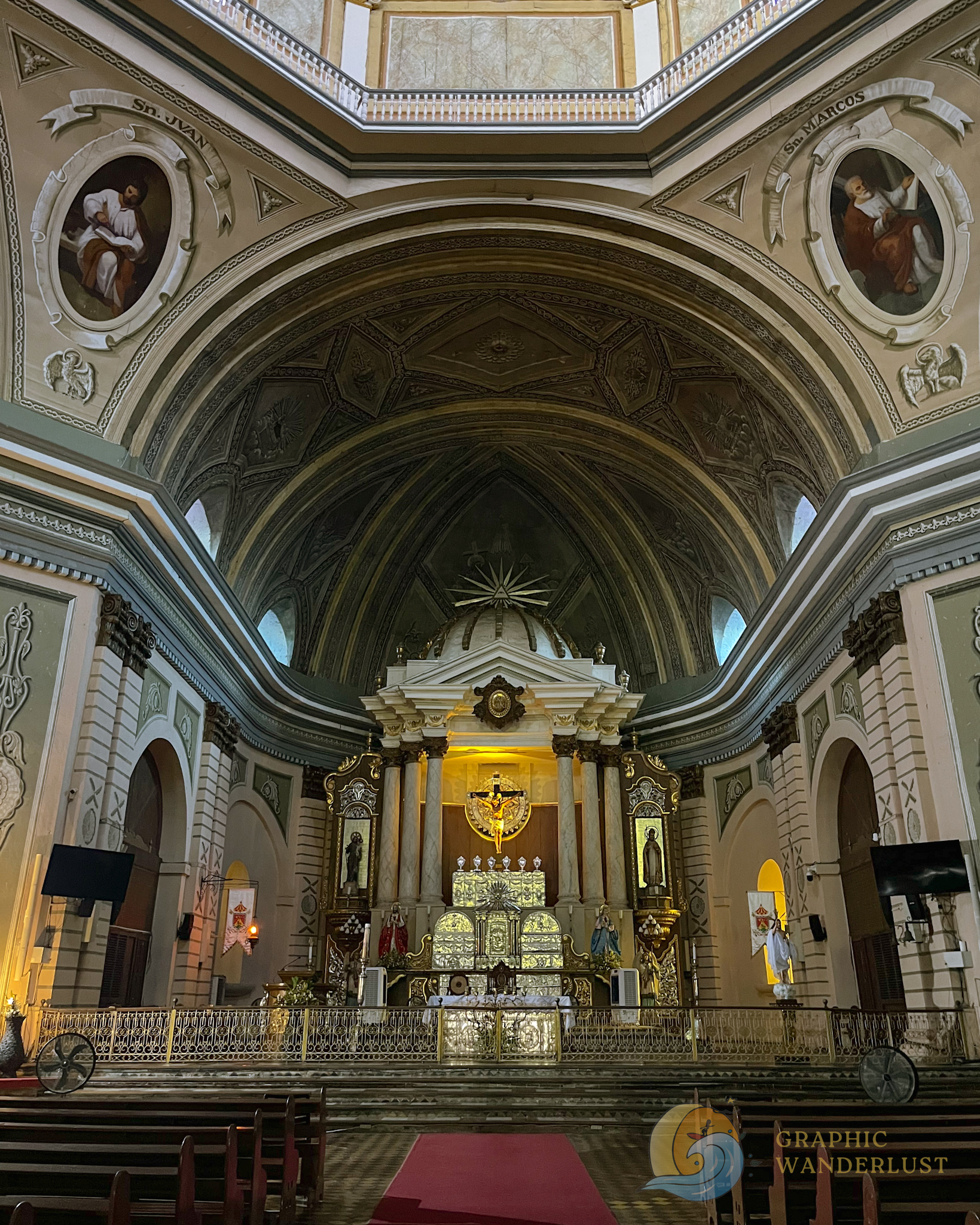
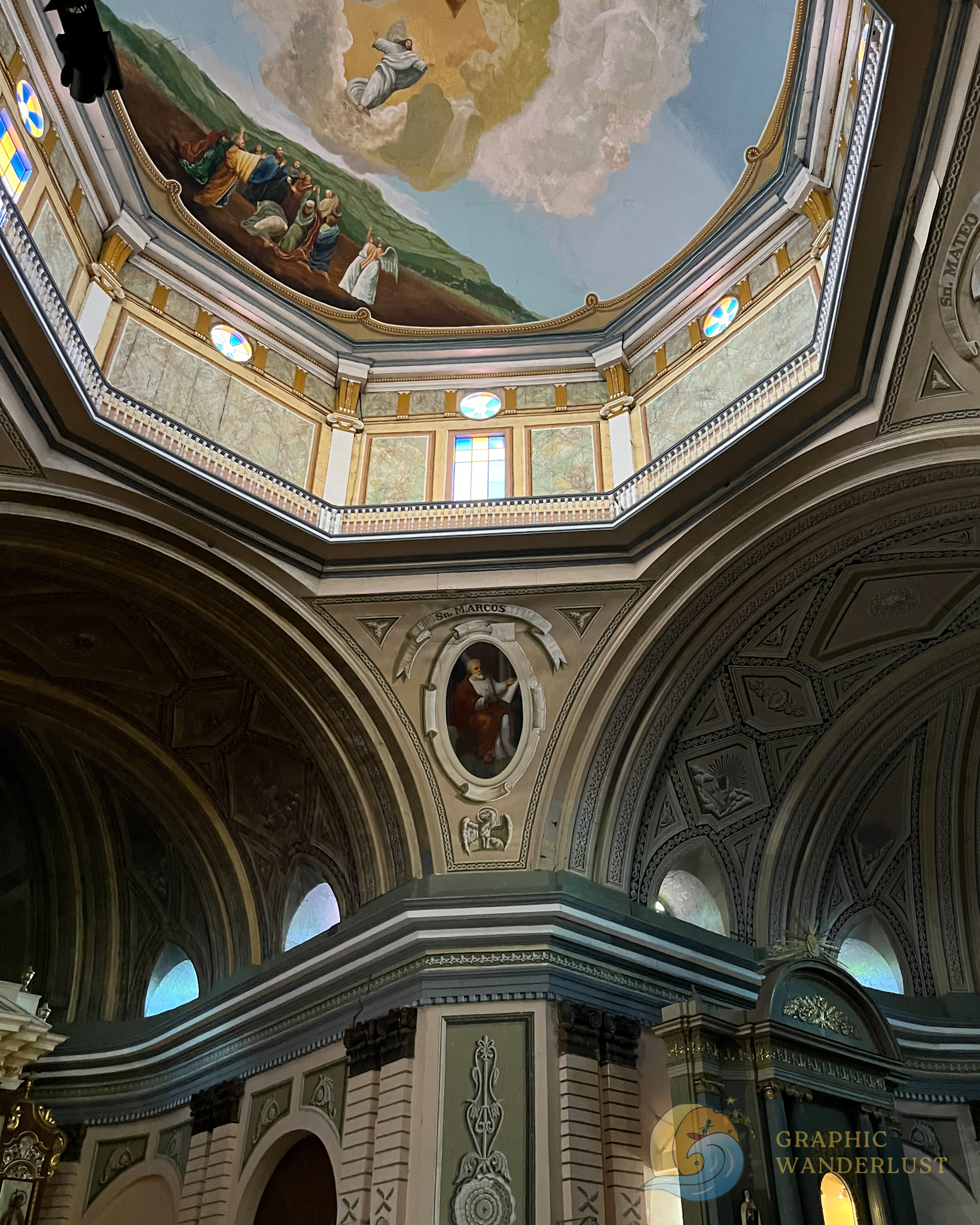
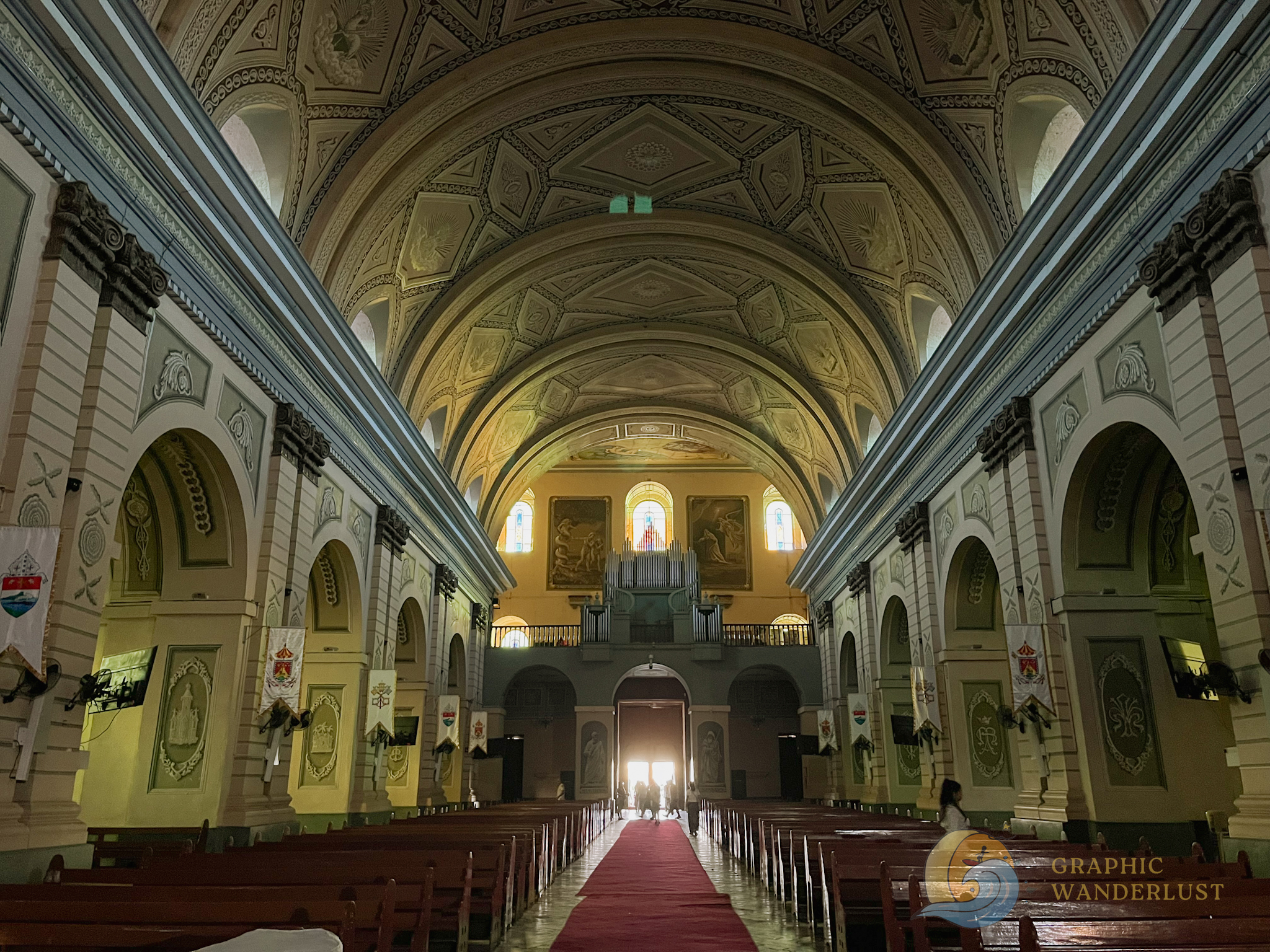
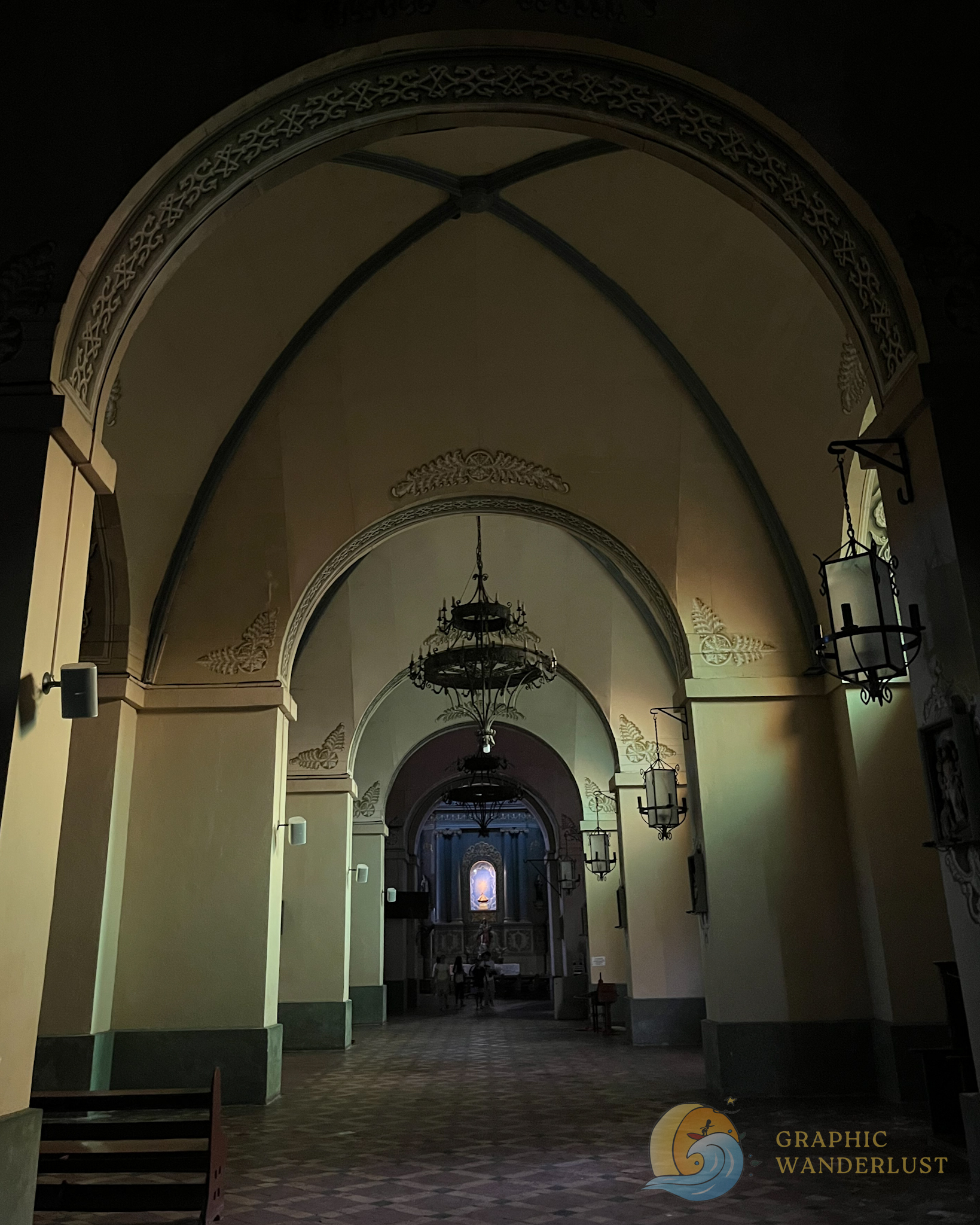
Today, the basilica enjoys its designation as a government-protected national historical landmark and the largest Catholic church in Asia, with its Italian Baroque architecture and trompe l’œil ceilings as its main highlights.
On a personal note, I also think that the basilica is one of the most beautiful and amazing churches that I’ve visited in the Philippines.
Our Lady of Caysasay Church
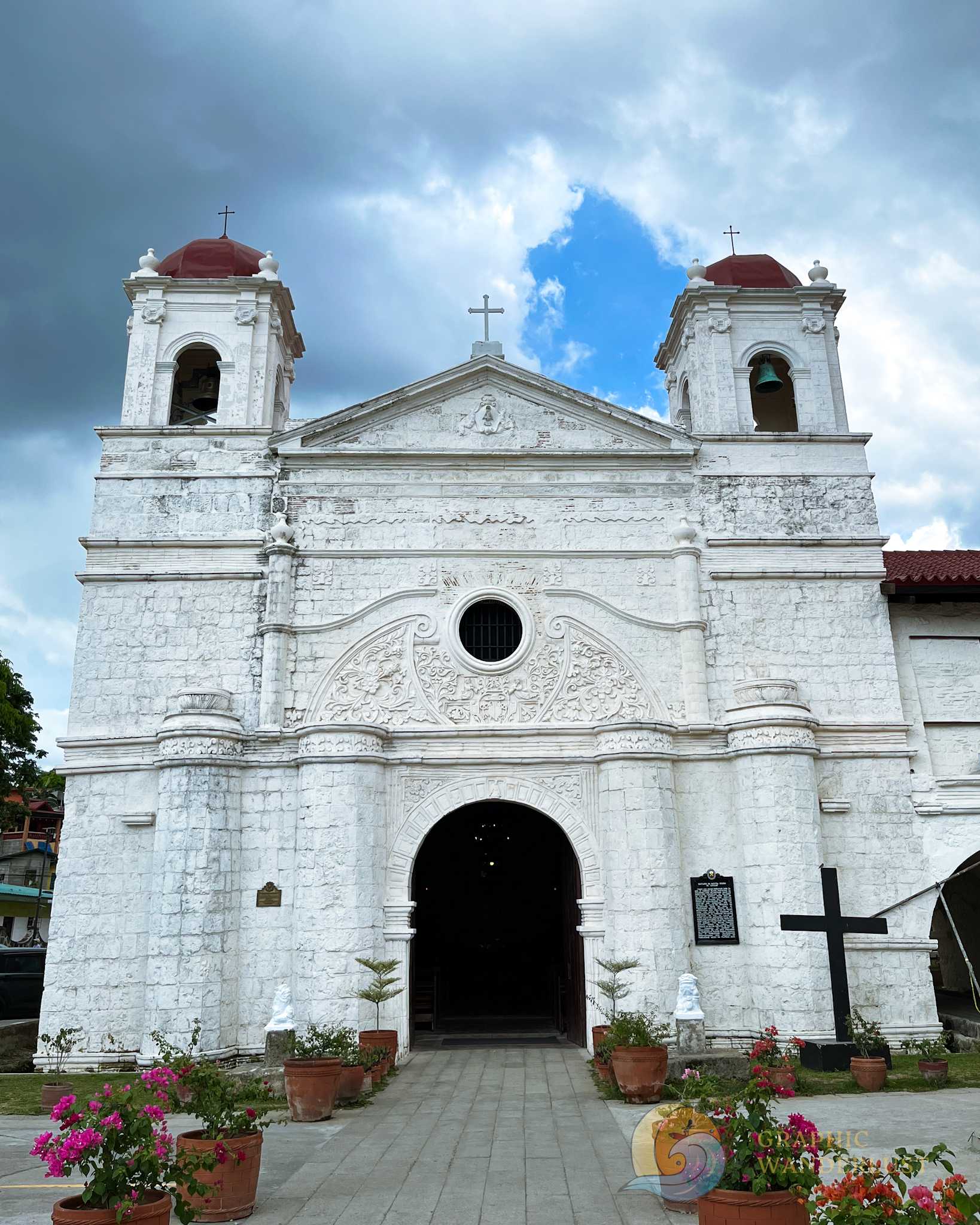
Officially called the Archdiocesan Shrine of Our Lady of Caysasay, this 17th-century Catholic church houses the sacred wooden image of the Virgin Mary, which was found in the waters of the nearby Pansipit River and is believed to possess miraculous powers.
This well-loved pilgrimage site is visited for the image’s healing powers, revered by the sick and the poor, as well as by the locals of Taal and its nearby towns.
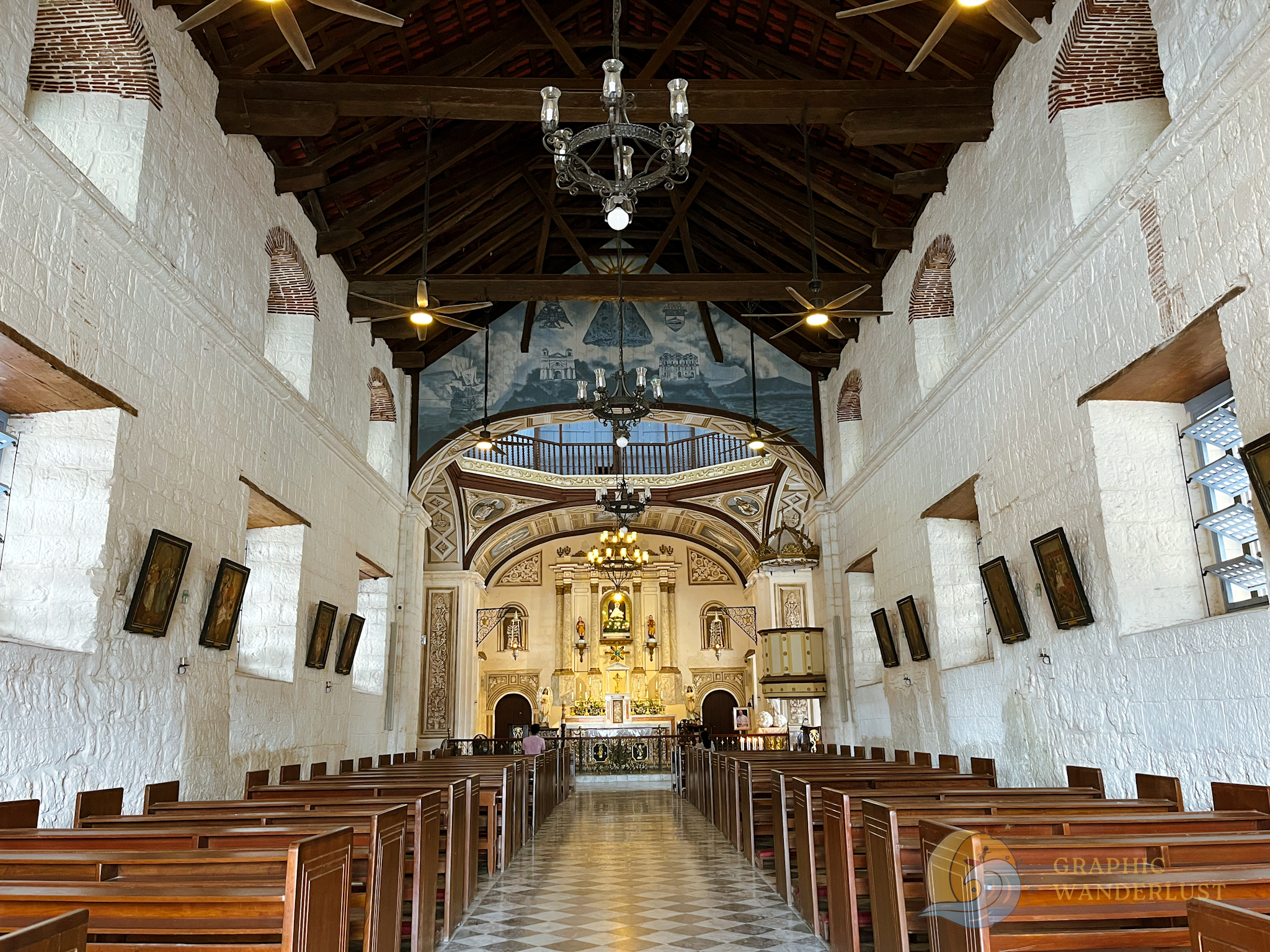
The church’s architecture is defined by its coral stone construction and trompe l’œil ceilings paired with minor yet unique details like the capiz shell windows at the clerestory level of its dome and façade bas-relief depicting the Virgin Mary at the top.
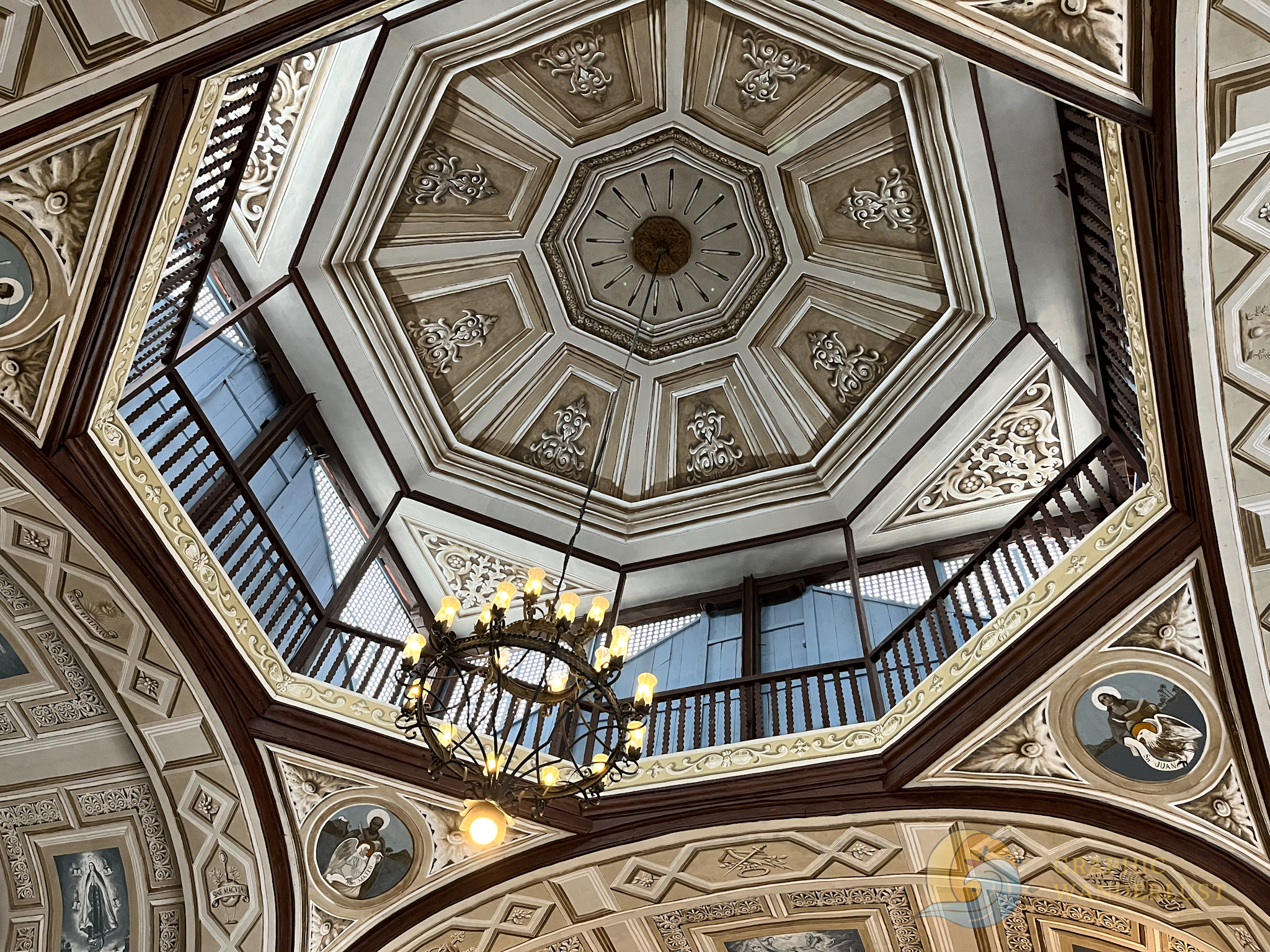
Today, the church is declared a national treasure and historical landmark, recognizing not just the Virgin Mary’s healing powers, but also the cultural and historical importance that it plays in Taal.
Sta. Lucia Well
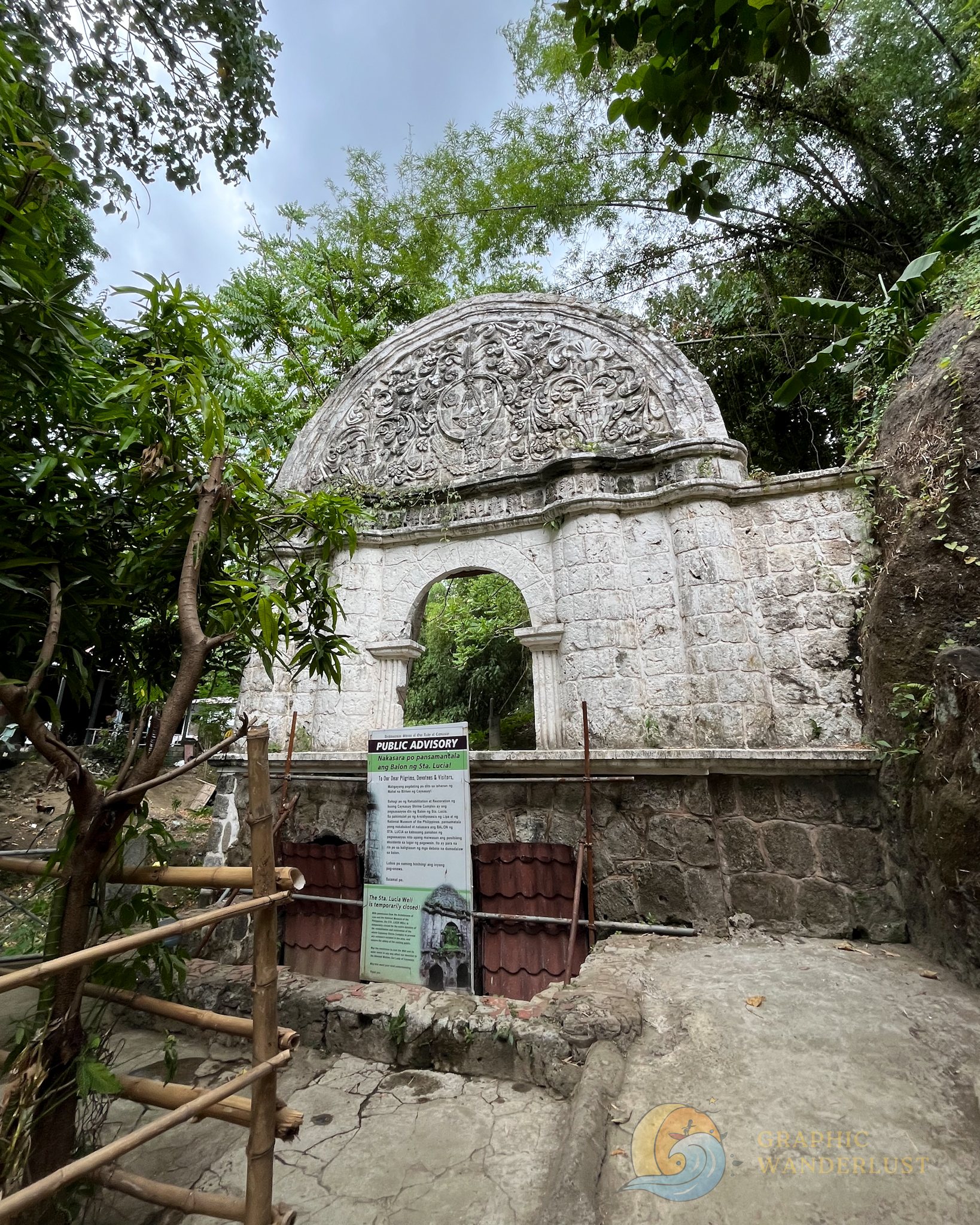
Another highly-revered spot in the town, the Sta. Lucia Well, or Banal na Pook (sacred place) as locals call it, is another place dedicated to the miraculous Virgin Mary of Caysasay.
Known to be the exact spot where the image reappeared after years of disappearance, the waters from this well are also believed to have healing powers after allegedly curing a local with a serious eye disease who used its waters in the early times.
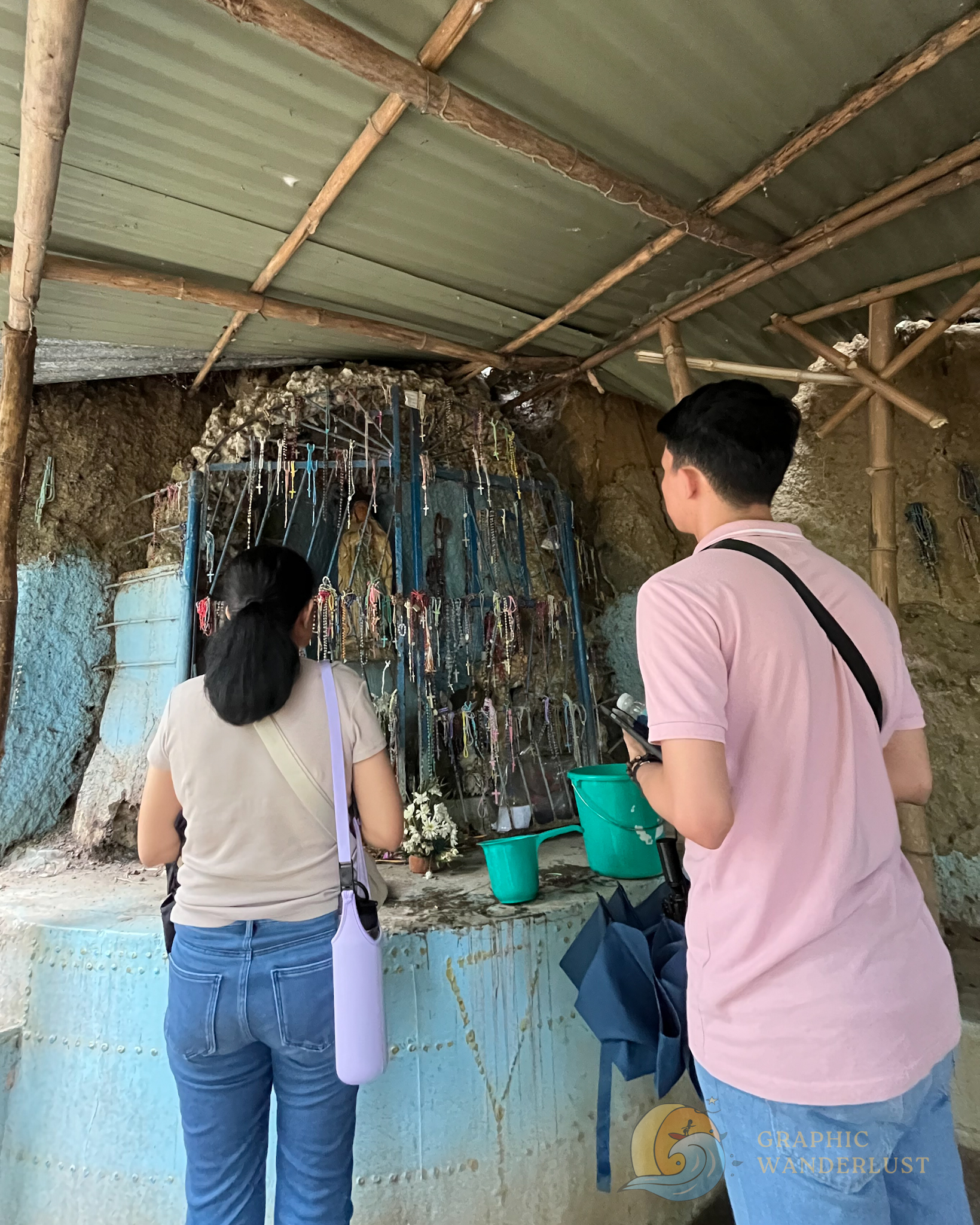
The spot also played an important role in the origins of the Virgin Mary’s name after two native women saw the image floating mid-air beside a sampaga tree with silvery kingfishers, locally called kasay-kasay, surrounding it.
Today, the well is distinguished by its large coral stone arch underscored by its bas-relief of cornices with an image of the Virgin Mary at the center.
The place is located in the middle of the forest, a few meters from the mid-section of San Lorenzo Luis Steps, which connect Caysasay Church to the town center.
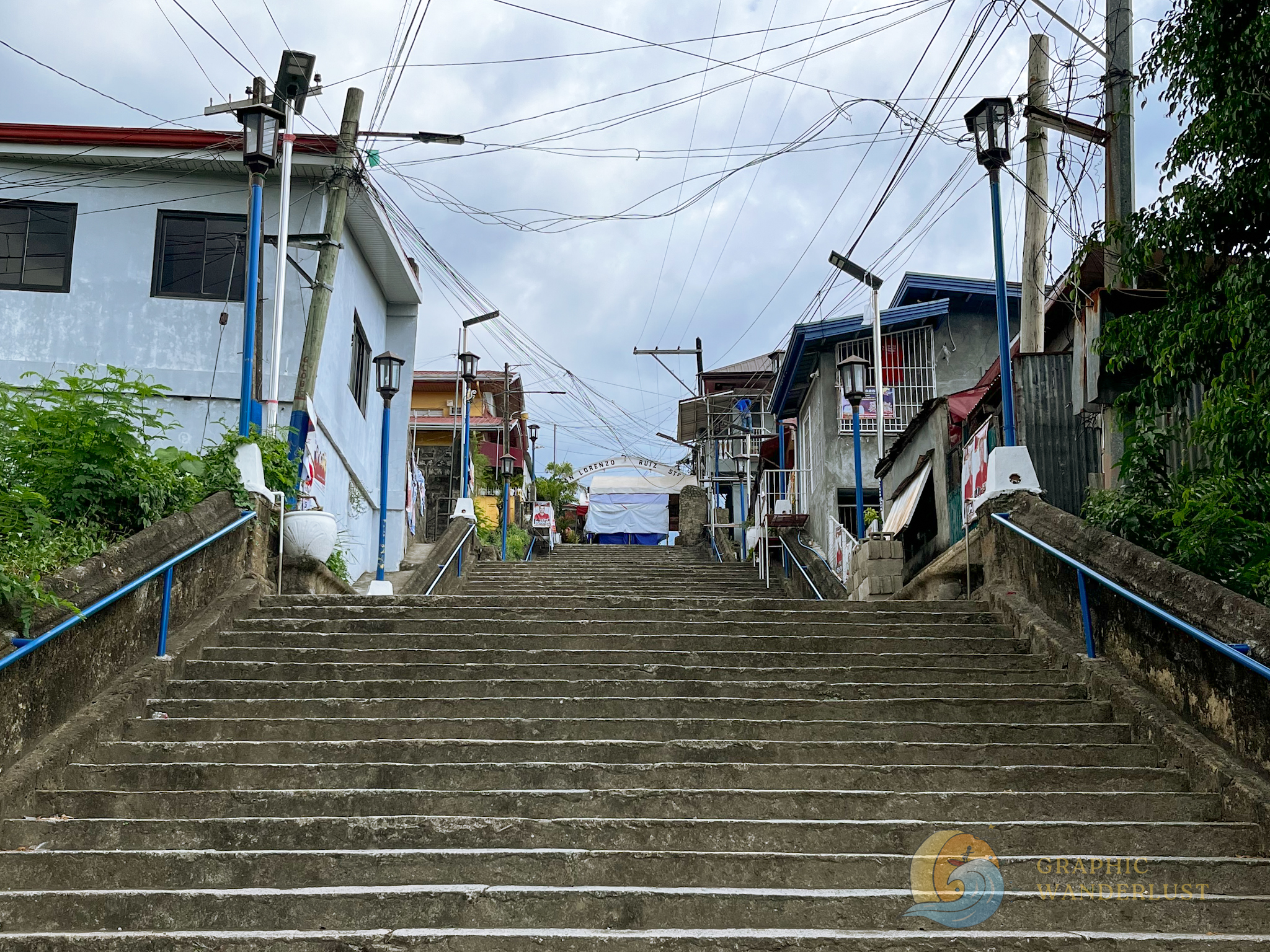
If unsure how to go, you can simply ask a local for directions or chance upon a little kid who will kindly take you to its location, which is what happened to us during our visit.
Entrance to the place is free; however, getting water from the well and lighting candles cost ₱30 and ₱20, respectively.
Taal Public Market
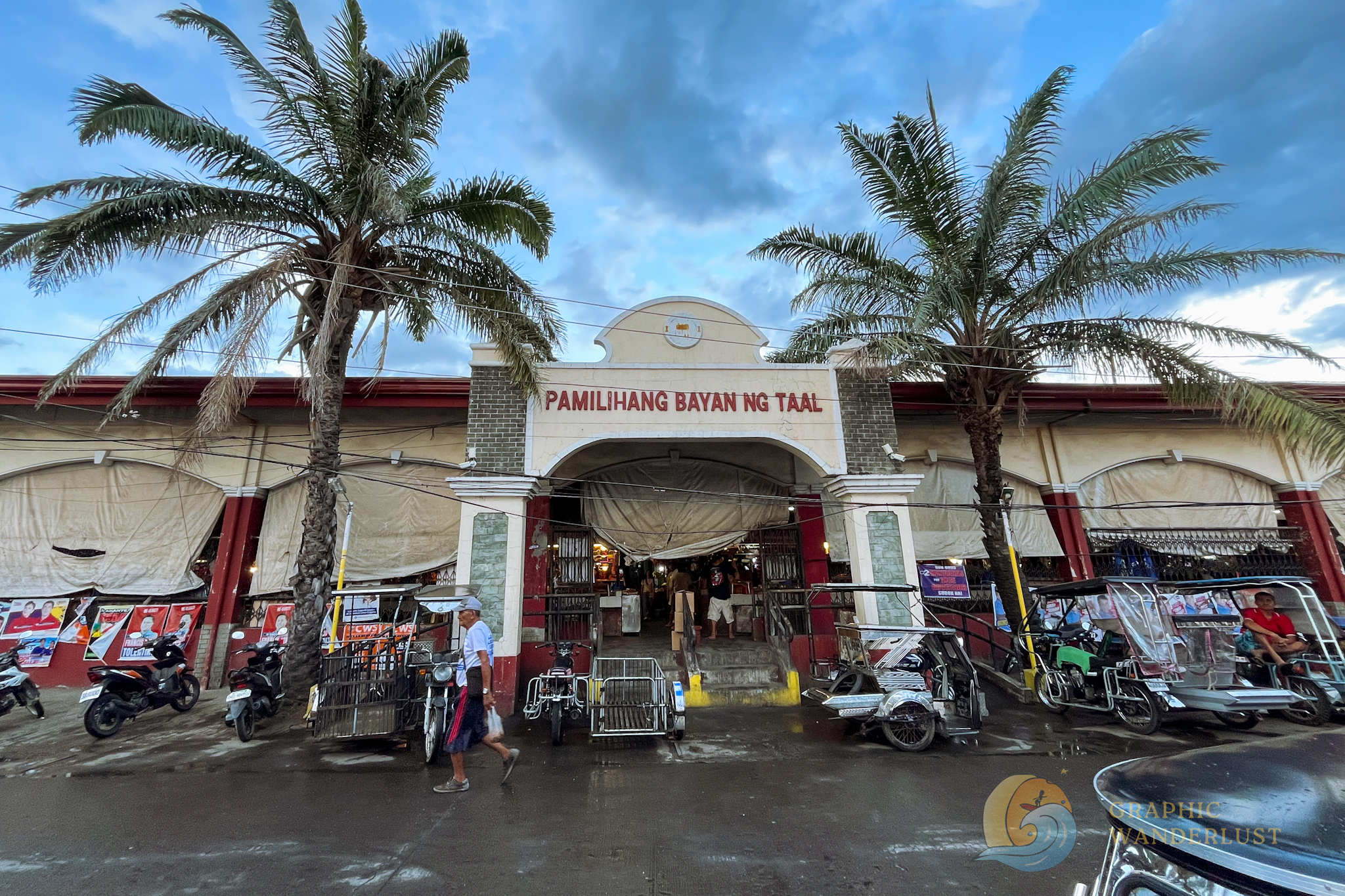
Complete your trip to the town by taking home some of the place’s specialties at Taal Public Market.
Located along Calle Ananias Diokno, two blocks away from Taal Basilica, the place is the best spot to take home the town’s signature tapang Taal (cured beef) and longganisa (Filipino sausage) in the lines of stalls selling them. Don’t forget to take home pieces of panutsa (peanut brittle), ube halaya (purple yam), and suman (rice cake) too for sweet lovers.
Aside from perishables, the market is also filled with gown stores, complementing the rows of shops outside it which sell Taal’s signature barong tagalog.
Where to Stay in Taal
One challenge that I encountered when I was planning my trip to the Heritage Town of Taal was the limited options available for overnight stays.
This fact posed another challenge, as available accommodation rates are slightly higher for budget travelers.
Nonetheless, if you don’t mind stretching your budget a bit to experience staying in a homey ancestral house, then you might find the extra amount worth the buck.
Here is a list of places to stay in Taal, including nearby options, if you want to experience the place after dark:
Budget:

Mid-range:
High-range:

Where to Eat in Taal
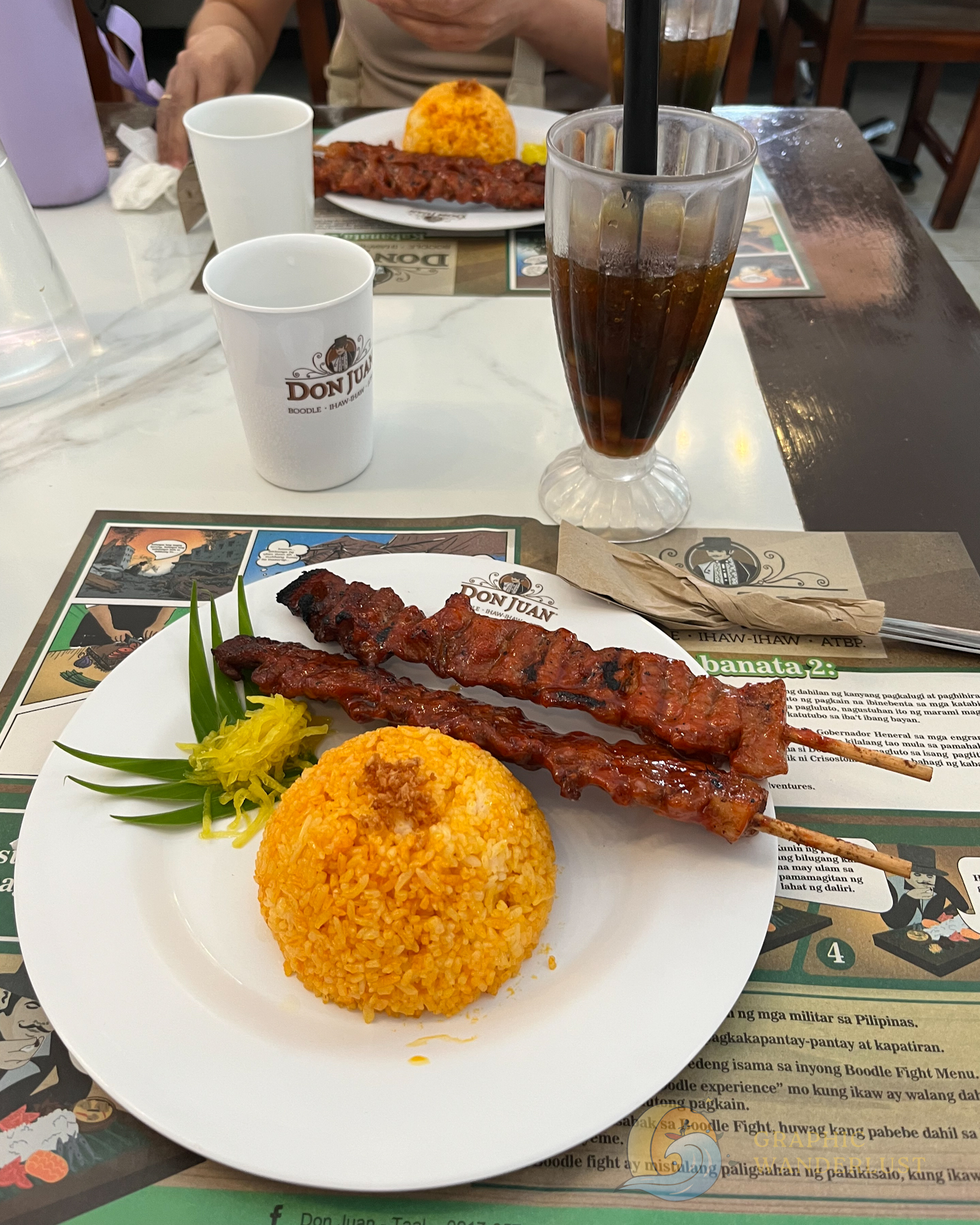
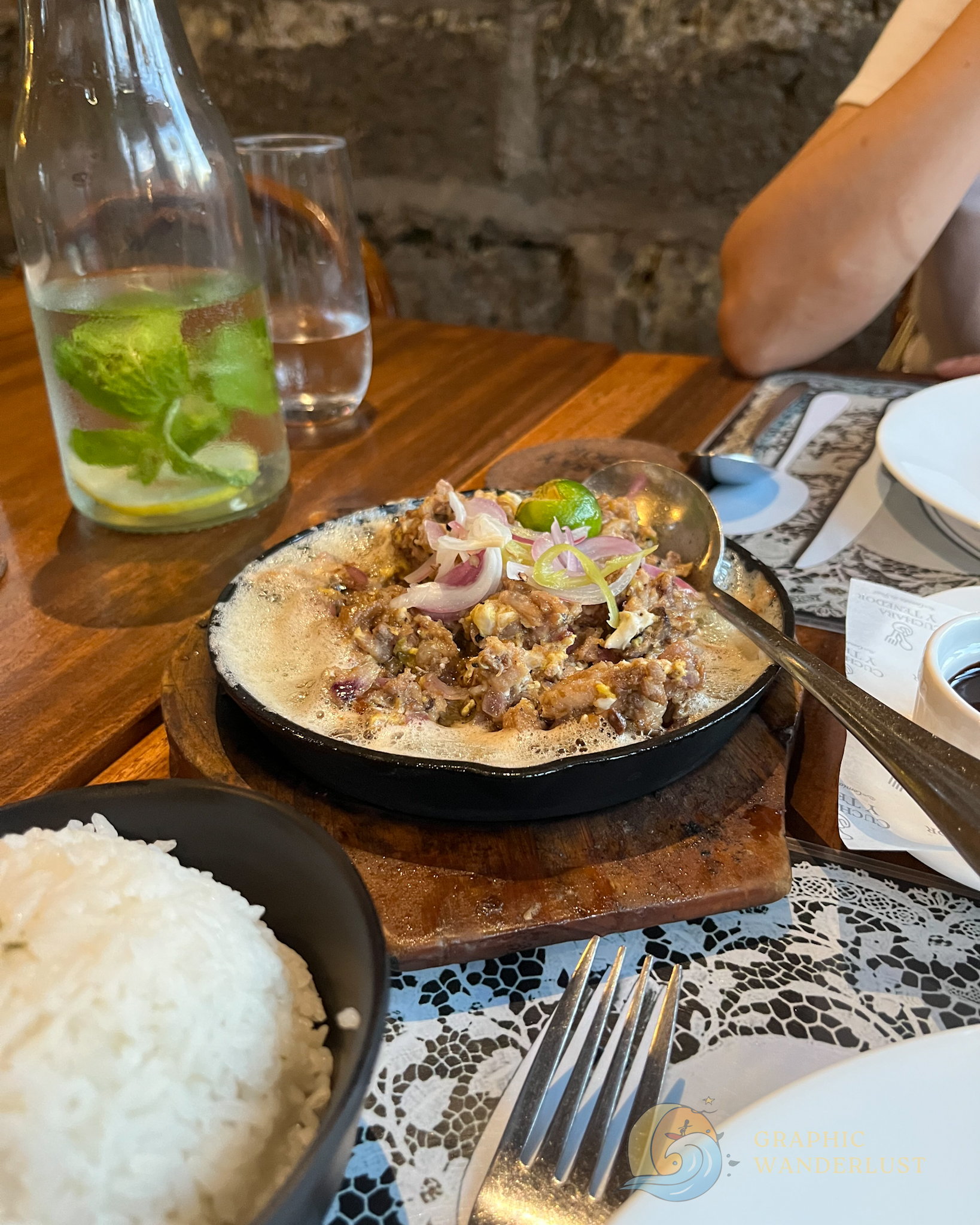
With a backdrop of centuries-old Spanish colonial houses and cobblestone streets, the Heritage Town of Taal effortlessly sets up the scene for a charming and memorable dining experience.
Staying true to its heritage, most of the dining spots in the town offer Filipino and Spanish cuisine, with a few serving Western specialties.
If you’re interested in trying some of Taal’s specialty dishes or just looking for a place to dine in after a day of sightseeing, here are some places to choose from in the town:
- Don Juan Boodle House – A Taal staple serving classic Filipino food and offering boodle fight set meals
- Cuchara Y Tenedor – A Filipino-Spanish restaurant serving classic local dishes
- Taal Bistro – A local eatery offering a mix of Filipino and Western dishes
- Roadside eateries – There’s a handful of them in the town serving various budget-friendly food ranging from halo-halo (sweet crushed ice dessert), pancit (traditional rice noodle dish) to skewers.
Sample Taal Heritage Town Itinerary
For our two-day and one-night trip to Taal Heritage Town, here is the actual itinerary we followed in exploring the village and commuting via public transport:
Day 1 – Traveling and Exploring Taal Heritage Town
6:30AM – Travel to SM Megamall
7:00AM – Board the bus headed to Lipa, Batangas
8:00AM – Depart for Lipa, Batangas
10:00AM – Arrival at SM Lipa Grand Terminal; board the modern jeepney headed to Lemery
11:30AM – ETA in Taal Heritage Town; drop-off luggage in accommodation
11:45AM – Early lunch at Don Juan Boodle House
1:00PM – Visit the Museo nina Leon at Galicano Apacible
1:30PM – Visit Villavicencio ‘Wedding Gift’ House
2:00PM – Pass by San Lorenzo Ruiz steps
2:15PM – Drop by Our Lady of Caysasay Church
2:30PM – Visit Sta. Lucia Well
3:00PM – Check-in at accommodation and rest
4:30PM – See Taal Park
4:35PM – Visit and explore Taal Basilica
5:20PM – Drop by and explore Taal Public Market
5:40PM – Early dinner at Cuchara Y Tenedor
6:30PM – Head back to accommodation and rest
Day 2 – Souvenir Shopping and Return to Manila
7:30AM – Wake up and prepare
10:20AM – Drop by at Agoncillo Heritage House
10:30AM – Visit Taal Basilica again
11:00AM – Buy souvenirs at Taal Public Market
11:30AM – Head back to accommodation and check out
12:00PM – Board the jeepney going to SM Lipa
1:00PM – Late lunch in SM Lipa
2:20PM – Board the bus going to SM Megamall
4:00PM – Arrival in Manila
Budget Breakdown
Since the trip was fully covered by me, including the expenses of my companion, here is the breakdown of our trip expenses, sorted both for two pax and per person for reference.
If you want to save more, you can do a day trip and skip booking an accommodation; however, expect your schedule to be tighter and more tiring.
| Particulars | 2 pax | Per pax |
|---|---|---|
| 1-night stay at Casa Conchita | ₱2,077.59 | ₱1,038.80 |
| Transport going to SM Megamall | ₱50.00 | ₱25.00 |
| Snacks | ₱38.00 | ₱20.00 |
| Bus going to Lipa | ₱372.00 | ₱186.00 |
| Modern jeepney going to Taal | ₱154.00 | ₱77.00 |
| Don Juan Boodle House | ₱541.00 | ₱270.50 |
| Casa Villavicencio Wedding Gift House Entrance Fee | ₱200.00 | ₱100.00 |
| Souvenirs | ₱350.00 | ₱350.00 |
| Cutsara y Tenedor | ₱695.00 | ₱347.50 |
| Jeep to Lipa | ₱130.00 | ₱65.00 |
| Lunch at SM Lipa | ₱385.00 | ₱192.50 |
| Bus to Manila | ₱376.00 | ₱188.00 |
| Transport going home | ₱62.00 | ₱31.00 |
| Grand Total | ₱5,430.59 | ₱2,891.30 |
Taal Town Travel Tips
- If you’re keen on seeing a specific ancestral house, ensure to check if visits require an appointment before going to the town, and contact the owner/caretaker or the local tourism office first. Most house visits require prior booking, except Villavicencio ‘Wedding Gift’ House, Galleria Taal, and the government-operated museums, which accept walk-in visitors.
- Contrary to what one may expect, the Taal Heritage Town is mostly sleepy during regular days. Hence, if you want to experience a livelier ambience, try visiting the village during important historical events and local festivities such as Independence Day or the Feasts of St. Martin of Tours in November or Our Lady of Caysasay in December, when most houses are opened for public viewing.
- As opposed to what most articles online are saying, going to the bell tower of Taal Basilica is not allowed anymore as of 2025.
- Don’t fall for vendors claiming they are selling tawilis (freshwater sardine only found in Taal Lake) as the species is currently endemic, limiting its catch, and worsening due to the recent Taal Volcano eruption in 2020.
It’s quite surprising to realize that there are places and unsung heroes like Taal town and its great natives whose importance and contributions are not being highlighted in schools and textbooks as part of Philippine history being taught to students.
Personally, this recent trip to Taal became a strong eye-opener for me about the current status of the education system in the Philippines that important places like Taal town are being left out in the pages of school textbooks—more worrisome is the future of heritage preservation in the midst of the threat of historical revisionism.
Nonetheless, through small acts like publishing posts like this, I am hopeful that history will be preserved and awareness and knowledge can be built about important historical places like the town of Taal.
How about you, is this also your first time discovering the town and its people’s contributions to Philippine history? How does that make you feel? Share your thoughts in the comments below!
If you also find this post useful, you can support me in creating more travel and hiking guides in the future! Just tap on my Ko-fi or Buy Me a Coffee profile to get started or share this post with your friends or socials for free!
Read more historic Philippine destinations!





Any thoughts?