

Bangkok may be brimming with endless sights and activities for every type of traveler but nothing can beat the charm and experience of doing Ayutthaya day tours and seeing its temple ruins just north of the city.
Historically noted as the second capital of the country after Sukhothai, Ayutthaya has been the seat of power and center of commerce and global diplomacy of the then Kingdom of Siam from the 14th century up to the 18th century. The civilization that flourished within this city became an integral influence in the region and paved the way for the construction of different buildings and institutions which included royal palaces and monasteries. However, in 1767, Ayutthaya faced its fall when the Burmese army attacked eventually burning the city to the ground. The fleeing royal court sought refuge in the south in Thonburi where they moved the country’s capital to modern-day Bangkok and left Ayutthaya in ruins.
Today, this ancient city enjoys its designation as a UNESCO World Heritage Site covering a total of 289 hectares and protecting a handful of important archaeological ruins, paying homage to Thailand’s once glorious capital.
Table of Contents
- Where to Book Tours
- Traveling to Ayutthaya from Bangkok
- Bang Pa-in Palace
- Wat Niwet Thammaprawat
- Trying Ayutthaya’s Grilled River Prawns
- Wat Yai Chai Mongkhon
- Wat Mahathat
- Wat Chaiwatthanaram
- Ending the Day at Rak Na Café
Where to Book Tours
After finding out that Ayutthaya is a UNESCO World Heritage Site, I was instantly sold to visiting the city and made sure to allot a day in our itinerary to it when we visited Bangkok. I was also particularly excited to experience this place due to its similarities with the temples in Angkor Wat, Cambodia which also piques my interest. Hence, without an ounce of doubt, I’ve looked up different tours going to Ayutthaya from Bangkok and rounded up the following options:
- Ayutthaya Day Tour from Bangkok: Ayutthaya Temples (Thai Costume), Bang Pa-in Summer Palace, Talad Kung & Cafe | Thailand
- Ayutthaya Must-Visit Tour: Summer Palace, Temples Full Day
- Ayutthaya Temples One Day Tour from Bangkok
- Ayutthaya Temple Day Tour
Most of these tours include visits and admissions to the must-see temples of Ayutthaya and would only vary on the organizer’s itinerary, additional stops and add-ons such as onboard sandwiches, free bottled water, etc.
For our trip, we opted to avail of the first package from KKDay due to its relatively cheaper price among the rest which we were able to get for only ₱1231.79* per person on Agoda for booking advance. This wasn’t a bad deal as our experience on the tour was generally good and we enjoyed the company of our guide, Must.
Our booked package also included the arrangement of our trip’s itinerary which was detailed as follows:
*2024 rate. I highly suggest checking with the tour organizer for the updated price rate.
Traveling to Ayutthaya from Bangkok
Since our tour package included transport from Bangkok to Ayutthaya and vice versa, we easily reached the city by meeting with our guide at MBK Shopping Center in Siam and hopping on the bus assigned to our group. Travel time wasn’t that long and lasted more or less an hour and a half after taking the northbound highway. During the trip, our guide also oriented us on what we would be expecting in the day’s tour before finding ourselves getting off the bus for our first stop of the day.
Bang Pa-in Palace
- Address: Bang Pa-in District, Phra Nakhon Si Ayutthaya
- Operating hours: 8:00AM-4:00PM
- Entrance fee: THB100
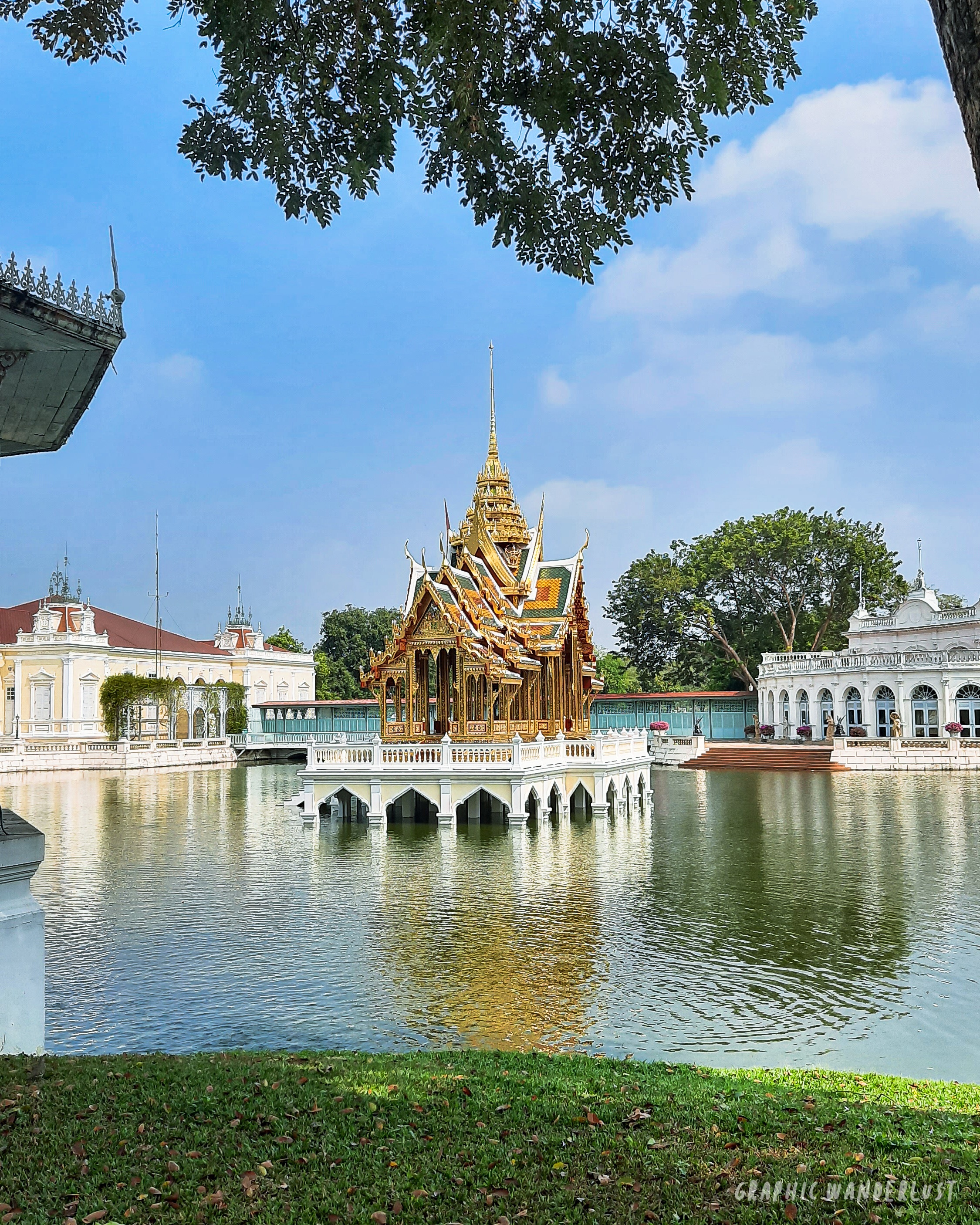
The sun was up yet the breeze was noticeably colder than in the city when we first stepped out into the province of Ayutthaya. Our first stop was in the district of Bang Pa-in where the famous summer palace of the Thai royal family is located which is known for its buildings designed with a mix of Western, Thai and Chinese architectural styles. Nonetheless, the real star of the place is its man-made lake which bears a striking golden pavilion at its center which is also noted to be a replica of the one found in The Grand Palace.
After days of wandering through the streets of Bangkok, catching sight of wide-open space and greenery in Bang Pa-in Palace was a relief to our eyes. From afar, one can easily see the structures which the place boasts including its Doll Bridge and its Greek-inspired sculptures, Phra Thinang Warophat Phinan and its distinct white and yellow neoclassical exterior and the tiered-roof pavilion of Phra Thinang Aisawan Thiphya-art tucked at the center of the place’s man-made lake and across the octagonal English-inspired pavilion of Gra-Jom Tae. In just a few glimpses, one can easily infer that King Chulalongkorn—one of the kings who restored the palace from ruins and ordered the construction of most of the buildings on the site—was a big admirer of Western architecture.
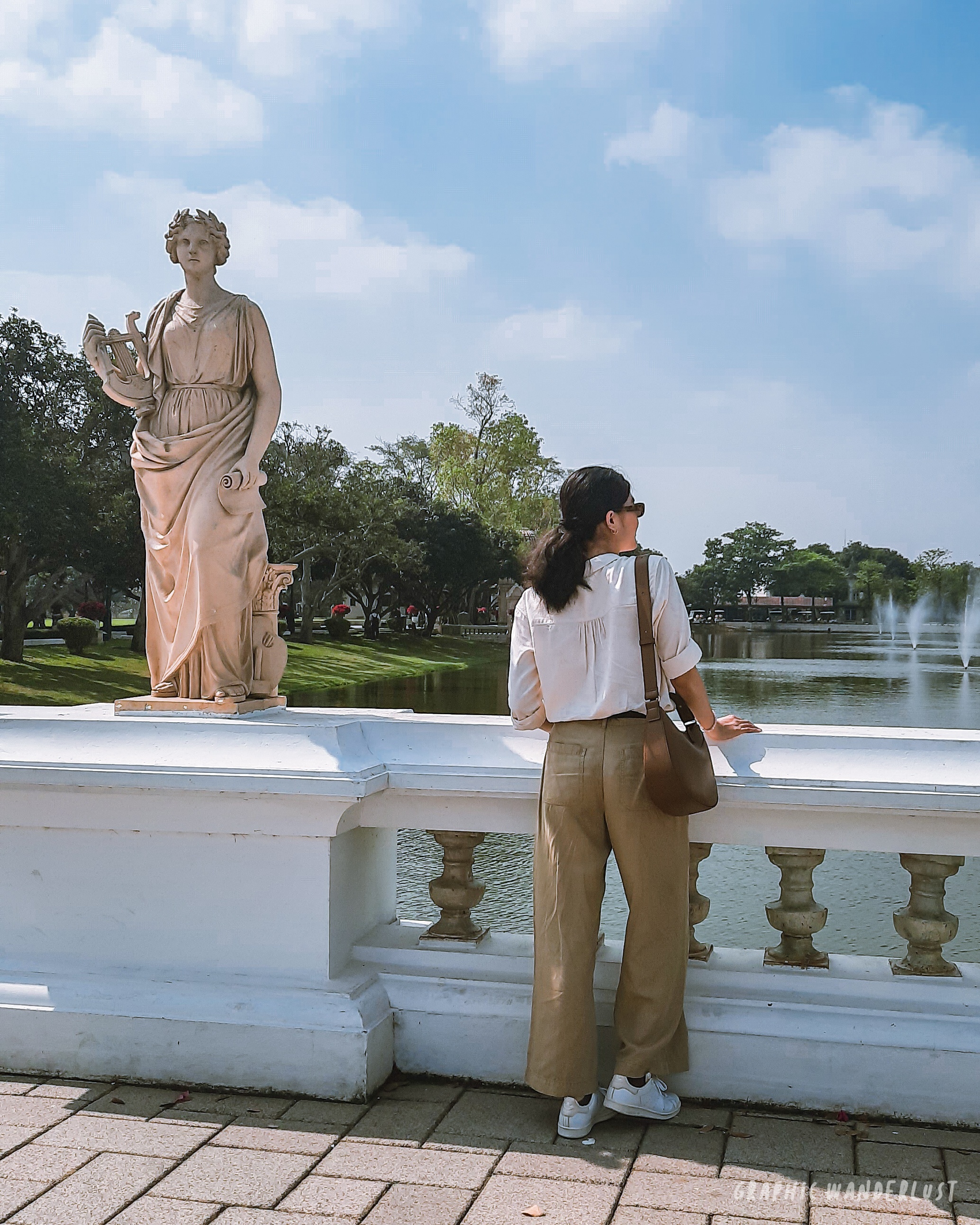
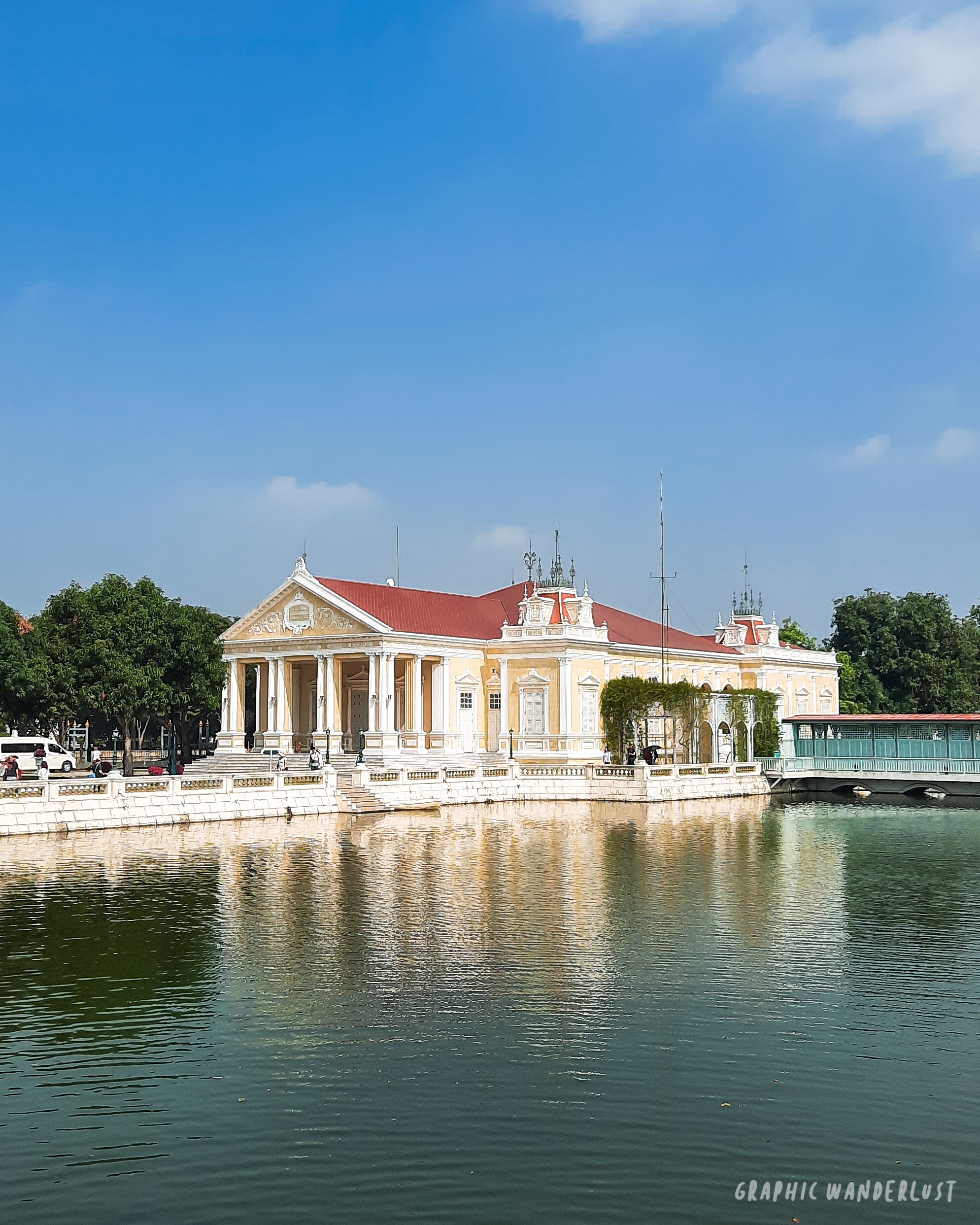
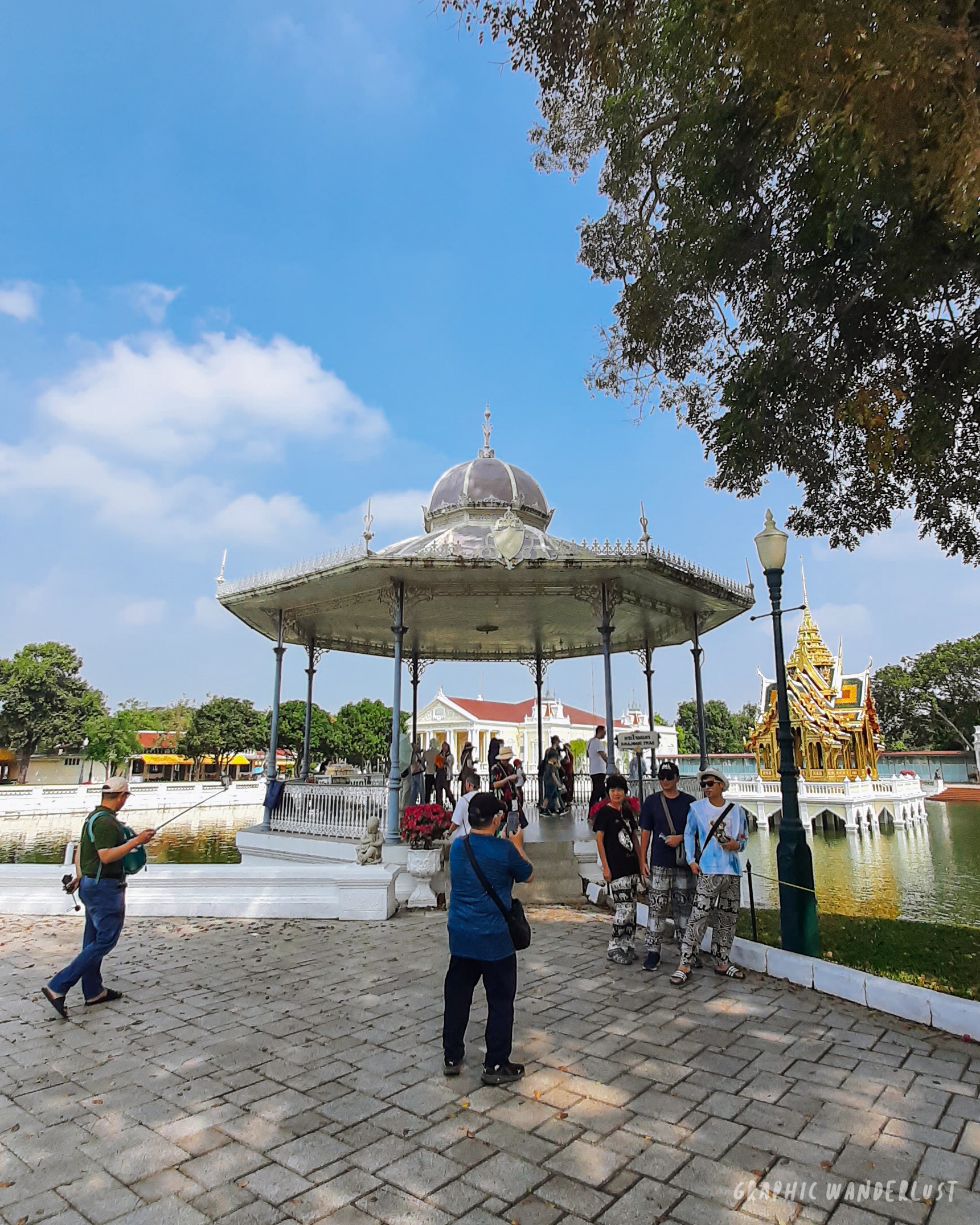
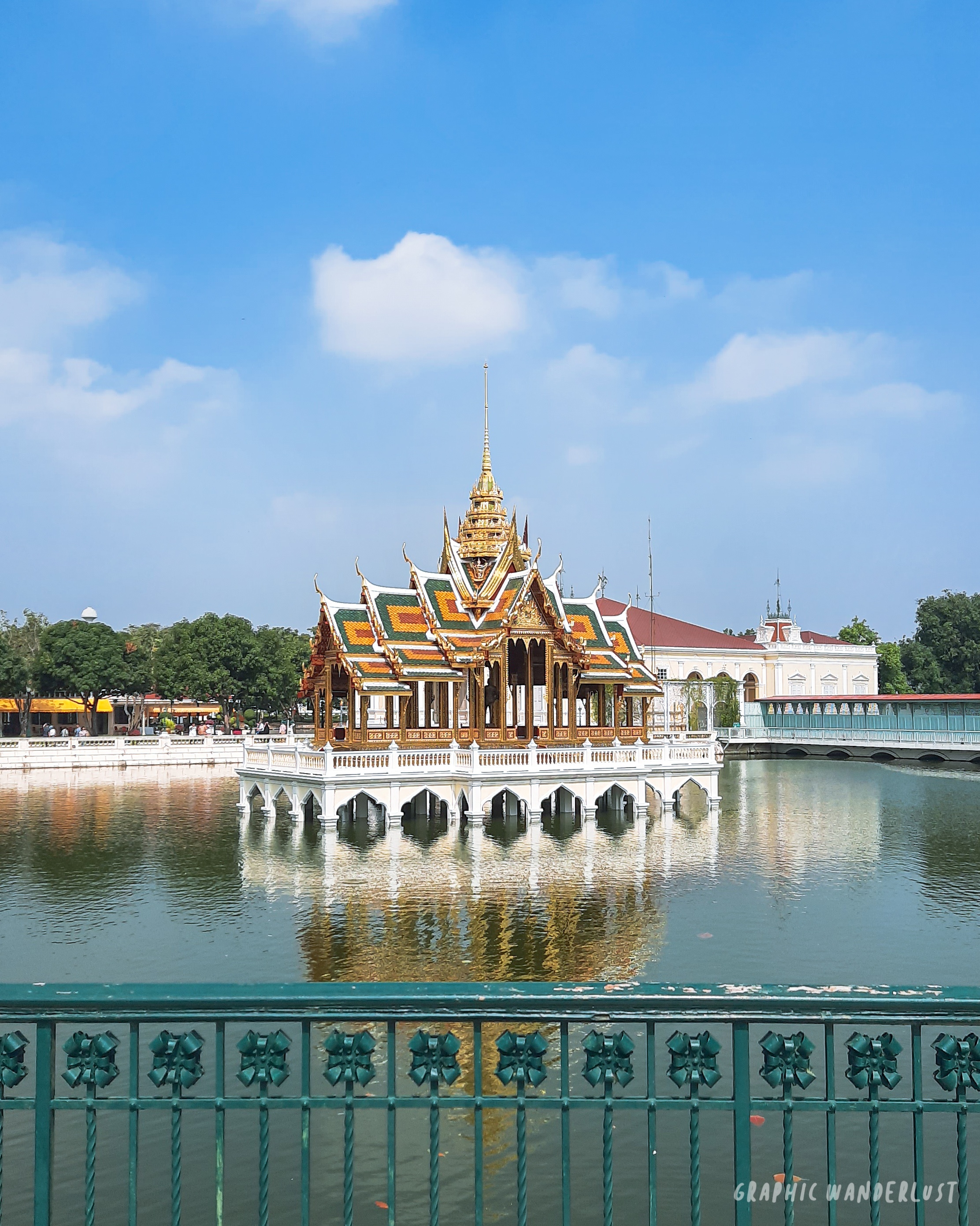
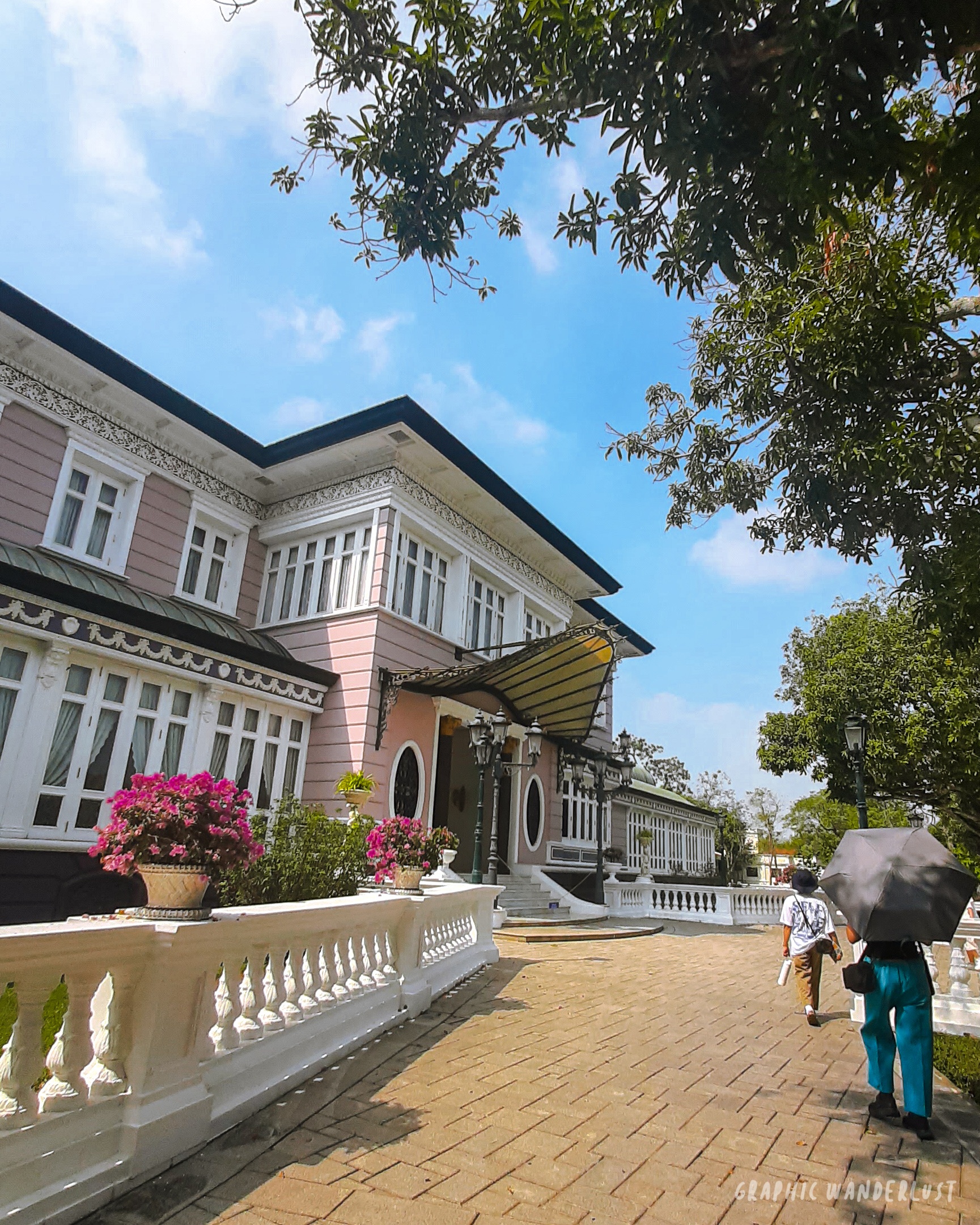
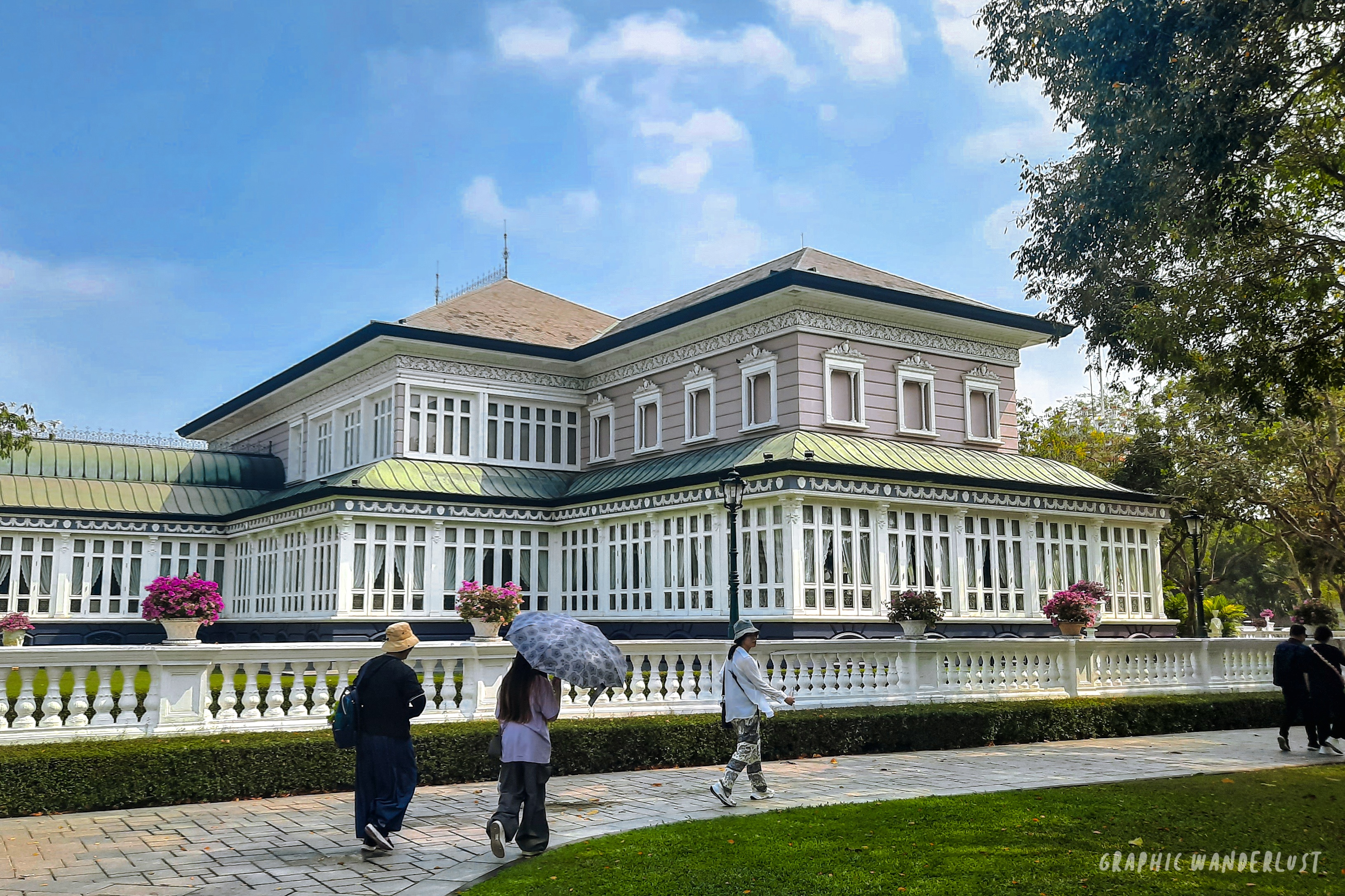
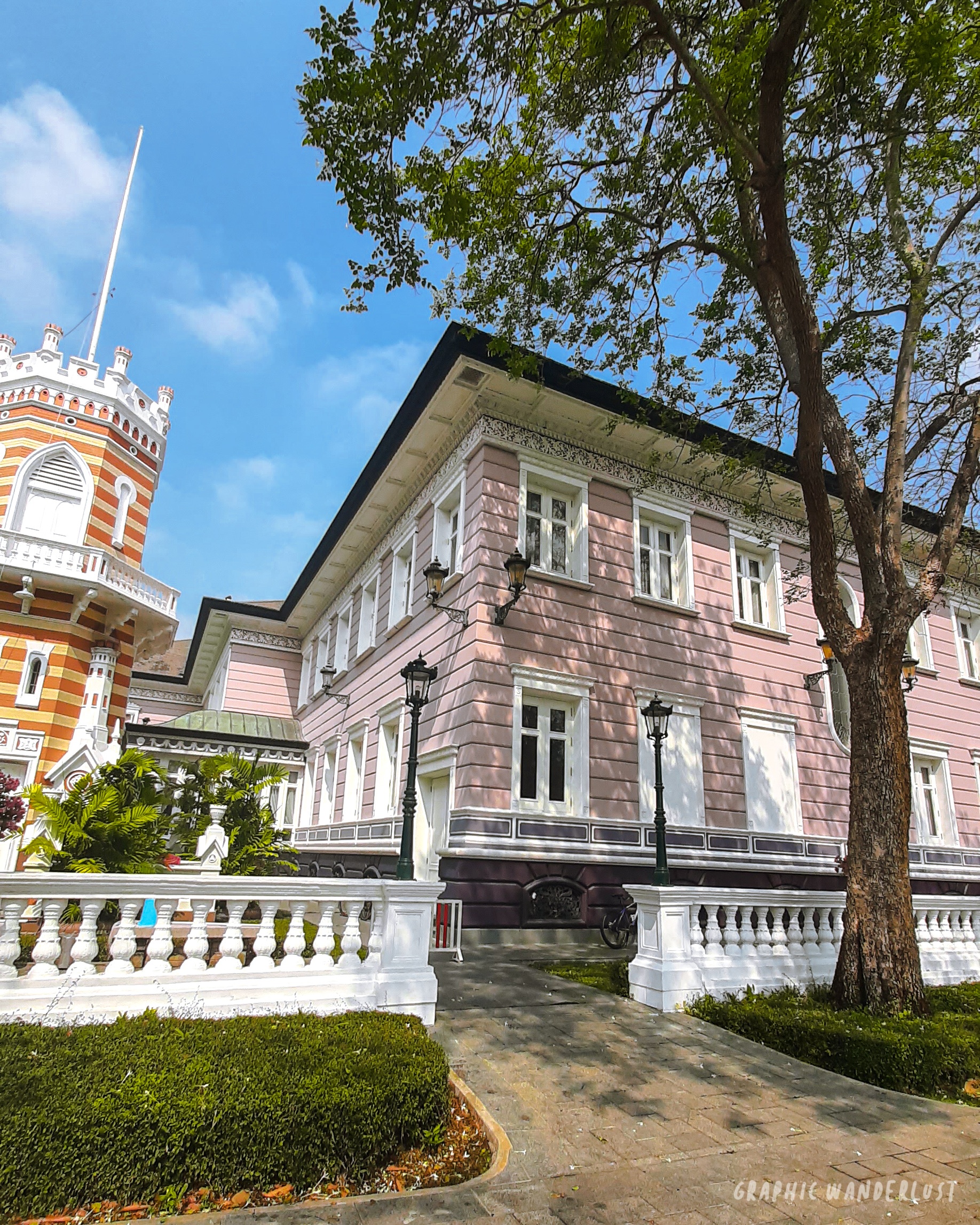
Walking further into the complex further solidified my assumption of the king’s preference with the sight of Devaraj-Kunlai Gate‘s semi-circular construction in neoclassical architecture and Phra Thinang Uthayan Phumisathian‘s Swiss chalet inspired-style finished in pink, purple and white hues. Our guide has relayed that the latter was recently used by the Thai royal princess in accommodating guests which hints about the building’s modern function as a reception and banquet hall.
Not far from this is another imposing structure called Ho Withun Thasana which is a watchtower used by then King Chulalongkorn in observing the countryside and Phra Thinang Wehart Chamrun which stands out in the complex with its distinct two-storey Chinese-style architecture that resembles a temple but serves as another residence mansion of the Thai royal family.
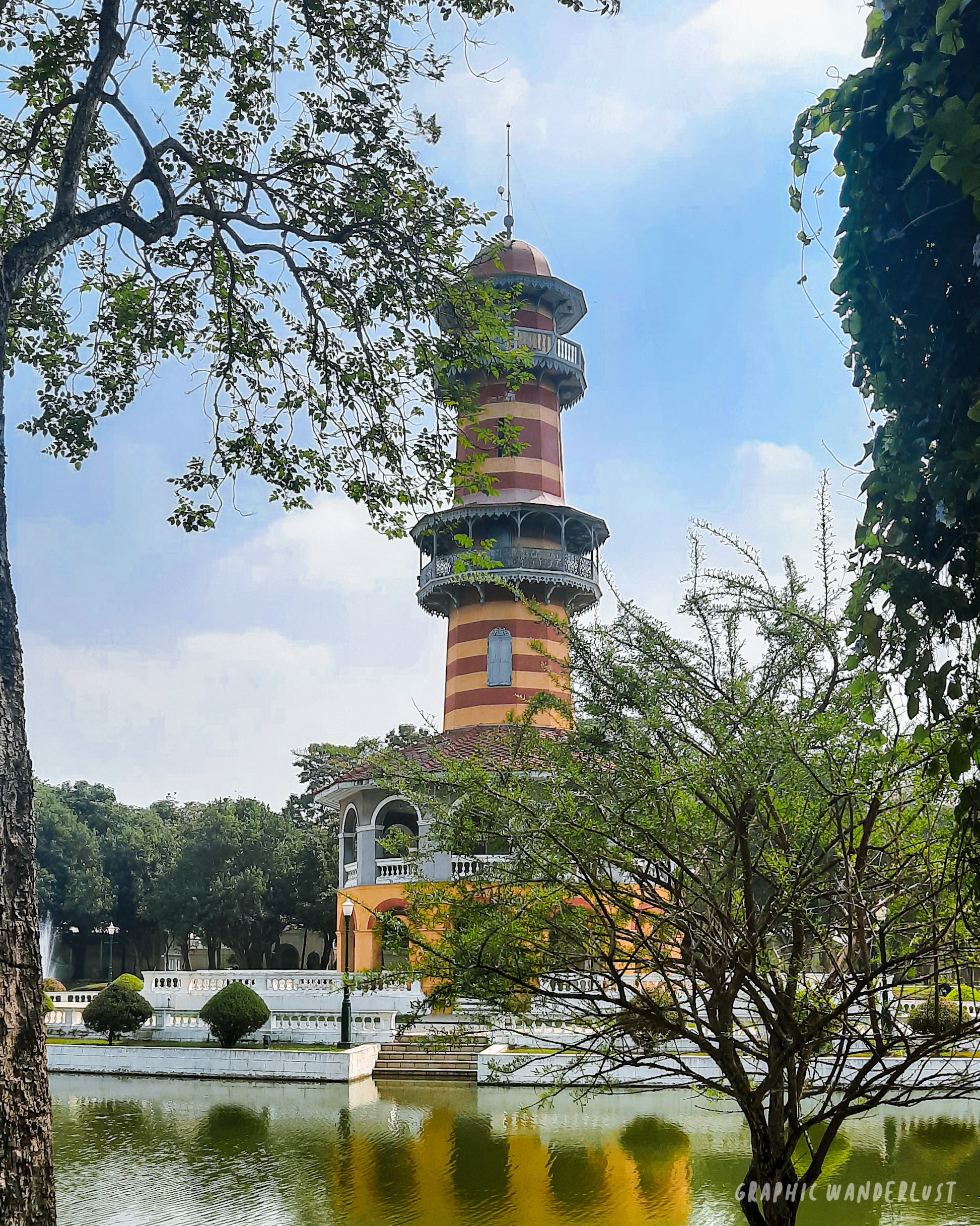
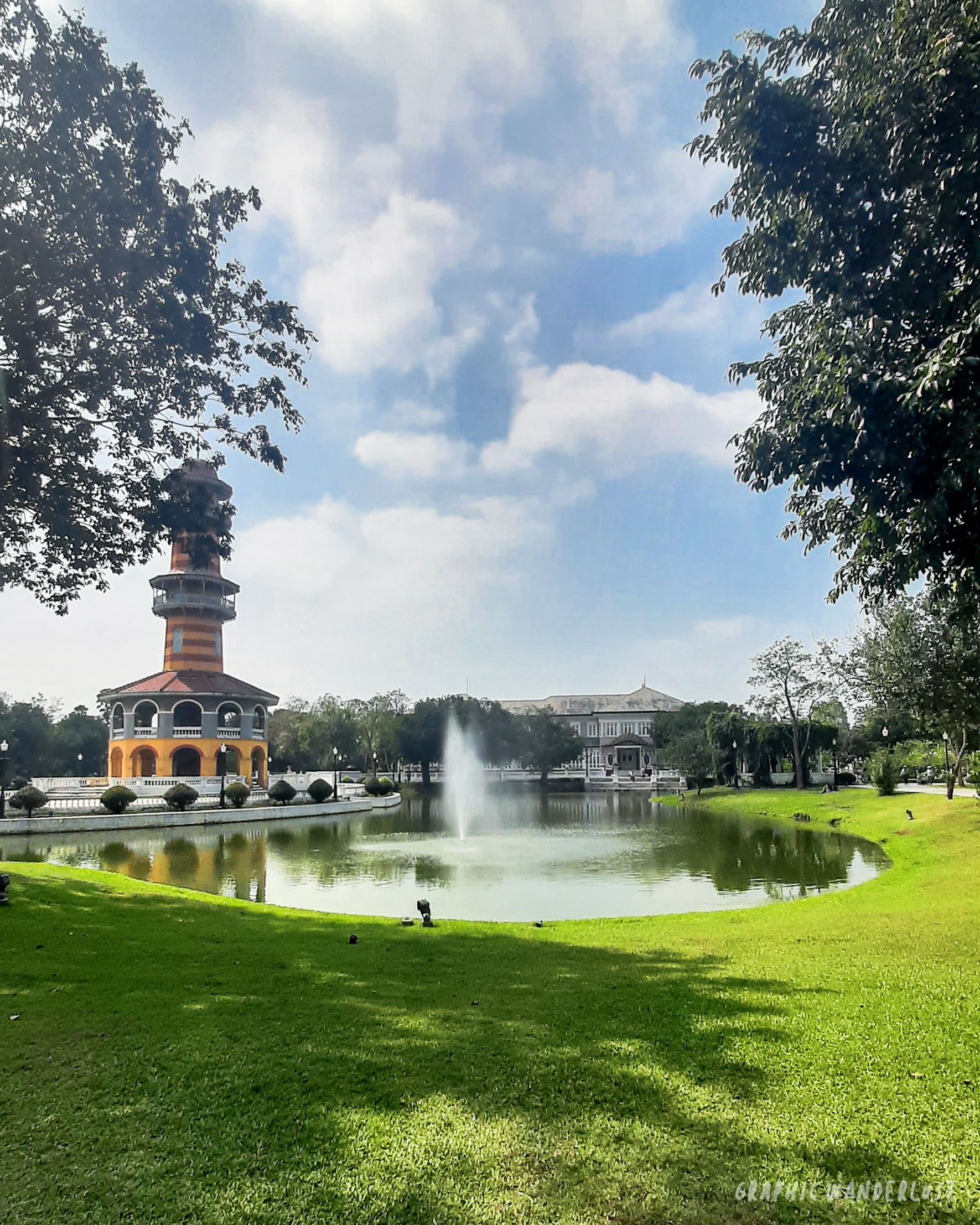
Filling the northern and easternmost parts of the complex are the different residential buildings dedicated to the ladies of the court which all share a glimpse of how local houses are designed in the country.
Wat Niwet Thammaprawat
- Address: 60 Mu 12 Bang Pa-in, Phra Nakhon Si Ayutthaya
- Operating hours: 9:00AM-5:00PM
- Entrance fee: None
After around an hour of exploring the complex of Bang Pa-in Palace, our guide led us to the riverside and in front of a pair of small cable cars that alternately cross the river. It turned out that this is the only way to our next stop which was Wat Niwet Thammaprawat.

A Neo-Gothic building standing on the island across Bang Pa-in Palace, this peculiar church-like structure is a royal Buddhist temple that was ordered to be erected by King Chulalongkorn for worshipping purposes during his stay in the province.
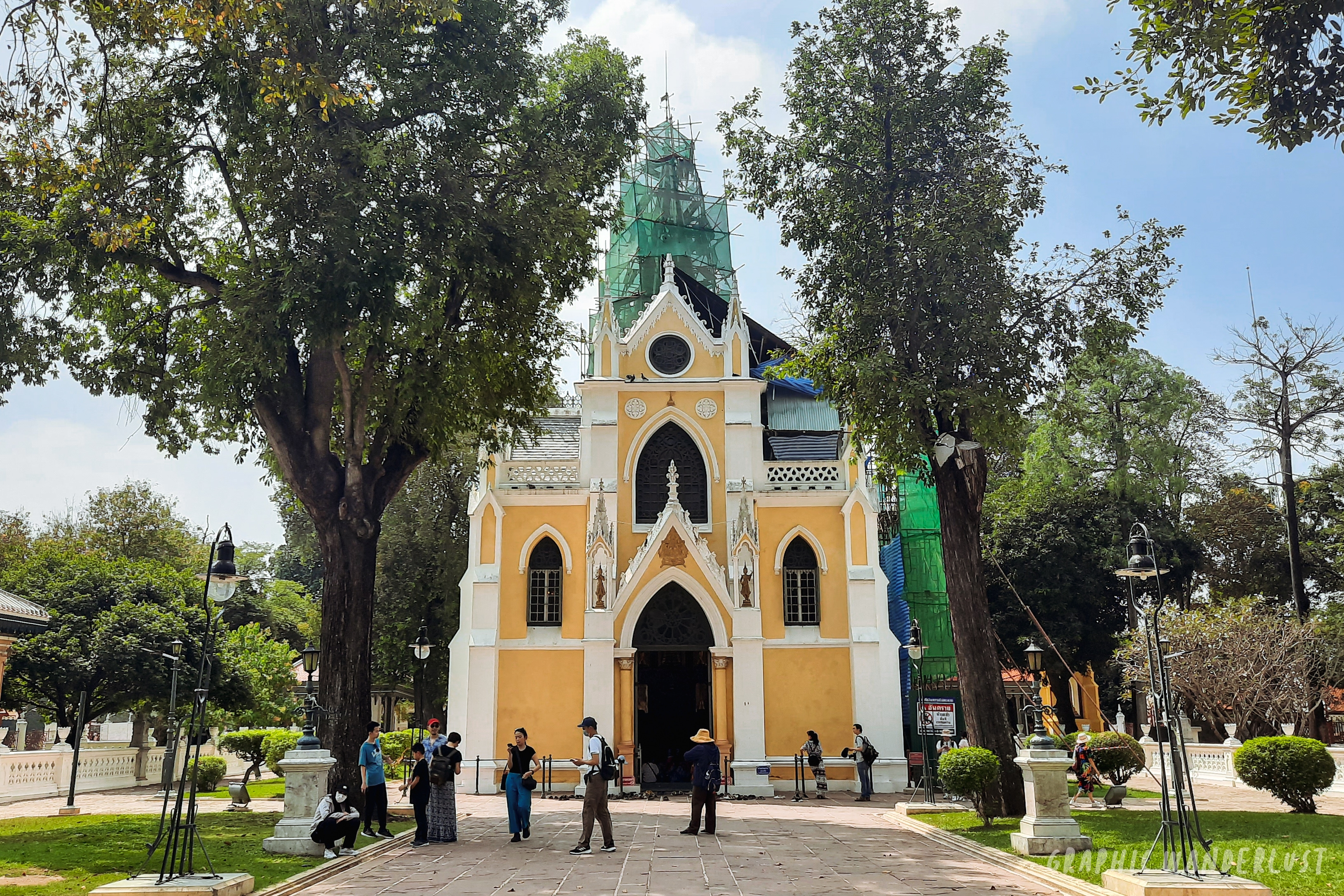
Like its Christian counterparts, Wat Niwet boasts characterizing Neo-Gothic details which include its pointed spires and arched windows. Opposite the entrance of the place is a two-tiered golden altar which displays a Buddha image instead of the traditional saints. However, contrary to its inspiration, the temple lacks wooden benches, wide space and vaulting and instead has a stylized gabled ceiling and requires visitors to remove their footwear before entering.
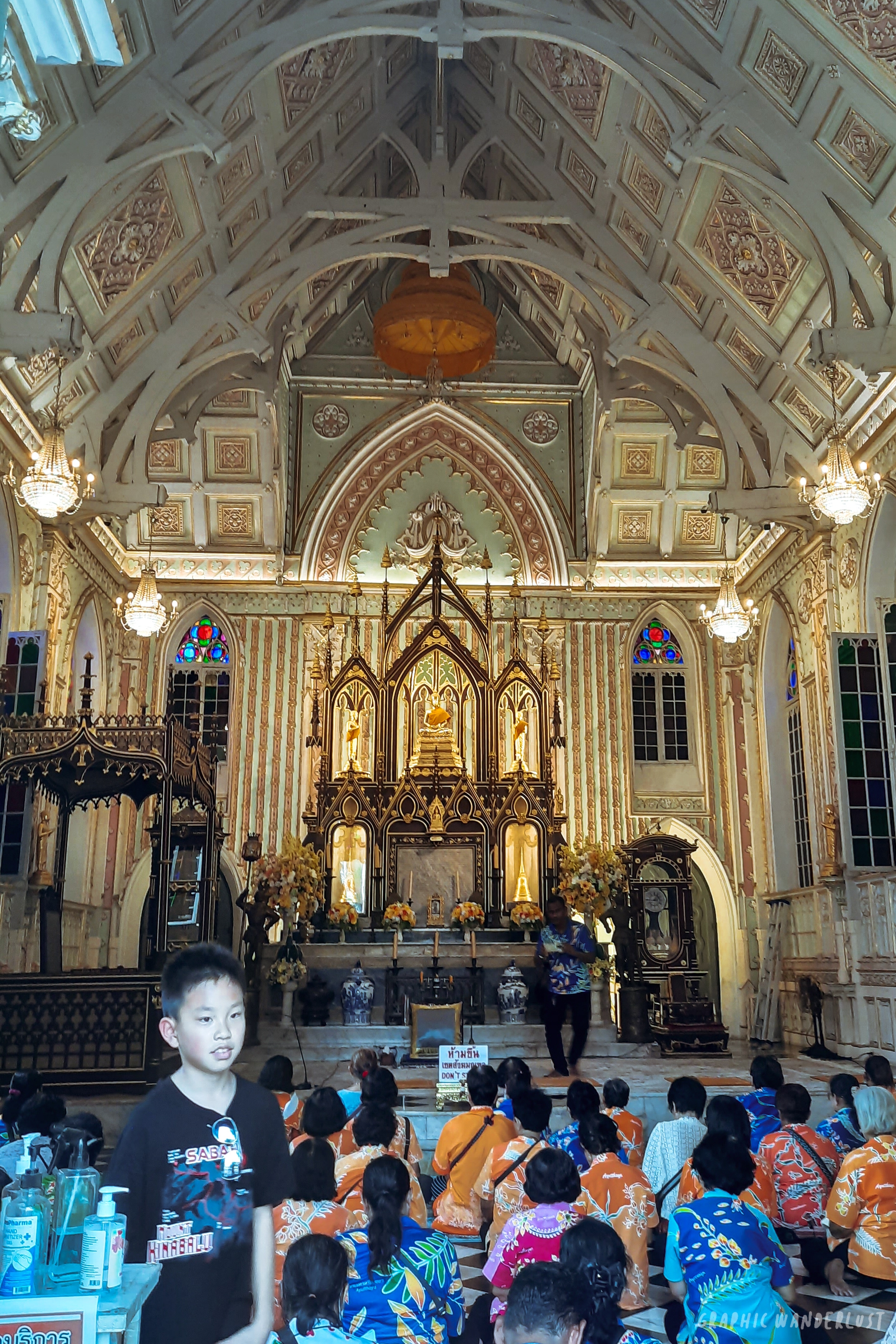
As a Catholic-raised person, I was amused after seeing Wat Niwet as it both has the feel of familiarity and oddness that makes one a bit confused about what practice to do. It was also interesting to find out that Buddhist temples can be constructed in an unconventional style.
Trying Ayutthaya’s Grilled River Prawns
When in Ayutthaya, one of the most recommended dishes to try is their grilled river prawns which are available in most restaurants found in the city and fortunately, was also the same specialty where our guide has taken us for the day’s lunch.
Literally translated as ‘shrimp market’, our guide has brought us to a talad kung beside the highway and near Ayutthaya Central Agricultural Market where several eateries are lined up with fresh seafood aquariums placed in their storefronts. Since most of these restaurants have writings in Thai which we didn’t understand as tourists, we just followed our guide’s recommendation of trying Por Pao Joy Grilled Shrimp พอร์ เปา จอย กุ้งเผา which she mentioned offers an English menu and air-conditioning to dining customers.
Apparently, we ordered half a kilo of their Grilled Shrimp (THB380/kg; THB190/half kg) and Fried Rice with Crab Meat (THB150) and Egg and Pork (THB50) to go along with it.
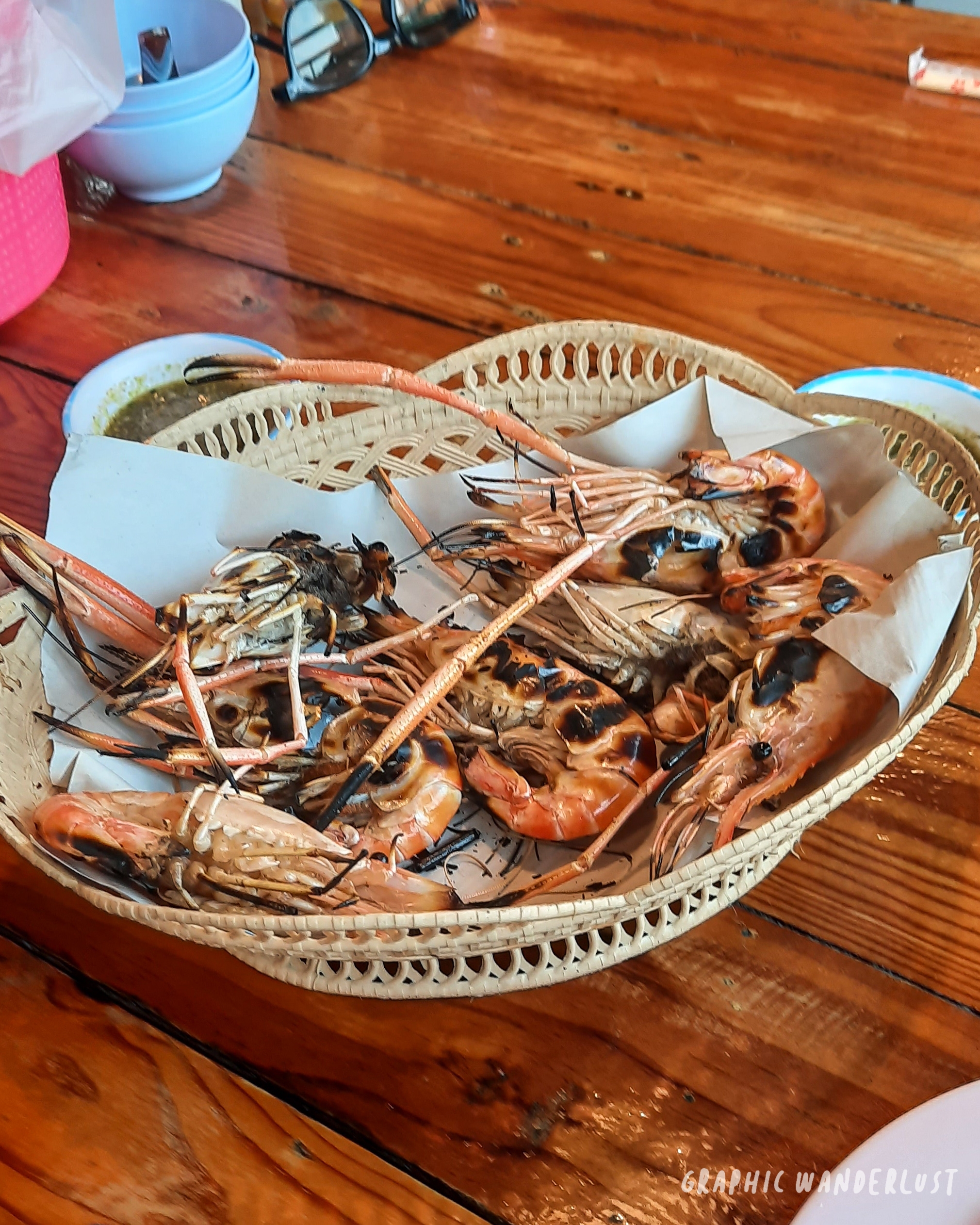
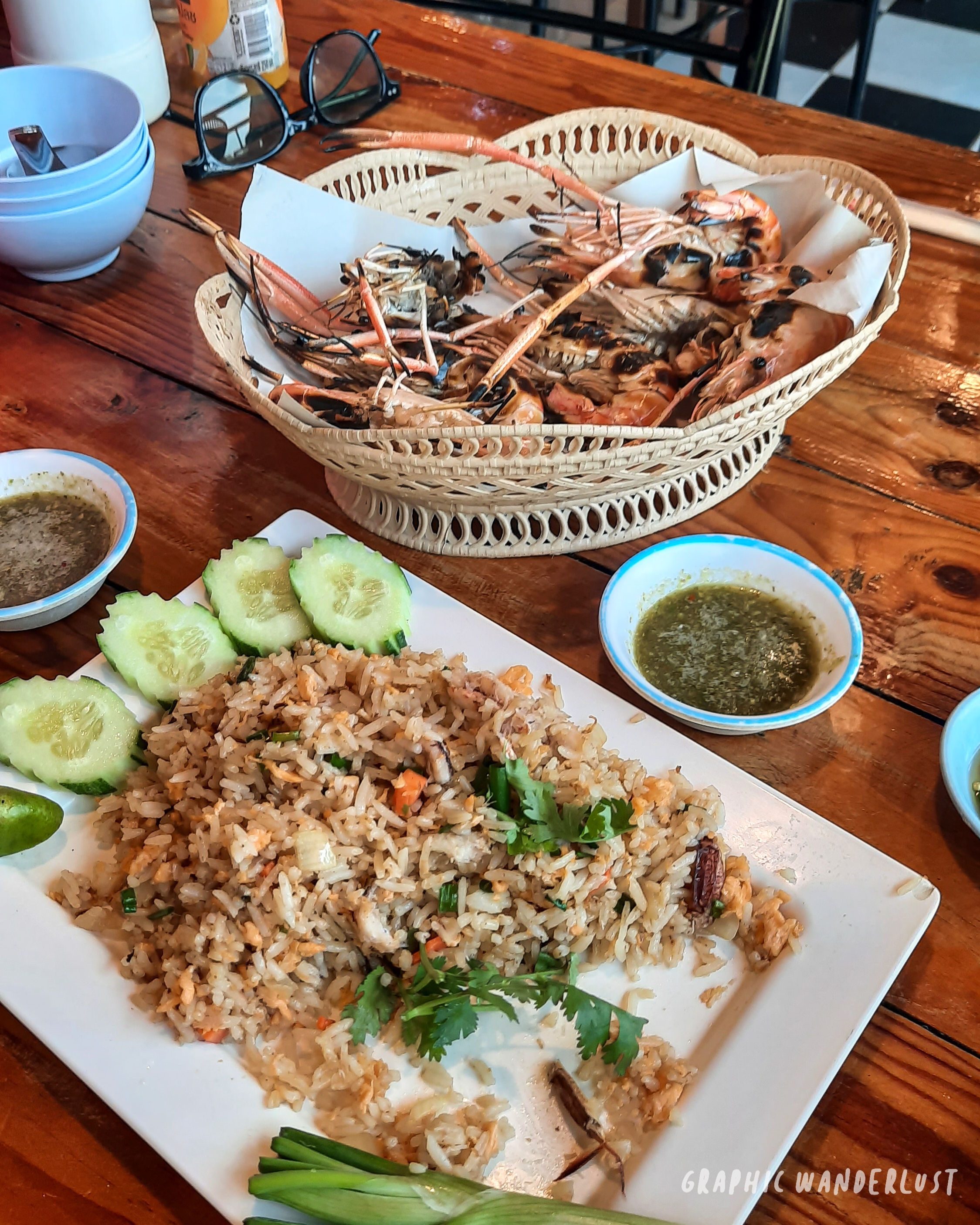
Once our main dish arrived, we were all surprised with the size of the prawns placed in front of us which was relatively bigger than what we usually have in the Philippines. Unlike the latter, Ayutthaya’s grilled shrimp are served with their legs and eggs still attached which gave a fresher taste to its meat. The crab fried rice also pairs well with the prawns which, indeed, comes with crab meat that gives a balanced finish to the shrimp’s fishy taste. However, we just found its serving a bit unpleasant to eat because there were small pieces of shell that were mixed with the rice.
On the other hand, we found their fried pork and egg rice delectable to our taste buds with its balanced saltiness which reminded us of those servings of chao fan back home.
Wat Yai Chai Mongkhon
- Address: 40/3 Village No. 3, Khlong Suan Phlu Subdistrict Phra Nakhon Si Ayutthaya District, Ayutthaya
- Operating hours: 8:00AM-6:00PM
- Entrance fee: THB20
After around an hour of delving into our serving of grilled river prawns, we found ourselves back in the bus again this time to our fourth destination of the day which was Wat Yai Chai Mongkhon.
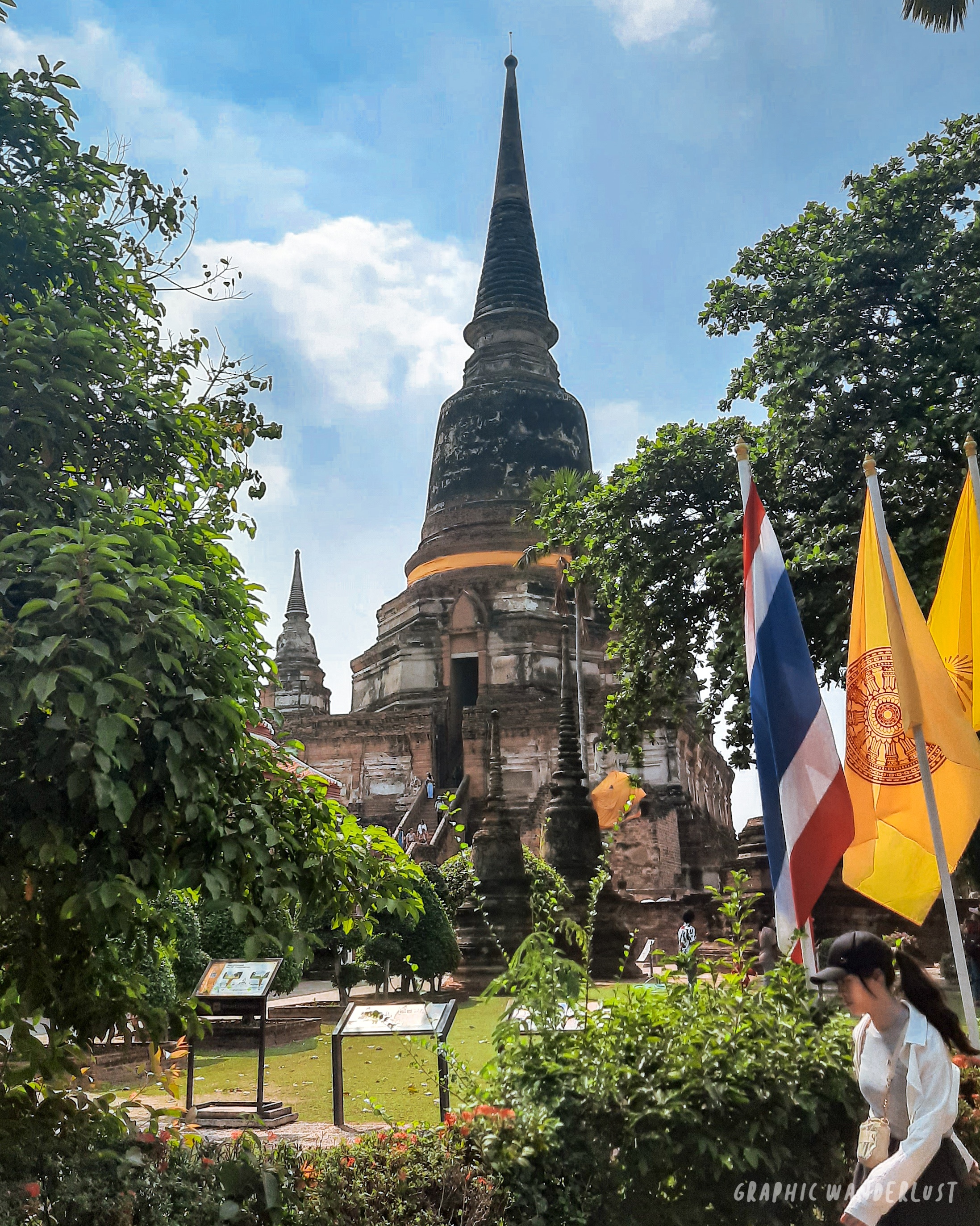
One of the first buildings that defined the establishment of Ayutthaya as the capital of the then Kingdom of Siam, Wat Yai Chai Mongkhon came into life under the order of the city’s first ruler, King U-thorn, who proclaimed it as a “royal”, temple. The place eventually became the home of meditation-practicing monks coming from Ceylon (modern-day Sri Lanka) before being renovated and enlarged under the order of King Naresuan to commemorate his victory over the Burmese army. Along with this was the renaming of the temple to its current title today and the restoration of the place’s existing main chedi which is currently the most prominent part of this Buddhist place of worship.
Whenever I travel overseas, it takes a few days for me to process that I am in a completely different country and our visit to Wat Yai Chai Mongkhon became this point of realization for me.
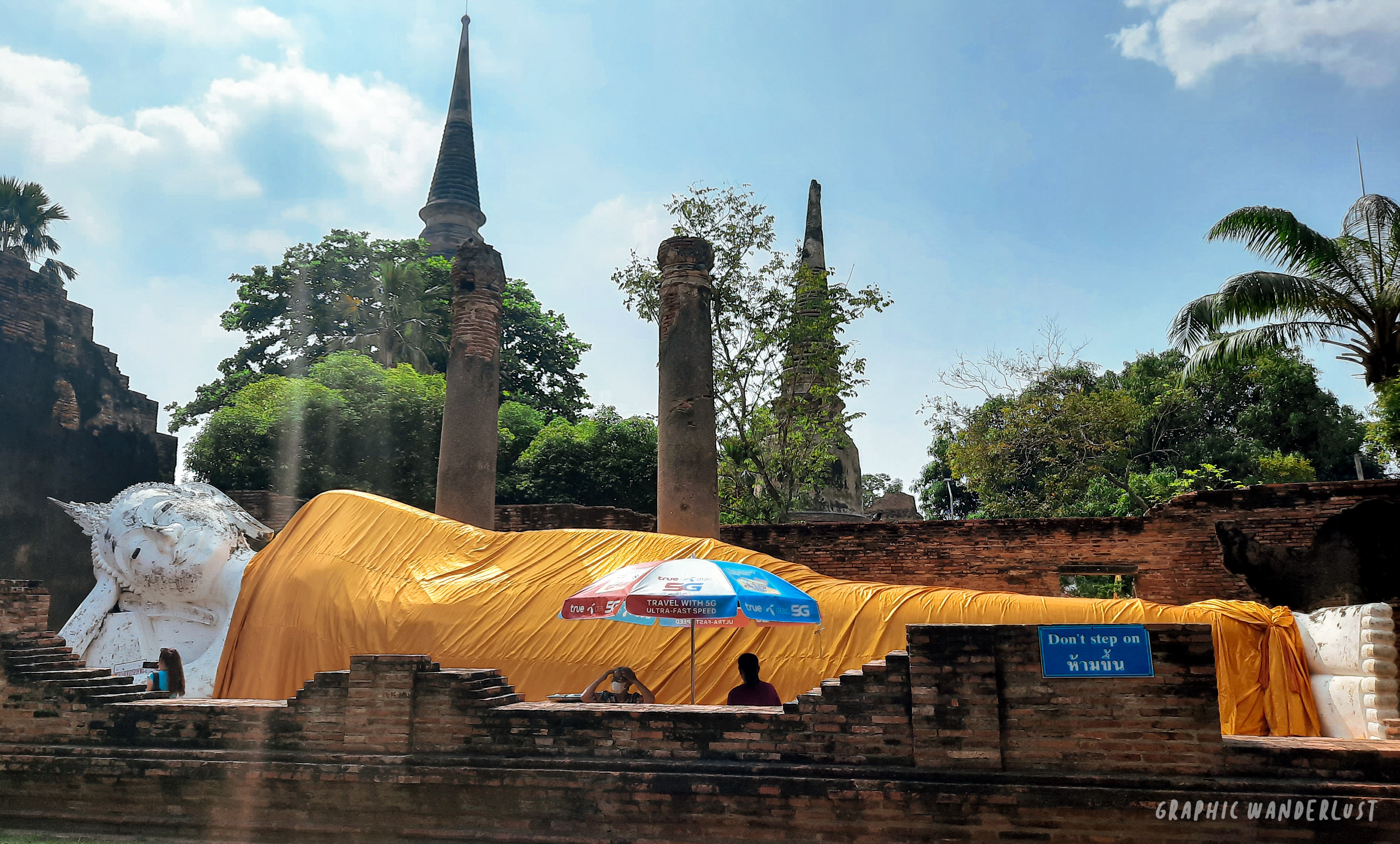
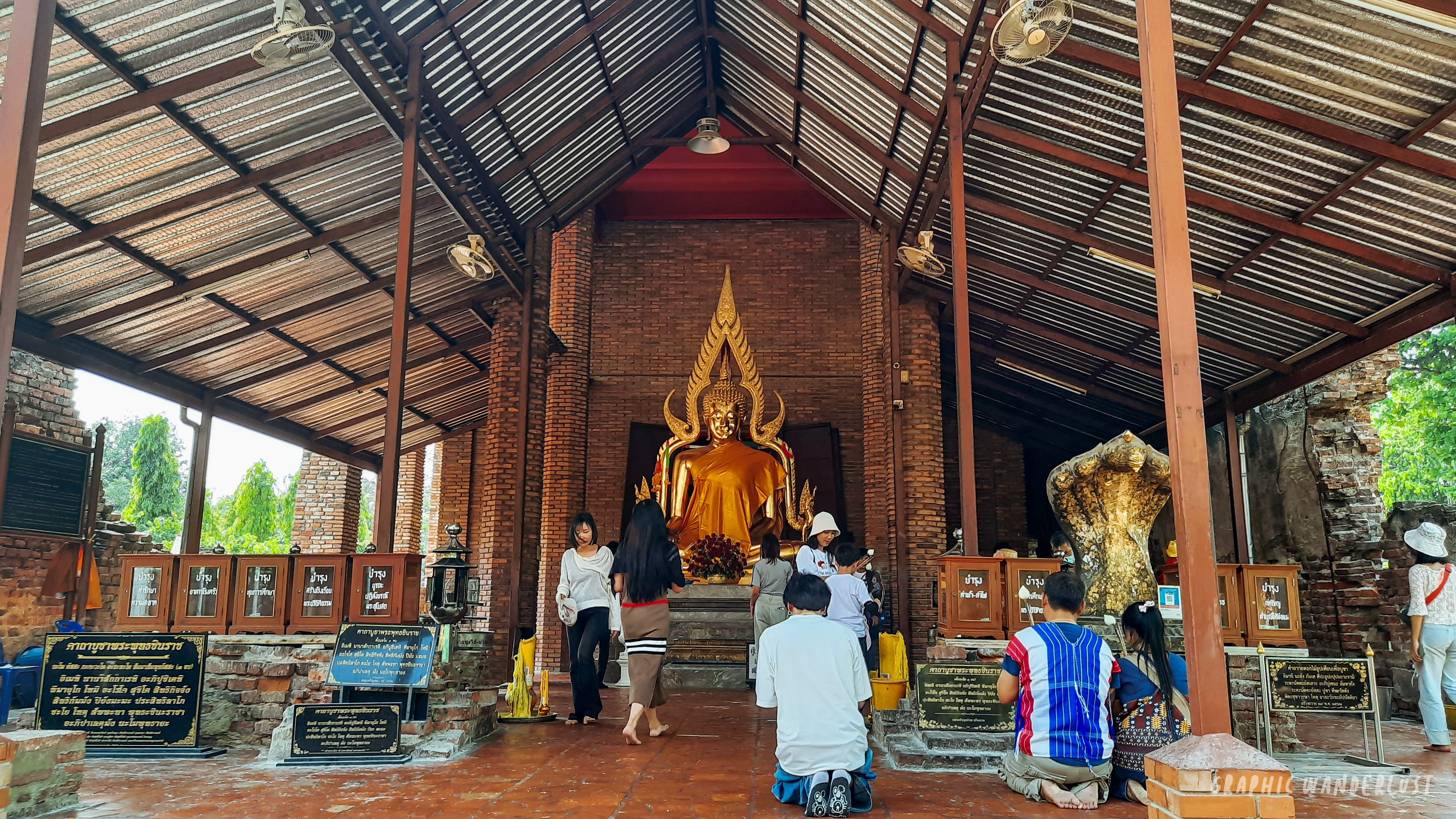
Upon entering its complex, we were first greeted by a big reclining Buddha like that of Wat Pho’s except for its lack of gold plating and the presence of a large mustard-colored fabric instead that serves as a blanket of the entire image. It is historically noted that the reclining Buddha was ordered to be constructed by King Naresuan and was housed inside a pantheon which was unfortunately destroyed. Beside this is the place’s ordination hall which also sits on the same site as its ruins and displays one of Ayutthaya’s most sacred Buddha images. Looming outside of this is the imposing sight of the place’s principal chedi which stands gloriously against the blinding brightness of the sky.
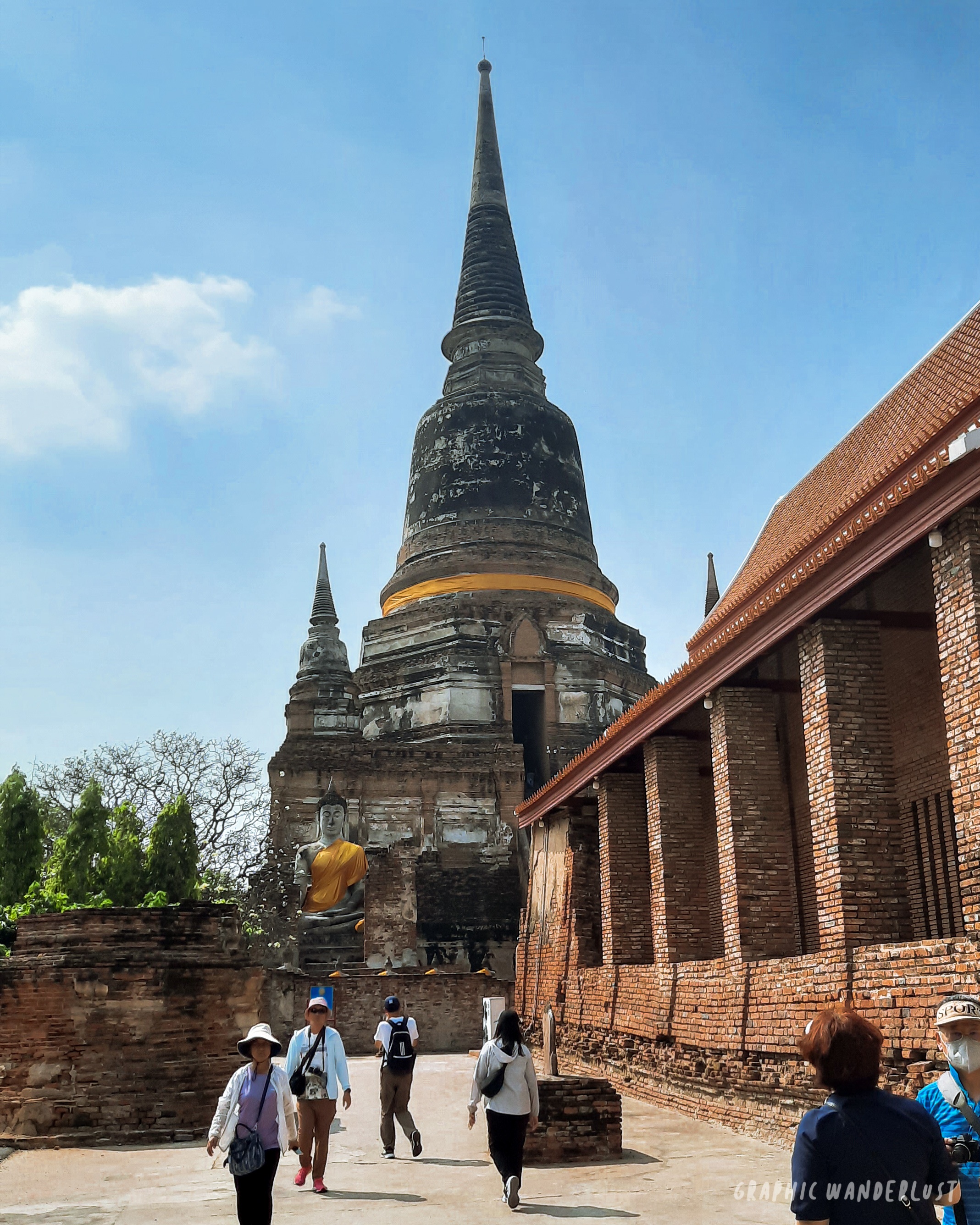
Seeing Wat Yai Chai Mongkhon’s bell-shaped main stupa was the first time when I found myself utterly amazed during our Thailand trip. Its gigantic size, foreign architecture and time-worn appearance delivered a feeling of disbelief within me that I was seeing a similar building that I only used to see in photos. Add up the thought that its old age has witnessed a lot of historical events that I couldn’t fathom and experience. The climbing of the steep staircase going to the top and the interior of the chedi’s dome added more to my thrill of experiencing the place where more gilded Buddha images and a reliquary chamber can be found. Outside of it, its surrounding terrace offers a good vantage point of the entire complex and its other parts.
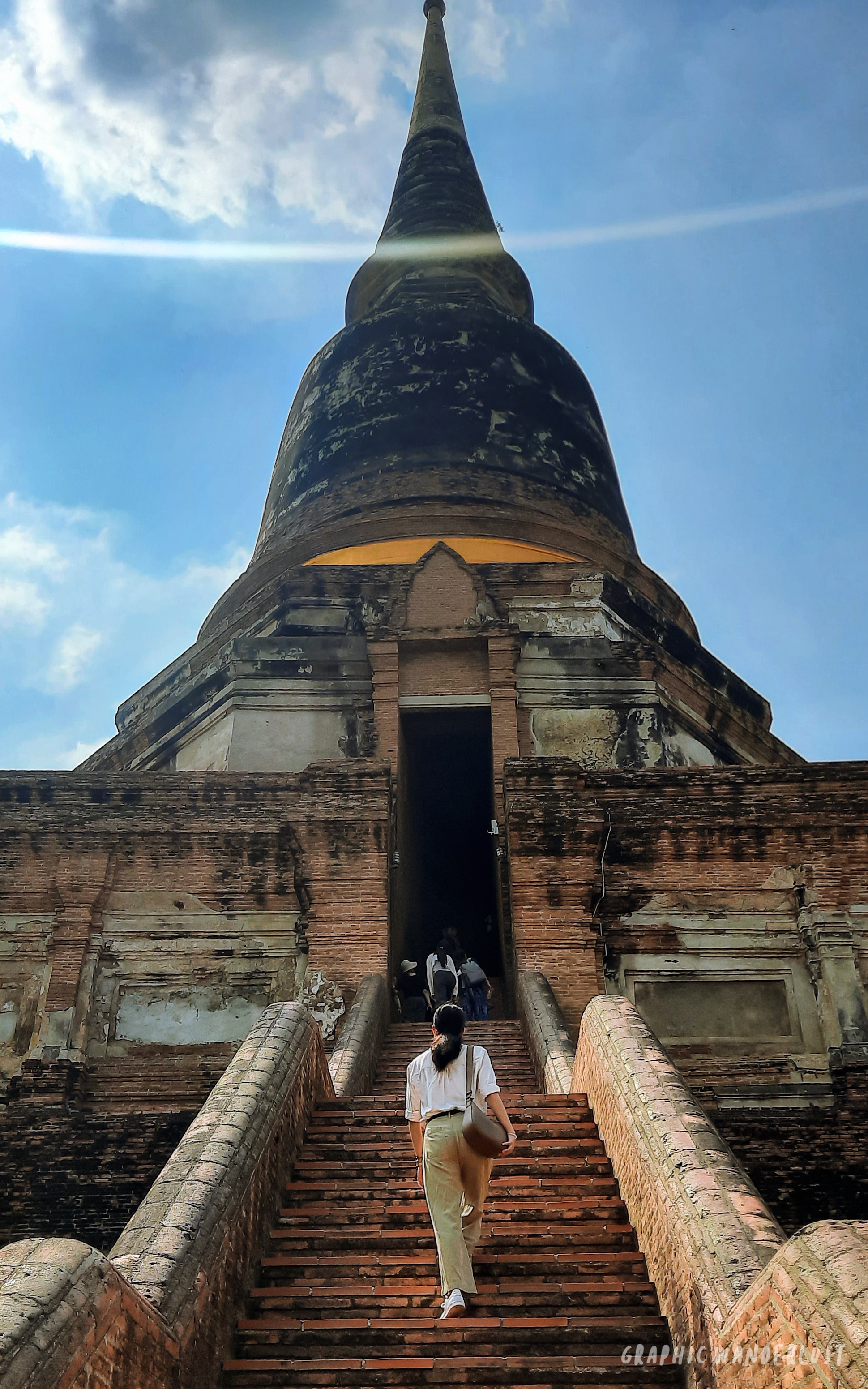
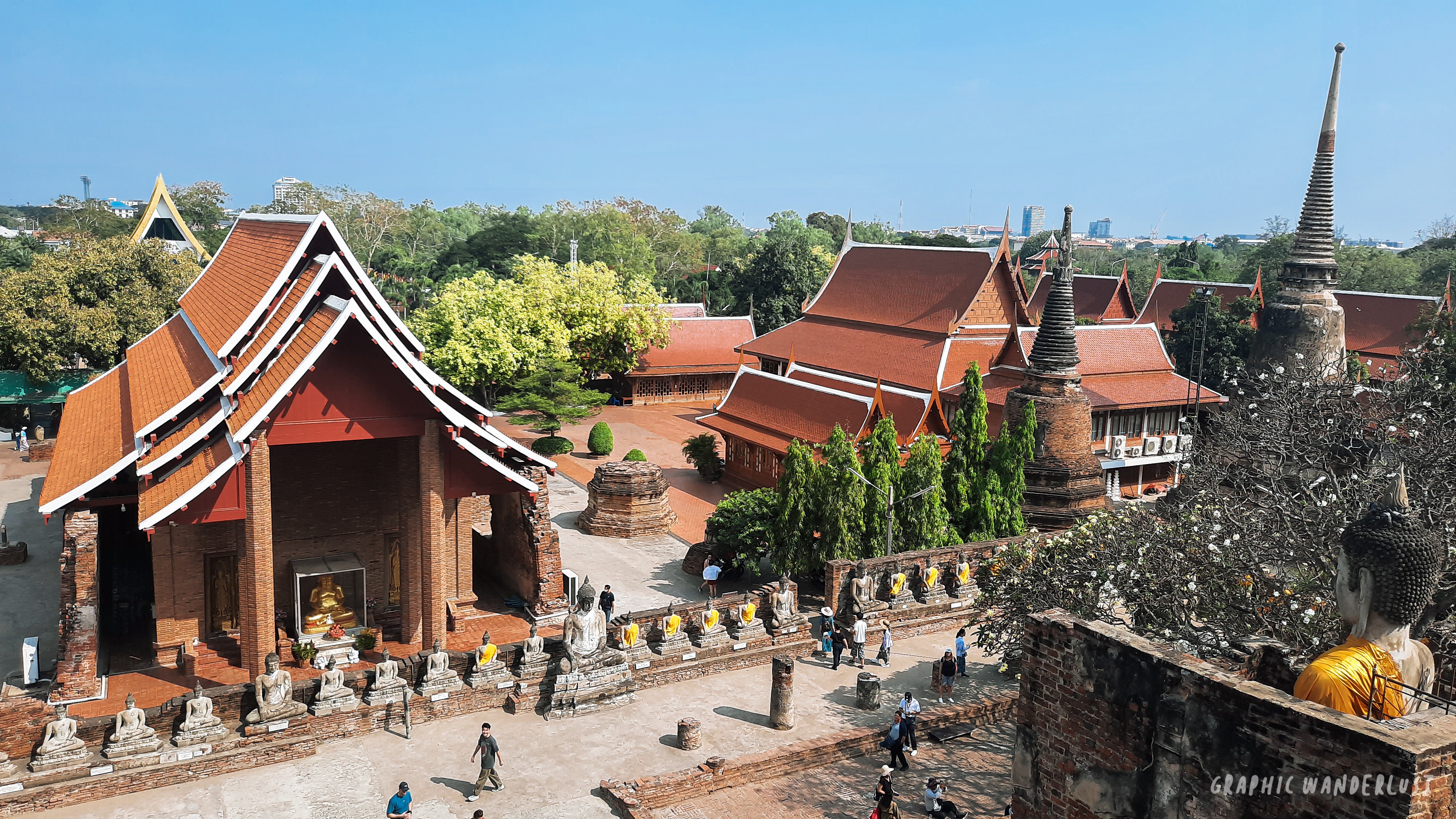
After a few more explorations of the place and some snaps, we ended our visit to the temple by grabbing a local coconut-flavored ice popsicle outside of its gates before hopping back to our bus again for another iconic and historic temple ruin.
Wat Mahathat
- Address: Naresuan Rd, Tha Wasukri, Phra Nakhon Si Ayutthaya District, Phra Nakhon Si Ayutthaya
- Operating hours: 8:00AM-5:00PM
- Entrance fee: THB50
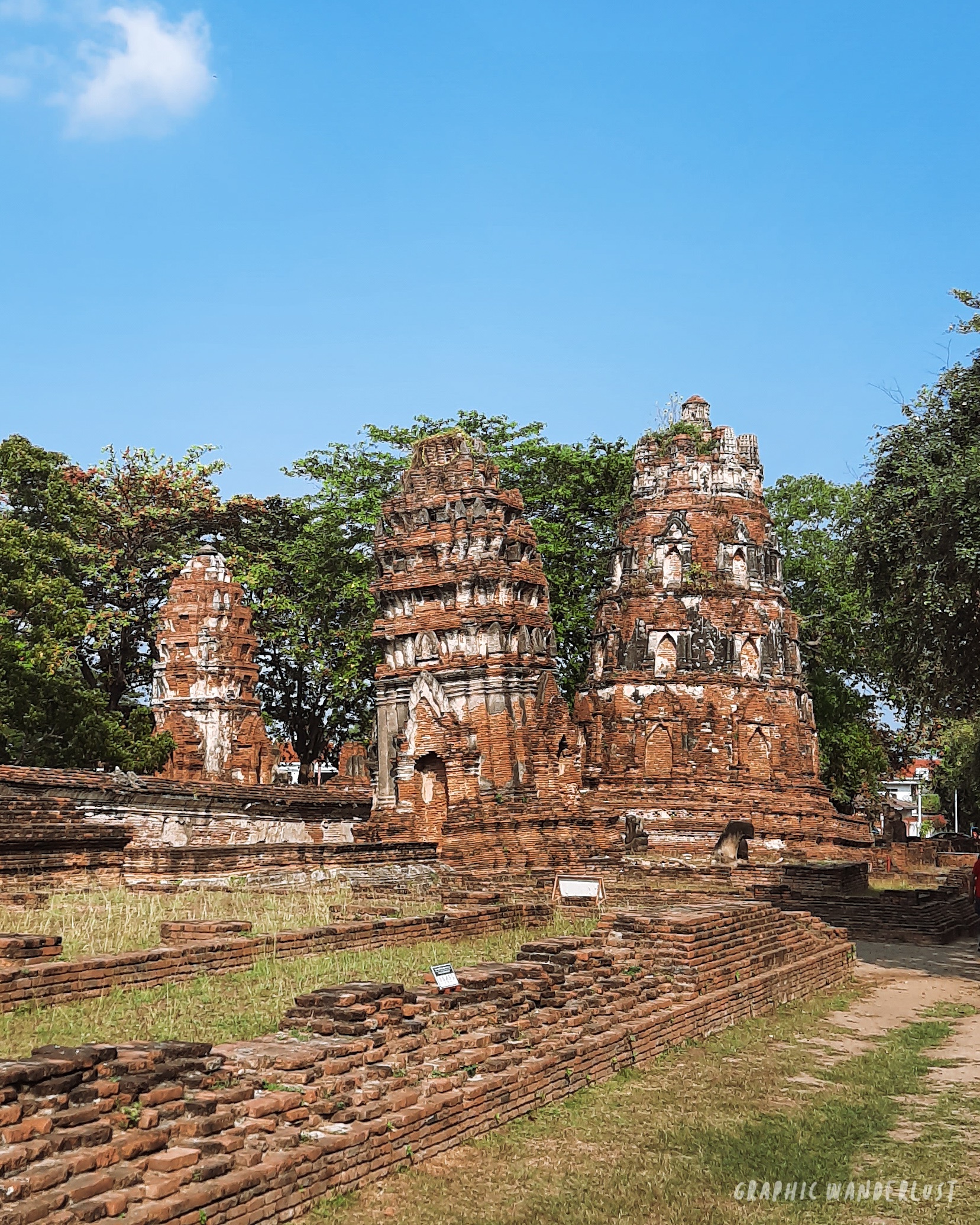
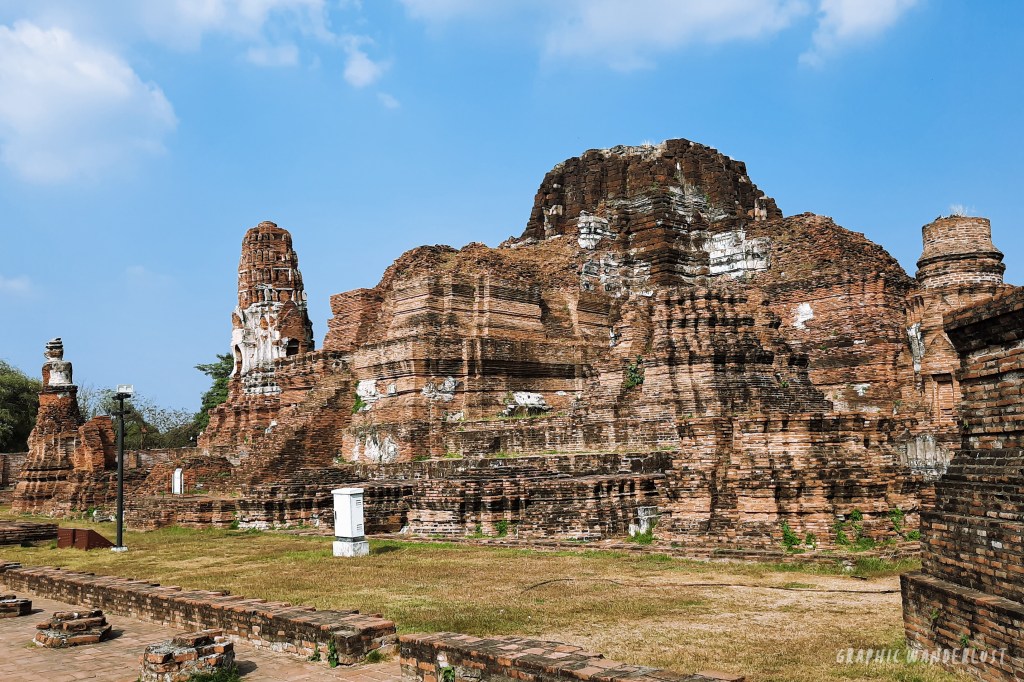
One of the most important and oldest royal temples during the height of the Ayutthaya period, the ruins of Wat Mahathat are found within today’s Ayutthaya Historical Park and are protected for preservation by the national government. The place played a pivotal role in the former kingdom’s history with the handful of events and ceremonies that were held in its grounds and its former function as the home of Buddha relics and important treasures. Along with the fall of the city in 1767, Wat Mahathat was one of the severely damaged buildings in Ayutthaya when it was burned down to the ground by the Burmese army during their attack.
One of the places that I was looking forward to seeing in real life, I deemed our trip to Wat Mahathat as underwhelming probably because of the lack of relevant information that could have been shared with us during our visit to the place. The red brick ruins and headless Buddha images found within its complex were screaming to be understood, although, our guide has relayed that the reason behind the headless Buddhas was because of the looting that happened to the place before. But aside from that, I couldn’t appreciate the essence of the ruins due to a lack of knowledge.
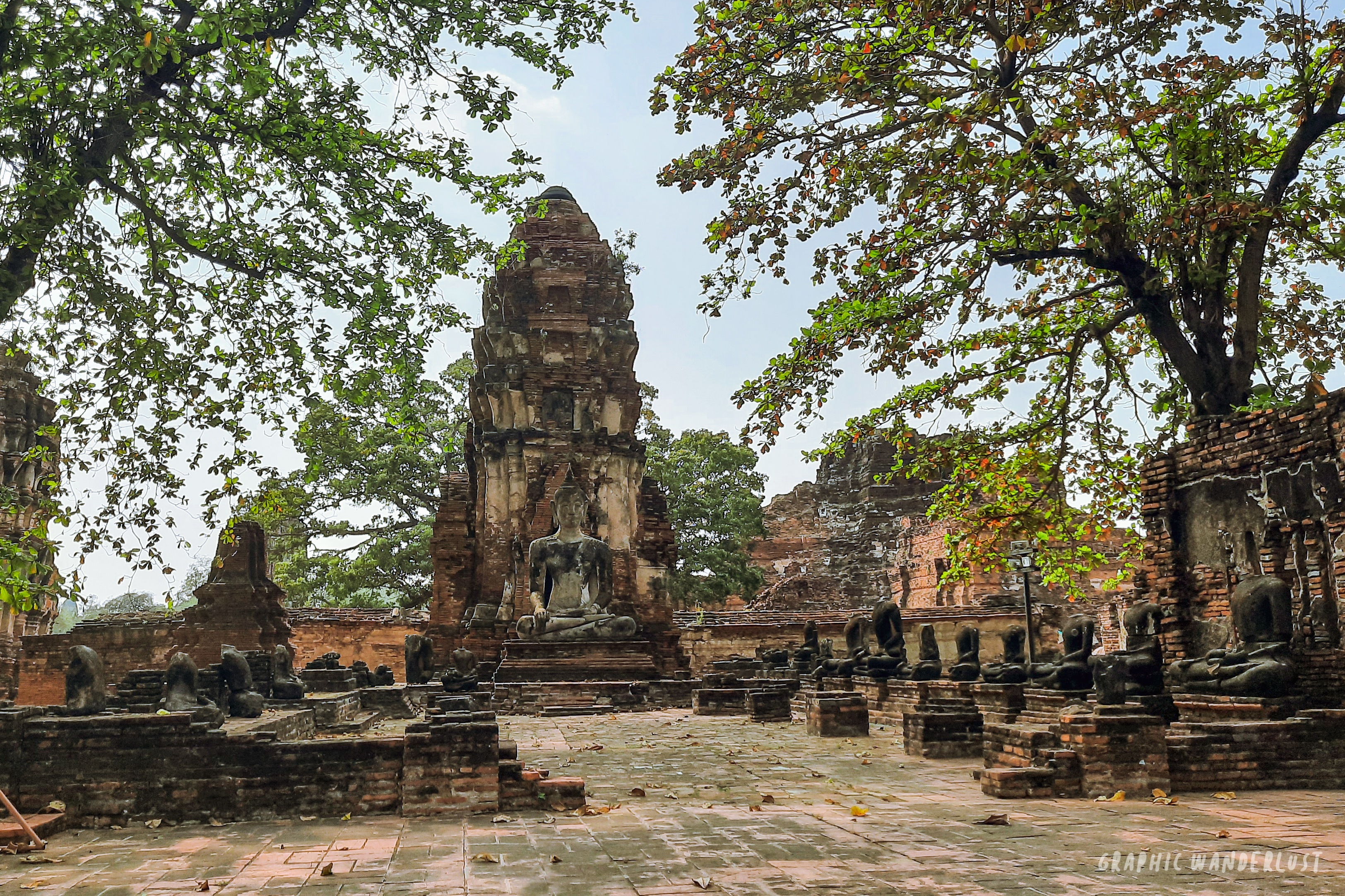
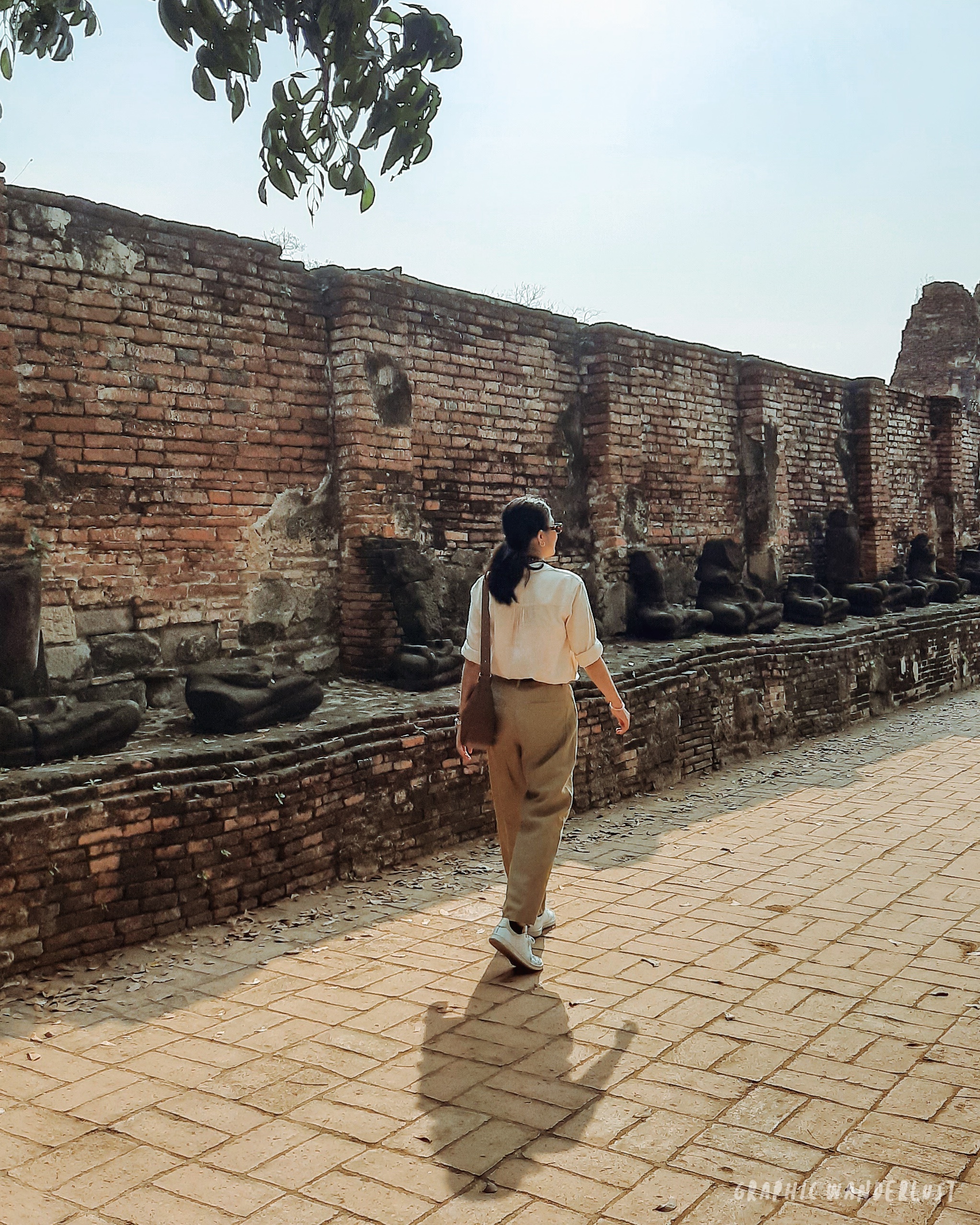
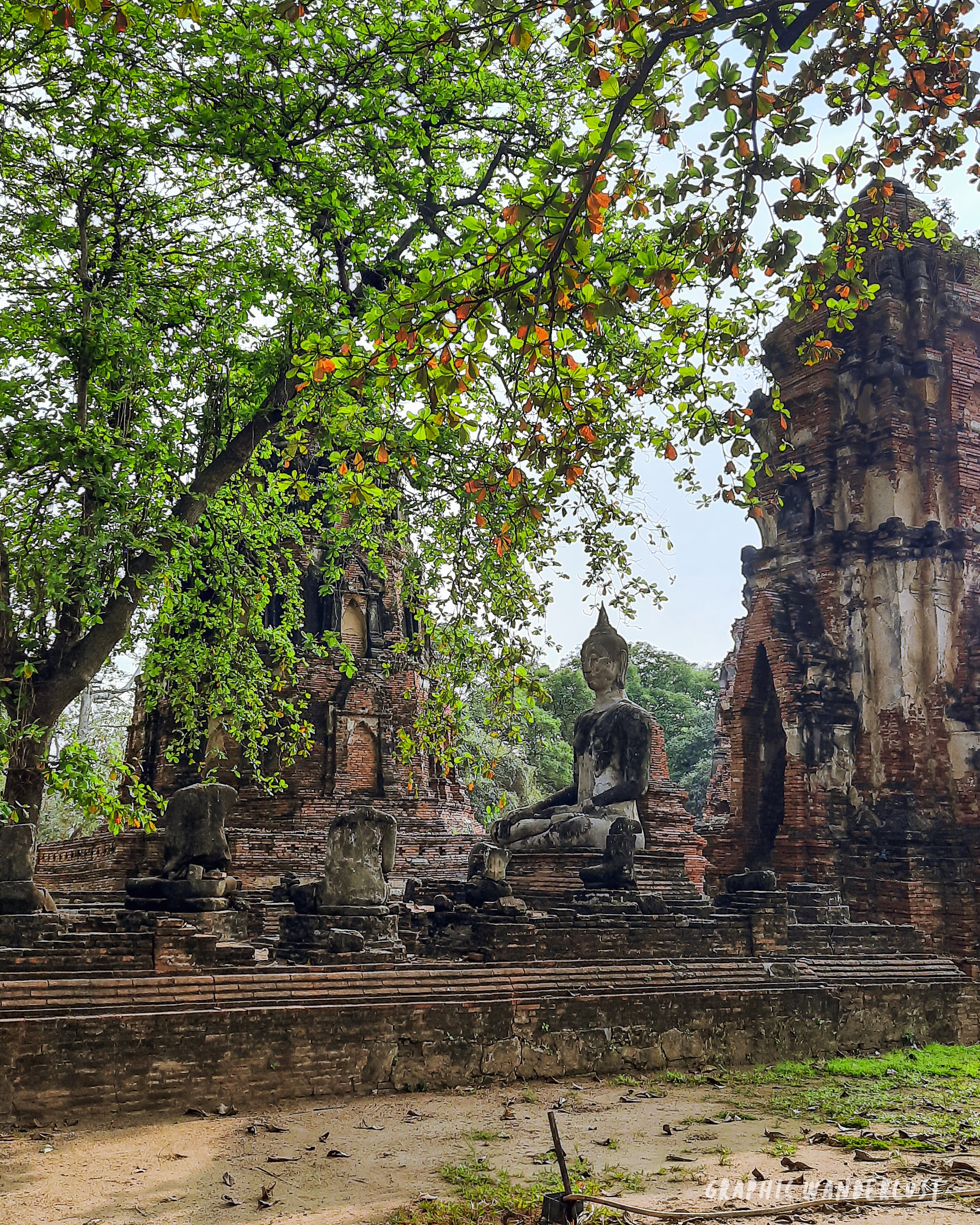
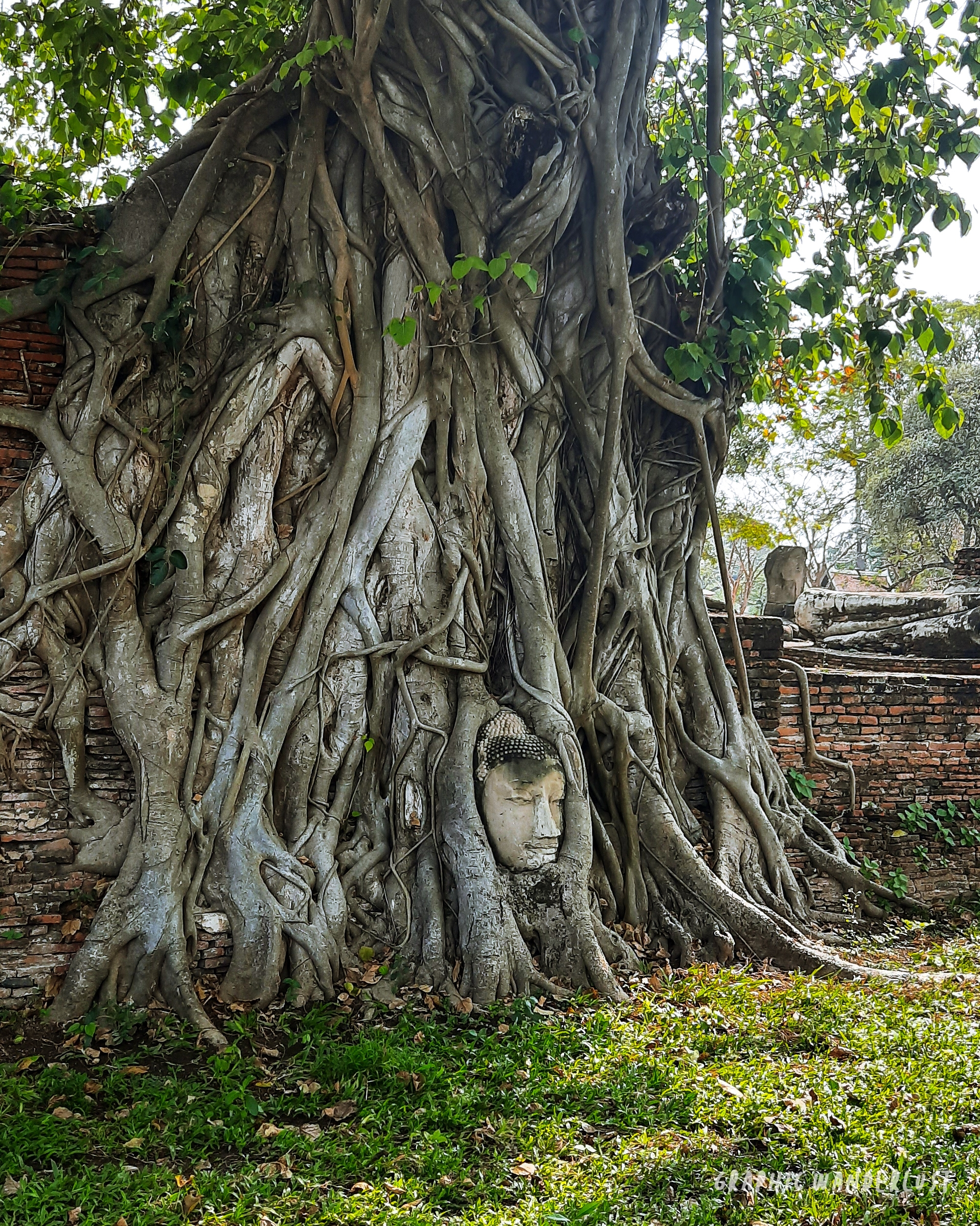
Nonetheless, disregarding this bad side of our experience, Wat Mahathat did evoke that feeling of being driven back to the past with its time-worn appearance and the sight of the remaining prangs or spires and chedis still standing on the ground. As expected, these towers resemble Khmer architecture as that of Angkor Wat and give a glimpse of the engineering practices observed during its time of construction. The ruin of its massive central prang also shows the gradual and natural deterioration that the temple has experienced in the past centuries with its platform base as the sole remaining part existing to this day. The nearby sight of the famous Buddha’s head intertwined between a tree’s roots added to the charm of the place which seems to show how time has taken over this historic site.
Wat Chaiwatthanaram
- Address: Mu 9 Phra Nakhon Si Ayutthaya, Phra Nakhon Si Ayutthaya
- Operating hours: 8:00AM-5:00PM
- Entrance fee: THB50
Completing our tour of Ayutthaya’s temple ruins was another archaeological site that I was also looking forward to visiting due to its striking resemblance to Angkor Wat.
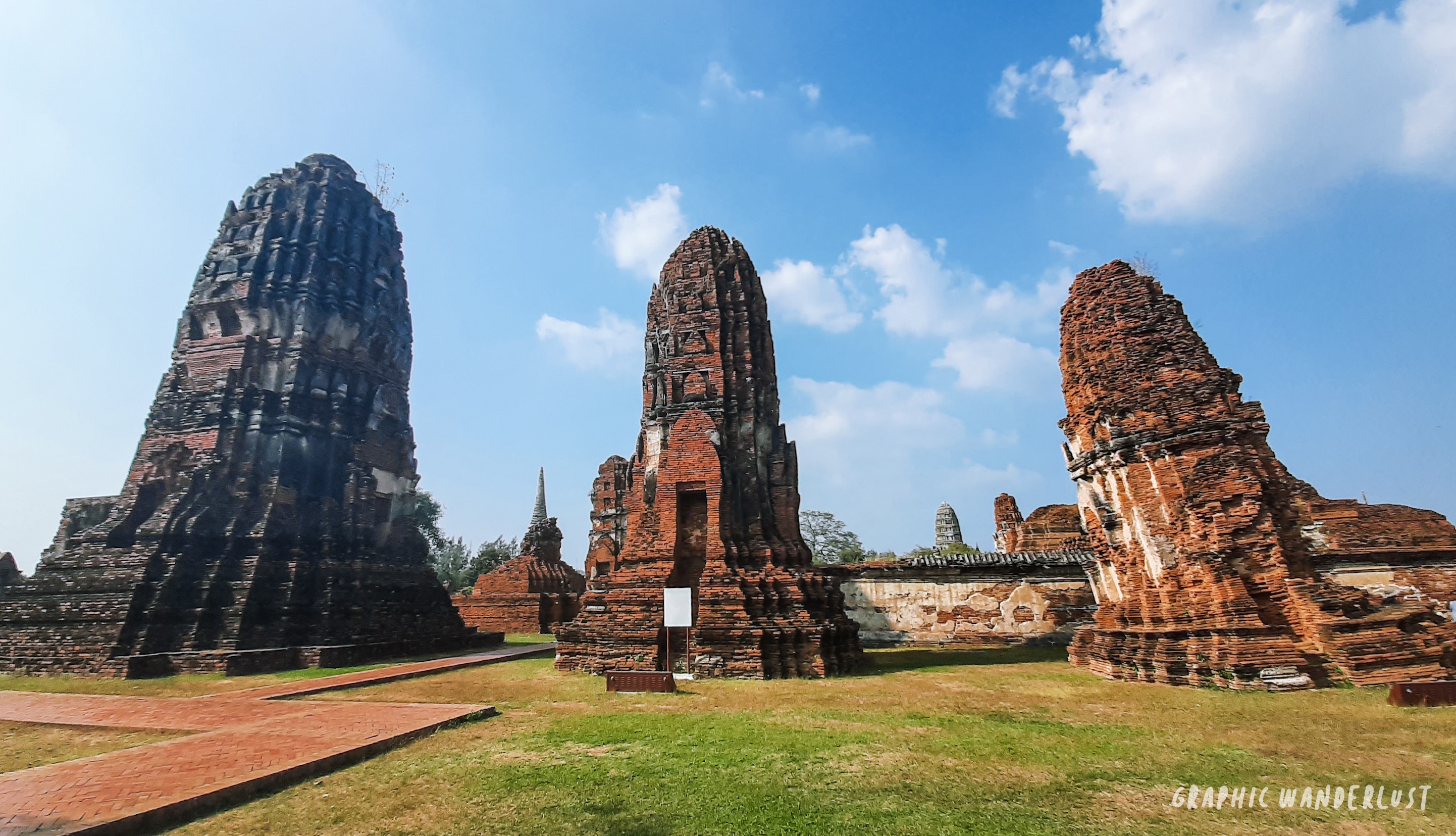
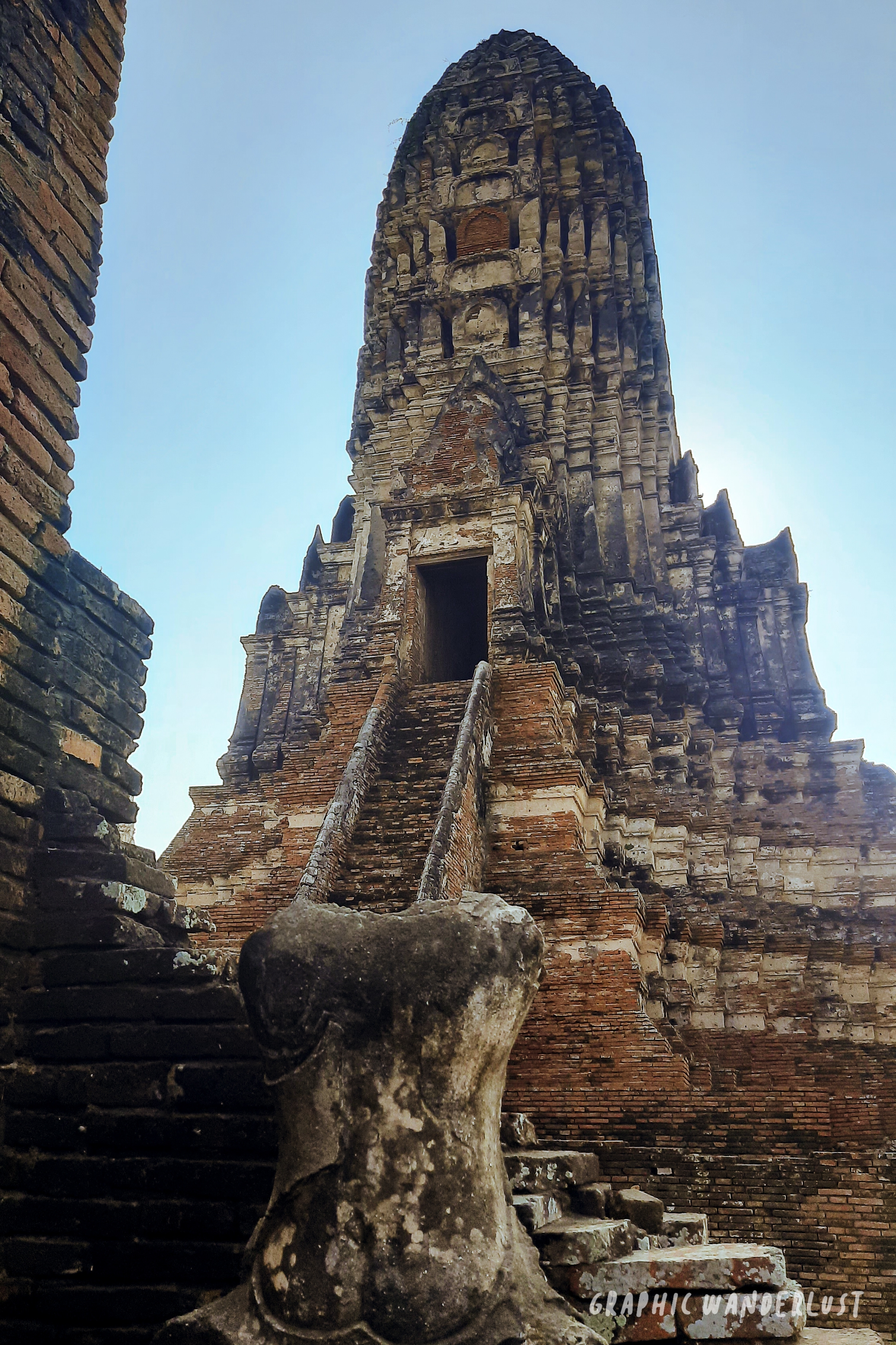
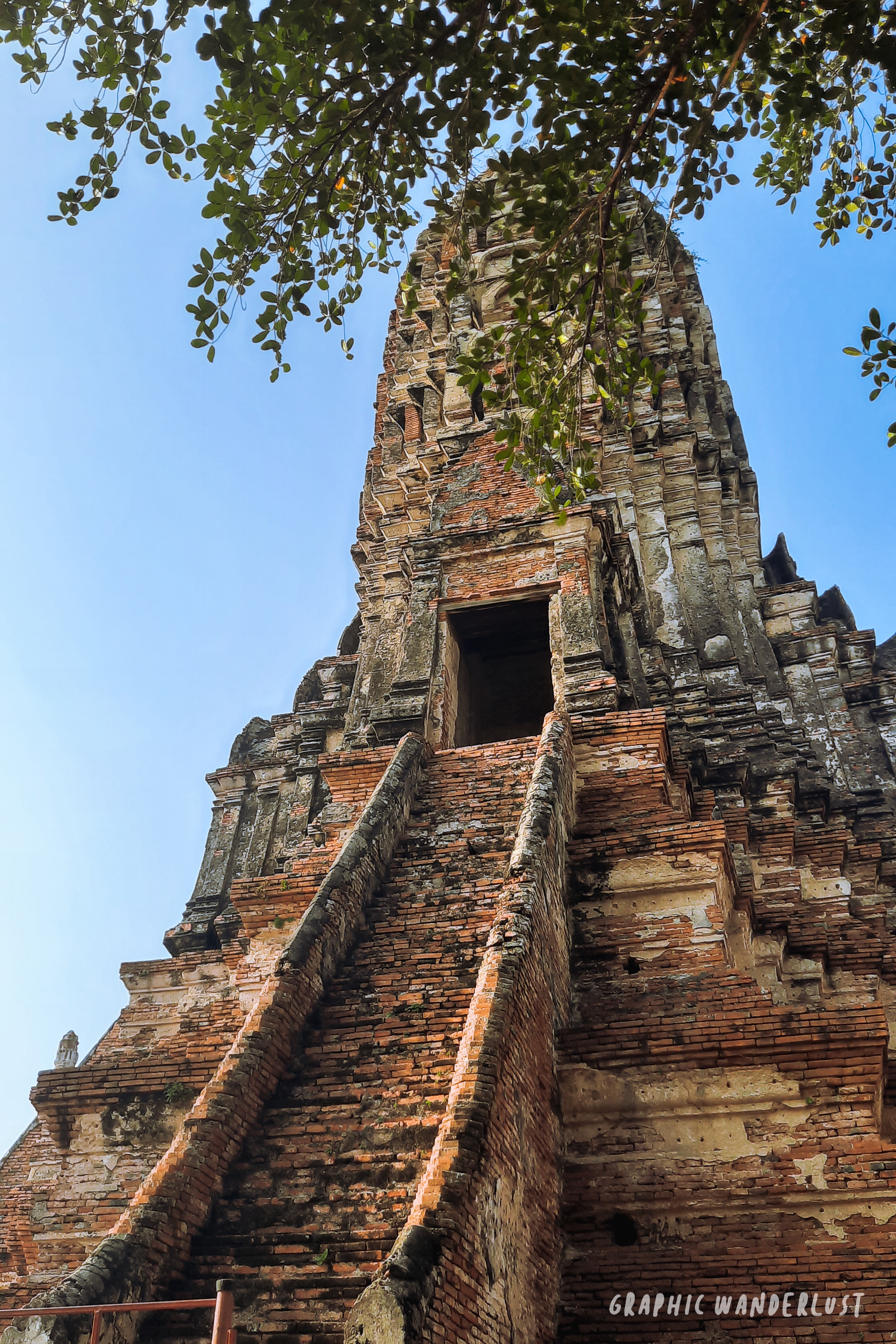
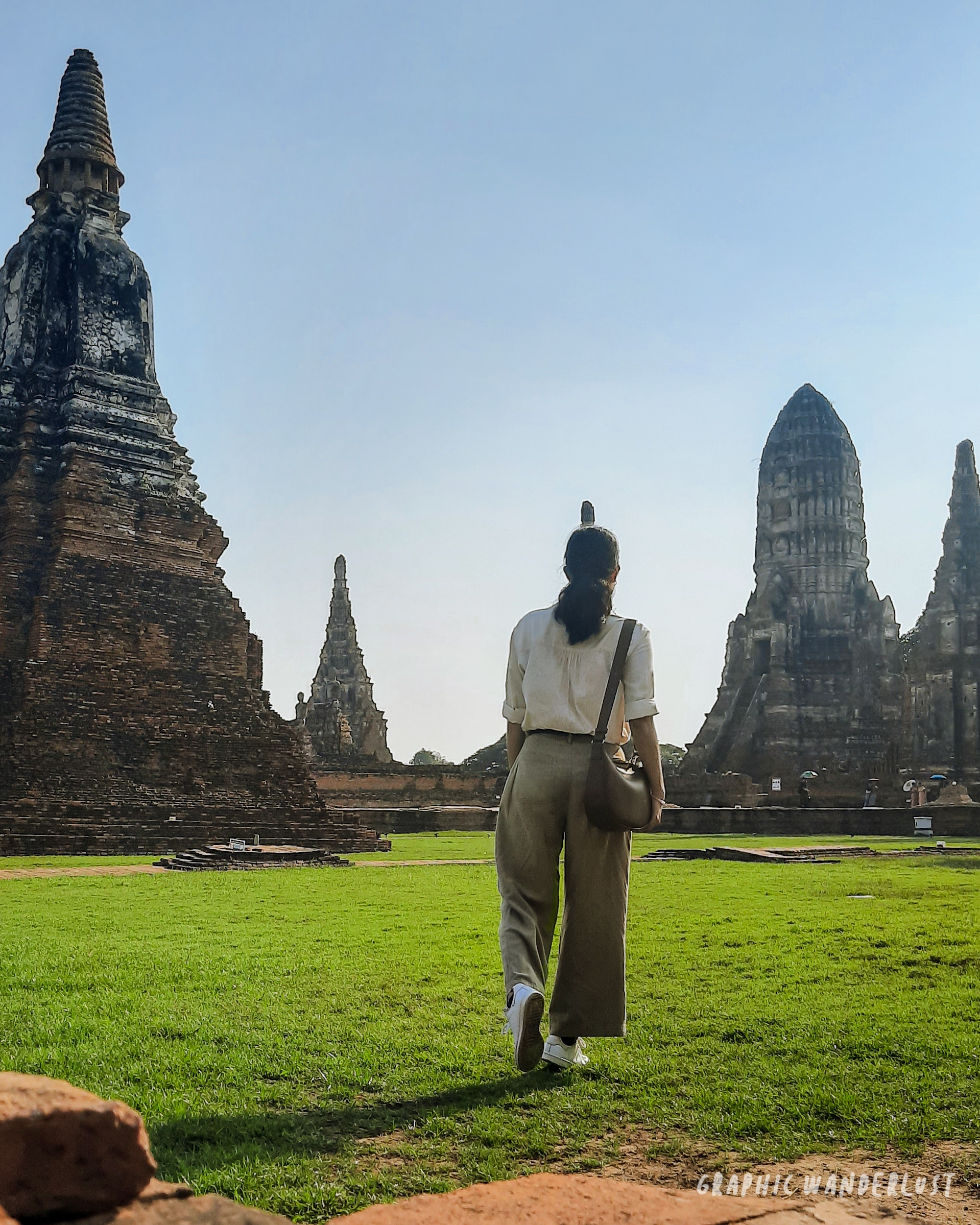
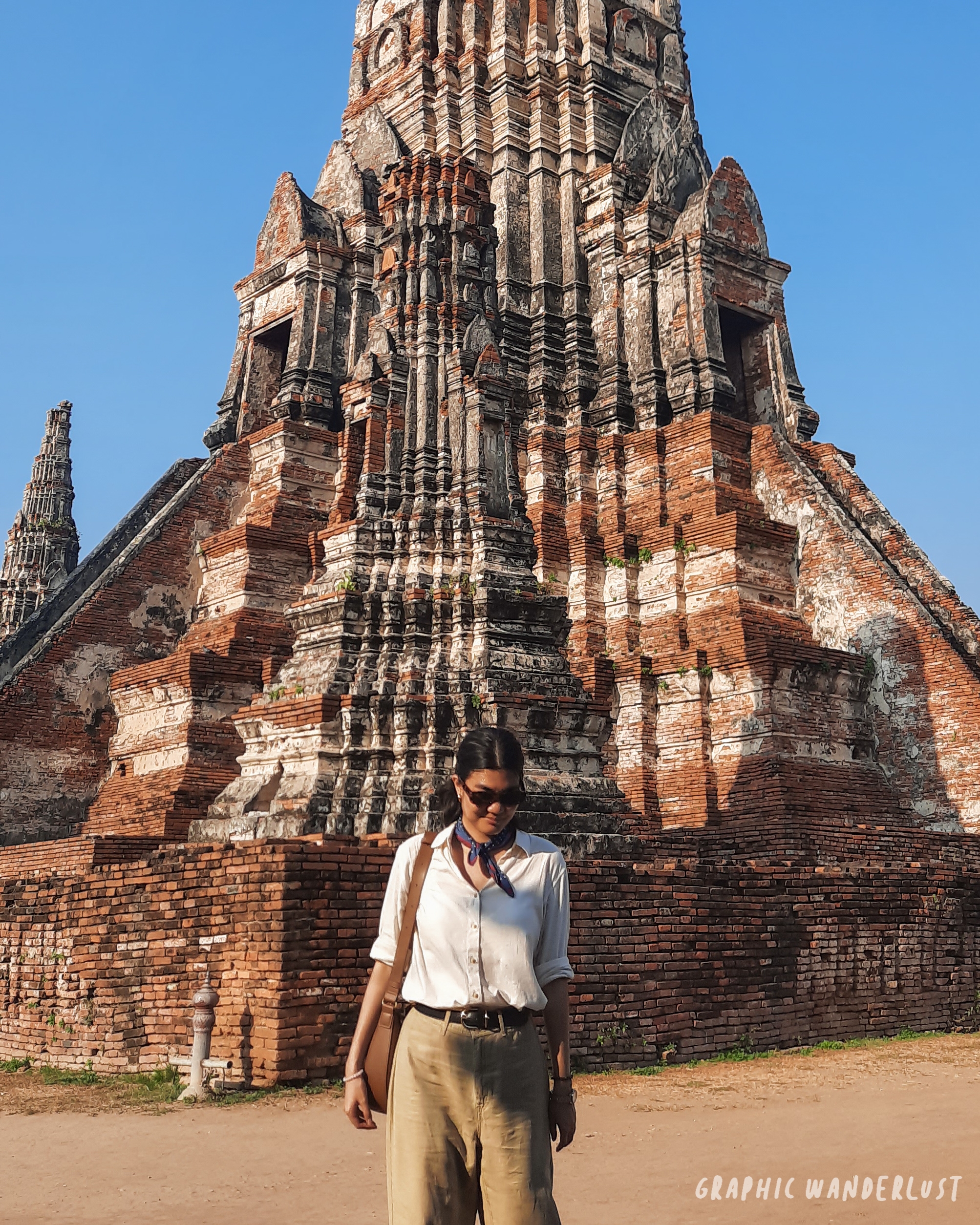
Contrary to the first two ruins, Wat Chaiwatthanaram was built during the late Ayutthaya period under the command of King Prasat Thong to mainly commemorate his mother and whose construction was inspired by the great Hindu-Buddhist temple of Siem Reap, Cambodia. Like Angkor Wat, the place also follows a quincux layout where a large central prang towers over four smaller spires which represents Mount Meru and the four continents respectively in the Buddhist worldview. Similar to Wat Mahathat, Wat Chaiwatthanaram was left abandoned and targeted by looters after the fall of Ayutthaya in 1767 until it was subjected to conservation in the 21st century.
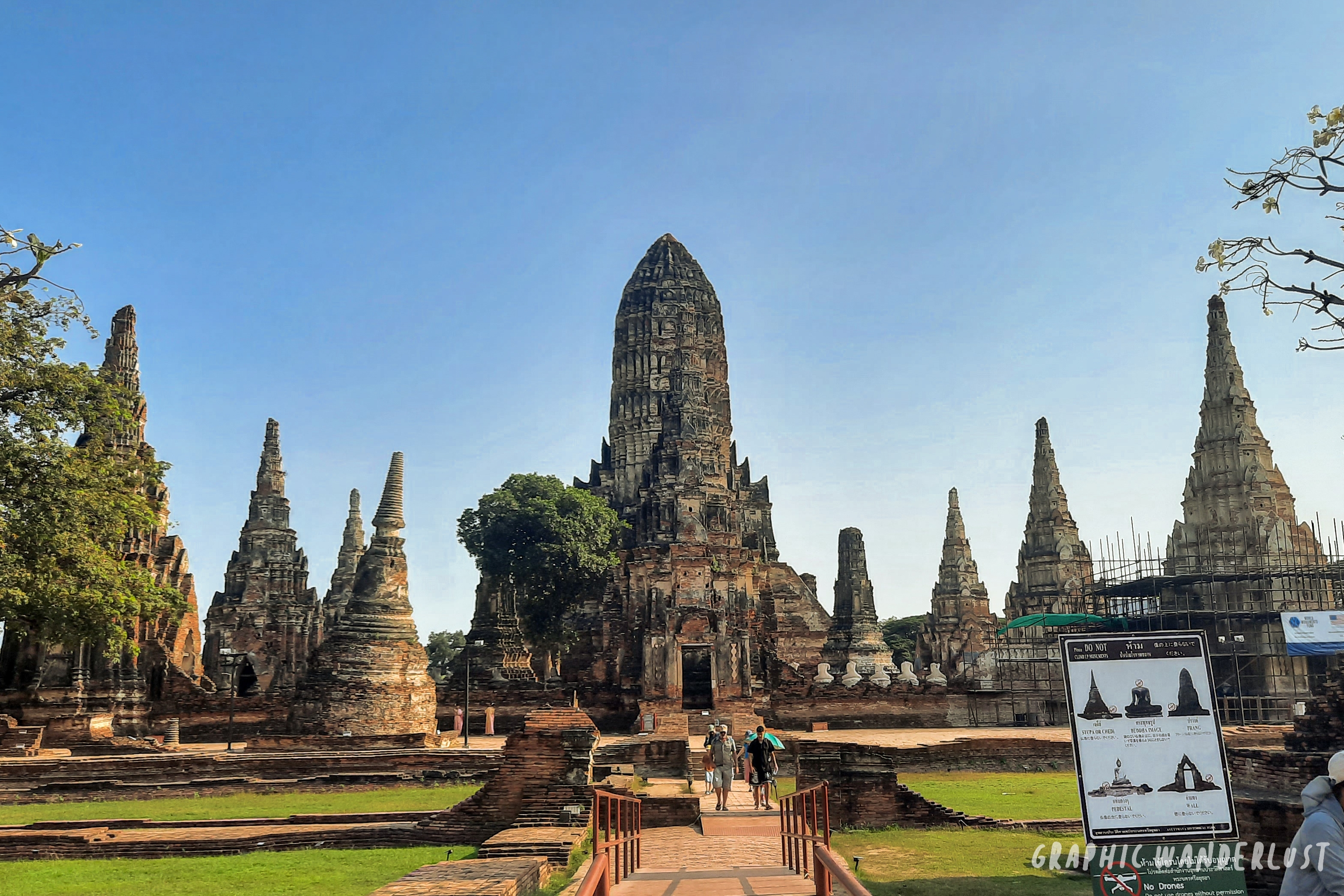
Unlike in the previous temple ruins, I appreciated Wat Chaiwatthanaram more due to its better conserved state which depicts a clearer picture of how the place used to be in its heyday.
Catching my attention effortlessly were its spires and chedis towering over the complex which evoked a feeling of being taken back in ancient times during the height of the Ayutthaya period. The remnants of Buddha images in its former gallery and Merus added to the distinct charm of the place while the surviving prangs’ ornate details and worn-out appearance fascinated me in a way that made me imagine how they were seen and used before. Nonetheless unlike in Wat Yai Chai Mongkhon, access to the chamber of the main prang is restricted, only allowing visitors to view it from below. Regardless, the temple ruins’ other parts such as its former vihara and interior walls are sights to marvel at where one can appreciate Ayutthaya’s history more.
Ending the Day at Rak Na Café
- Address: 88 8, Ban Pom, Phra Nakhon Si Ayutthaya District, Chang Wat Phra Nakhon Si Ayutthaya
- Operating hours: 8:00AM-6:30PM, Monday-Friday; 8:00AM-7:00PM, Saturday-Sunday
Capping off the day and our tour, our guide took us for the last time to another dining spot where we were served with the place’s signature refreshments to beat the afternoon heat.
Located along the national highway and parallel to our last stop, Rak Na Café boasts a farm site ambience with the rice field and paddies that surround the restaurant and thatched roofs that cover the place’s dining areas composed of wooden tables and stools. The specialty of the place is their fruit smoothies which we tried by ordering their Avocado and Passionfruit Shake (THB95) which was free of charge and covered by our tour package. Nonetheless, I found the serving refreshing and packed with the fruits’ signature juicy flavors which started to get bland and tasted watery as I finished the cup.

Ambience-wise, the place did offer a relaxing and unique feel especially since it was the first time when I had visited such type of dining spot and when the sun started to set that created a more picturesque scenery of the rice fields.
Our quick day trip to Ayutthaya certainly did become a break for us from the hustle and bustle of the big city of Bangkok. Aside from the sights of its temple ruins and important buildings, our tour also provided us with a glimpse of provincial life in Thailand which I think is important in appreciating the country more. On top of this, the city did provide unique experiences that one wouldn’t have in Bangkok which are the same things why one shouldn’t miss this ancient and historic city in their itinerary when in Thailand.
Liked this Ayutthaya tour post? Don’t forget to give the like button a tap or share this to your friends on social media using the links below! ✨
If you also find this post useful, you can support me in creating more travel and hiking guides in the future! Just tap on my Ko-fi or Buy Me a Coffee profile to get started or share this post with your friends or socials for free!
Read more Asia posts!





Any thoughts?